Can Beetroot Juice Improve VO₂ Max?
Beetroot juice has become one of the more interesting endurance supplements over the past decade. The reason has less to do with beets themselves and more to do with what they contain: dietary nitrate.
Once consumed, nitrate can eventually be converted into nitric oxide, a signaling molecule involved in blood vessel dilation, blood flow, oxygen delivery, and muscle function. That has led researchers to ask whether increasing nitrate intake can make exercise more efficient or even improve one of the most important measures of aerobic fitness: VO₂ max.
A new 2026 systematic review and meta analysis published in Frontiers in Nutrition gives us one of the better looks at that question so far. Researchers pooled 38 randomized or crossover placebo controlled trials involving 703 participants and found that beetroot juice supplementation produced a small but statistically significant improvement in VO₂ max or VO₂ peak.
The effect was not huge, and it wasn't equally strong for everyone. Recreationally active people appeared to benefit more than highly trained athletes, multi day supplementation performed somewhat better than a single dose, and there appeared to be a useful nitrate dosing range rather than a simple "more is better" relationship.
That last point is especially interesting to me because it fits a pattern we see over and over again in sports nutrition.
The right dose matters more than the biggest dose.
TLDR: Do Nitrates Improve VO₂ Max?
This new meta analysis suggests that beetroot juice and dietary nitrate can produce a small improvement in aerobic capacity, particularly in recreationally active and moderately trained people. The effect is real enough to be interesting, but not large enough to replace training or magically transform your fitness.
The main points:
- Researchers analyzed 38 studies involving 703 participants.
- Beetroot juice produced a small but statistically significant improvement in VO₂ max or VO₂ peak compared with placebo.
- The largest effect occurred in recreationally active adults.
- Moderately trained athletes also showed a smaller but statistically significant benefit.
- Researchers did not find clear evidence of a benefit in highly trained or elite athletes, although there were relatively few studies in that group.
- The most consistent results occurred with approximately 6.4 to 12.8 mmol of nitrate, equal to roughly 400 to 800 mg of nitrate.
- Taking nitrate for three or more consecutive days produced a slightly larger pooled effect than taking a single dose.
- A commonly studied strategy was approximately 6.4 to 8.4 mmol of nitrate 2 to 3 hours before exercise.
- The overall benefit remained significant after adjusting for possible publication bias, but it became smaller.
- Nitrate probably works through several mechanisms involving nitric oxide, blood flow, oxygen delivery, and muscle contractile efficiency.
What Is VO₂ Max?
VO₂ max represents the maximum amount of oxygen your body can take in, transport, and use during intense exercise. It is one of the most commonly used measures of cardiorespiratory fitness and aerobic capacity.
In simple terms, a higher VO₂ max means your cardiovascular and muscular systems can process more oxygen at maximal exercise intensity.
That matters for runners, cyclists, triathletes, cross country skiers, and other endurance athletes because aerobic energy production is a major determinant of performance.
But VO₂ max isn't everything. Running economy, lactate threshold, durability, fueling, biomechanics, and mental tolerance all contribute to endurance performance too.
Still, improving VO₂ max is generally a good thing.
And traditionally, the best way to improve it is pretty obvious:
Train.
The more interesting question is whether nutrition can slightly enhance that adaptation or improve oxygen utilization on top of training.
That's where nitrate comes in.
Why Beetroot Juice?
Beetroot juice contains relatively high concentrations of inorganic nitrate.
After you consume nitrate, bacteria in your mouth convert some of it into nitrite. Nitrite can then be further converted into nitric oxide through what is known as the nitrate, nitrite, nitric oxide pathway.
Nitric oxide has a number of important physiological effects. It helps relax vascular smooth muscle, reduce vascular resistance, influence blood flow, and potentially improve oxygen delivery to active muscle. It may also affect muscle contraction and the amount of energy required to produce force.
This is why dietary nitrate has become such an interesting endurance supplement.
The goal isn't really to consume more beets.
The goal is to increase nitric oxide availability.
What Did the New Meta Analysis Find?
Researchers initially identified nearly 1,200 records and ultimately included 38 randomized controlled or crossover trials in their quantitative analysis.
Combined, those studies included 703 participants ranging from recreationally active adults to highly trained athletes.
When all of the studies were pooled together, beetroot juice supplementation produced a standardized mean difference of 0.24 in VO₂ max or VO₂ peak compared with placebo.
That is considered a small effect.
But it was statistically significant.
That distinction matters.
This is not evidence that nitrate supplementation dramatically increases aerobic capacity.
It suggests a modest average improvement.
For a competitive athlete, a small improvement can still matter.
For everyone else, it is probably better viewed as an additional tool rather than a game changer.
The Effect Was Strongest in Recreationally Active People
Training status turned out to be one of the most interesting parts of the analysis.
Among recreationally active participants, the standardized effect size was:
0.38
Among moderately trained participants:
0.17
Among highly trained or elite athletes:
0.07
The elite athlete result was not statistically significant.
That doesn't necessarily mean nitrate stops working once you become highly trained.
The authors specifically caution against that interpretation.
There were only six studies involving 125 highly trained athletes, and the results varied considerably between studies. The certainty of evidence in that subgroup was rated as low.
Still, there is a logical reason why elite athletes might see smaller improvements.
Highly trained endurance athletes already have very well developed cardiovascular systems, high capillary density, efficient mitochondria, excellent oxygen delivery, and well developed nitric oxide related adaptations.
They simply have less room for improvement.
That is a common theme with ergogenic supplements.
The closer someone is to their physiological ceiling, the harder it becomes for any supplement to create a noticeable effect.
This Doesn't Mean Nitrates Are Only for Beginners
I wouldn't interpret this research as saying nitrate is useful only if you're relatively untrained.
The outcome being measured here was specifically VO₂ max and VO₂ peak.
Nitrate research has also looked at exercise economy, time to exhaustion, repeated high intensity efforts, and endurance performance.
It is entirely possible for nitrate to influence one of those outcomes without significantly moving VO₂ max.
That is another reason we need to be careful with headlines.
"No significant increase in VO₂ max among elite athletes" is not the same thing as:
"Nitrates don't work for elite athletes."
This particular meta analysis simply couldn't demonstrate a clear VO₂ max benefit in that population.
How Much Nitrate Appears to Work Best?
This is one of the most practically useful findings in the paper.
The researchers divided nitrate intake into three categories:
Low dose: less than 6.4 mmol
Standard dose: 6.4 to 12.8 mmol
High dose: more than 12.8 mmol
The most consistent results occurred in the 6.4 to 12.8 mmol range.
Because supplement labels usually list milligrams instead of millimoles, let's convert that.
One millimole of nitrate is approximately 62 mg.
That means:
6.4 mmol ≈ 397 mg nitrate
and
12.8 mmol ≈ 794 mg nitrate.
So the most consistently effective range in this analysis was roughly:
400 to 800 mg of nitrate.
That's a very useful number.
More Wasn't Clearly Better
The low dose group did not produce a statistically significant improvement.
The standard dose produced an effect size of 0.27.
The high dose produced an effect size of 0.22.
In other words, pushing nitrate beyond approximately 12.8 mmol did not produce an obviously greater effect than the standard range.
The authors suggest this could represent a ceiling effect, although they correctly caution that the available data aren't strong enough to definitively establish one.
Still, it's another reminder that sports nutrition isn't a contest to see who can take the biggest dose.
Once the pathway you're trying to influence is adequately stimulated, more may simply stop adding much.
Timing Matters Too
The authors highlight a commonly studied practical protocol of approximately:
6.4 to 8.4 mmol of nitrate
taken:
2 to 3 hours before exercise.
That timing gives the nitrate, nitrite, nitric oxide pathway time to work before you start training or racing.
This is important because dietary nitrate doesn't work like caffeine.
You don't necessarily take it 15 minutes before your workout and immediately feel something.
The conversion process takes time.
That's why many nitrate protocols use a 2 to 3 hour pre exercise window.
Multi Day Supplementation May Work Better
The researchers also compared acute supplementation with chronic supplementation.
A single dose produced an effect size of:
0.19
Supplementation for at least three consecutive days produced an effect size of:
0.29
Both were statistically significant, but the multi day protocols produced the larger average effect.
That doesn't prove that everyone needs to load nitrate for several days.
But if I were preparing for an important race, I would probably be more interested in a multi day strategy than relying solely on one dose race morning.
The authors suggest the difference could involve more sustained nitrate and nitrite availability or other peripheral adaptations, although they stop short of saying chronic supplementation is definitively superior.
This Is Why I Formulated EndoFlow Around Nitrate
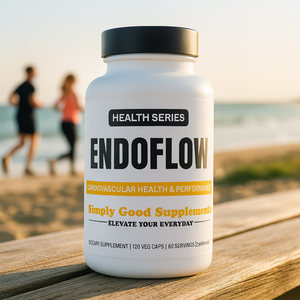
This research is also a good example of why nitrate is one of the main ingredients in our Simply Good Supplements EndoFlow formula.
EndoFlow is a stimulant free nitric oxide and blood flow formula designed for athletes and active adults. It uses NO3-T® betaine nitrate, standardized to provide 350 mg of nitrate per serving, along with vitamin C and Setria® glutathione.
I want to be transparent about how that compares with this particular meta analysis.
The 350 mg of nitrate in one serving of EndoFlow works out to approximately 5.6 mmol of nitrate. That's slightly below the 6.4 mmol lower end of the range that produced the most consistent VO₂ max results in this review.
That does not mean EndoFlow isn't providing a meaningful dose of nitrate. It means I don't want to take a study using roughly 400 to 800 mg and pretend our 350 mg serving is identical to it.
That's exactly the kind of supplement marketing I try to avoid.
What EndoFlow does provide is a substantial standardized nitrate dose designed to support nitric oxide availability, healthy blood flow, circulation, and exercise performance without relying on caffeine or other stimulants. We recommend taking it approximately 2 to 3 hours before exercise, which also happens to align closely with the timing commonly used in the nitrate literature.
Why Not Just Drink Beet Juice?
You absolutely can.
Beetroot juice is the intervention studied in most of the research included in this meta analysis.
Whole food sources of nitrate are perfectly legitimate.
Beets, arugula, spinach, lettuce, and other vegetables can all contribute meaningful amounts of dietary nitrate.
The biggest issue is consistency.
The nitrate concentration of foods can vary substantially depending on growing conditions, storage, preparation, and serving size.
A standardized nitrate supplement gives you a known amount.
That's one reason I like standardized ingredients for performance purposes.
I'm not guessing how many beets happened to be in a particular bottle of juice.
What Does Nitric Oxide Actually Do During Exercise?
The mechanism is probably more interesting than the supplement itself.
Nitric oxide helps blood vessels relax.
That can reduce peripheral vascular resistance and influence blood flow to exercising muscle.
During harder exercise, when fast twitch muscle fibers become increasingly active, improved local blood flow may potentially help deliver oxygen to those working fibers.
Nitric oxide may also influence muscle contractile efficiency.
One possibility is that muscle can produce a given amount of force at a slightly lower energetic cost.
That doesn't necessarily mean nitrate dramatically improves mitochondrial efficiency. The authors specifically caution against making that leap.
A better interpretation is that nitrate may help reduce the oxygen and ATP cost of muscular contraction under certain conditions.
For an endurance athlete, even a small improvement in efficiency could matter.
Think of It Like Fuel Economy
One way I like to think about nitrate is fuel economy.
Imagine two identical cars driving the same speed.
One needs slightly less fuel to maintain that speed.
That doesn't mean the engine suddenly became twice as powerful.
It's simply operating a little more efficiently.
Something similar may happen during exercise.
If your muscles can maintain a given workload while requiring slightly less oxygen or energy, you may be able to sustain that effort more comfortably or preserve capacity for later in the race.
That's different from saying nitrate suddenly gives you a massive VO₂ max.
The effect is much more subtle than that.
The Mouthwash Problem
There is one practical nitrate issue that often surprises people.
Remember the pathway:
Nitrate → nitrite → nitric oxide.
The first major step depends partly on bacteria in your mouth.
That means antibacterial mouthwash can potentially interfere with nitrate reduction and reduce the amount of nitrite available downstream.
Interestingly, the authors specifically identify antibacterial mouthwash use as one potential source of variation between nitrate studies.
If you're deliberately using dietary nitrate for exercise performance, aggressively using antibacterial mouthwash around your nitrate dose probably isn't the smartest strategy.
Sometimes microbiome bacteria actually work in our favor.
What About Women?
This is an area where we simply need better research.
Of the 38 studies included in the meta analysis, 29 were exclusively male. Only nine included women or mixed groups where sex specific data could be examined.
That means 76% of the included studies were male only.
There are plausible reasons women could respond differently to nitrate, including hormonal influences on nitric oxide biology across the menstrual cycle.
But right now, there isn't enough high quality female specific research to confidently say that women need a different nitrate dose or that they respond substantially differently.
That's not evidence that nitrate doesn't work in women.
It's evidence that researchers need to include more women in sports nutrition research.
Can Beetroot Juice Really Increase VO₂ Max?
Yes, based on this review, there appears to be a small average benefit.
But I wouldn't oversell it.
The overall standardized effect size was 0.24.
After researchers adjusted for possible publication bias, it dropped to 0.19, although the result remained statistically significant.
The overall certainty of evidence was rated moderate.
For recreationally active adults, certainty was rated high.
For highly trained athletes, it was rated low.
That's a pretty reasonable picture.
There is probably a real effect.
It's probably small.
And some people will respond better than others.
What This Study Does Not Tell Us
There are several reasons not to interpret these results too aggressively.
The studies used different nitrate doses, different beetroot formulations, different exercise tests, and participants with very different fitness levels.
Some studies measured verified VO₂ max while others really measured VO₂ peak.
The review also found evidence suggesting smaller negative studies may have been underrepresented in the published literature.
That's why the authors conclude that beetroot supplementation is associated with a modest rather than dramatic improvement in aerobic capacity.
I think that's exactly the right way to describe it.
Who Is Most Likely to Benefit?
Based on this analysis, I would be most interested in nitrate supplementation if you're a recreationally active or moderately trained endurance athlete.
That could include runners, cyclists, triathletes, trail runners, CrossFit athletes, Hyrox athletes, and other people doing sustained aerobic or mixed intensity exercise.
The evidence becomes less certain if you're already an elite endurance athlete with an exceptionally high VO₂ max.
That doesn't mean nitrate won't work.
It simply means the expected improvement becomes smaller and less predictable.
How I Would Use Nitrates for an Important Event
If you're going to experiment with nitrate, don't make race morning the first time you try it.
Use it in training.
Test your timing.
See how your stomach responds.
See how it fits with your caffeine, carbohydrate, and hydration strategy.
The evidence in this review suggests approximately 400 to 800 mg of nitrate is the range where VO₂ max effects were most consistent, with a commonly studied strategy around 400 to 520 mg taken 2 to 3 hours before exercise. Multi day use may provide somewhat more consistent effects than a single acute dose.
As always, that doesn't mean you need the maximum dose.
Start with a sensible amount and evaluate how you respond.
Where EndoFlow Fits
For someone who wants a standardized, stimulant free way to support the nitrate and nitric oxide pathway, that's exactly where EndoFlow fits.
Each serving provides 350 mg of nitrate from NO3-T® betaine nitrate, plus vitamin C and Setria® glutathione. It is designed to support nitric oxide availability, blood flow, circulation, and exercise performance without adding more caffeine to your day.
I particularly like that approach for endurance athletes because most of us already have plenty of opportunities to consume caffeine.
Not every performance supplement needs to stimulate your nervous system.
Sometimes improving the environment in which your muscles are working makes more sense.
See Simply Good Supplements EndoFlow
The Bottom Line
This 2026 meta analysis provides fairly good evidence that dietary nitrate from beetroot juice can produce a small improvement in VO₂ max or VO₂ peak, particularly in recreationally active and moderately trained adults.
The effect is not huge.
It is not guaranteed.
And highly trained athletes may see considerably less benefit.
But the research identified a pretty consistent pattern: approximately 6.4 to 12.8 mmol of nitrate, roughly 400 to 800 mg, produced the most reliable results, and multi day supplementation appeared somewhat more effective than relying on a single dose.
Most importantly, the mechanism makes sense. Dietary nitrate increases nitric oxide availability, which can influence blood flow, oxygen delivery, vascular function, and muscular efficiency.
That's also why nitrate is central to our EndoFlow formula.
But keep the effect in perspective.
Nitrate isn't going to replace interval training, long runs, consistent mileage, sleep, fueling, or years of aerobic development.
It might help around the edges.
And in endurance sport, sometimes the edges matter.
Reference
Qin G, Kim S. Effects of beetroot juice supplementation on maximal oxygen uptake during aerobic exercise: a systematic review and meta-analysis. Frontiers in Nutrition. 2026;13:1858216.