Can Caffeine Gum Improve Exercise Performance?
Caffeine is one of the few sports nutrition ingredients I have very little hesitation recommending when the goal is improving exercise performance. We have decades of research showing it can help with endurance, alertness, and certain types of high-intensity exercise.
But there's an interesting question that doesn't get nearly as much attention: Does the way you consume caffeine change how well it works?
Most people get their pre-workout caffeine from coffee, energy drinks, capsules, or powdered supplements. Caffeinated chewing gum offers another option, with the potential advantage of getting caffeine into circulation faster.
A new 2026 systematic review and meta-analysis published in Sports Medicine - Open examined whether caffeine gum actually improves physical performance, and whether factors like dosage, chewing time, training status, and habitual caffeine consumption influence the results.
The researchers analyzed 25 studies involving 390 participants, making this one of the more comprehensive evaluations of caffeine gum to date.
The findings were positive, although the actual performance improvements were considerably smaller than you might expect.
TLDR
A new 2026 meta-analysis examined 25 randomized controlled trials to determine whether caffeinated chewing gum improves exercise performance compared with placebo.
- Caffeine gum improved overall exercise performance. The pooled effect was statistically significant but classified as trivial in magnitude.
- Endurance showed the largest improvement. Aerobic endurance outcomes demonstrated a small positive effect, while sprint-related and jumping outcomes showed smaller benefits.
- Trained athletes appeared to benefit more. Improvements were significant in trained participants but not in recreationally active individuals.
- Ten minutes of chewing showed more consistent results. Benefits were significant in studies using 10 minutes of chewing, but the direct difference between chewing durations was not statistically conclusive.
- Habitual caffeine intake may matter. Benefits were detected among low and moderate caffeine consumers, but not among high habitual users, although the latter group had very limited data.
- The most commonly studied doses were approximately 2–4 mg/kg. Higher doses were associated with larger effects in the primary meta-regression, but that doesn't mean more caffeine is always better.
My takeaway: Caffeine gum appears to be a legitimate, fast-acting caffeine delivery method, but the average performance advantage is small. Its biggest practical benefit may be convenience and rapid administration rather than superior performance compared with other caffeine sources.
Why Would Someone Chew Caffeine Instead of Drinking It?
Most people think of caffeine as something you drink or swallow. Coffee, energy drinks, pre-workout powders, and capsules are the most common examples.
Caffeine gum works a little differently.
When you chew caffeinated gum, some of the caffeine can be absorbed through the lining of your mouth, known as the buccal mucosa. The remaining caffeine is swallowed and absorbed through the gastrointestinal tract.
This creates two potential routes of absorption rather than relying entirely on digestion.
Research discussed in the review indicates that caffeine gum can begin increasing circulating caffeine concentrations within approximately 5 to 10 minutes. That's considerably faster than the typical time required for caffeine concentrations to peak after swallowing a capsule.
However, faster absorption doesn't necessarily mean a larger performance benefit.
The real question is whether getting caffeine into circulation sooner makes a meaningful difference when you're actually exercising.
That's what makes this meta-analysis interesting.
For an athlete preparing for a race, a soccer player approaching halftime, or someone squeezing in an early-morning workout, a fast-acting caffeine source could be useful.
But if you already have 45 to 60 minutes before training, the practical advantage of chewing gum becomes less obvious.
How Caffeine Improves Exercise Performance
Before getting into the results, it's worth understanding why caffeine works in the first place.
Caffeine's primary performance-enhancing mechanism involves blocking adenosine receptors in the central nervous system.
Adenosine is a signaling molecule involved in sleepiness and the regulation of nervous system activity. As adenosine signaling increases, we generally experience greater feelings of fatigue and reduced alertness.
Caffeine competes with adenosine at its receptors, which can reduce perceived fatigue and increase alertness.
During exercise, this can translate into a lower perception of effort, improved willingness to sustain challenging workloads, and potentially better performance.
Caffeine may also influence other physiological processes, including catecholamine activity and neuromuscular function.
However, I think the reduction in perceived effort is one of the most practically important effects, particularly during endurance exercise.
If a given pace feels slightly easier, an athlete may be able to maintain that pace longer or increase their output before reaching exhaustion.
That doesn't mean caffeine directly makes muscles stronger in every situation. It means the nervous system and perception of effort can influence how effectively we use the physical capacity we already have.
How Was the 2026 Meta-Analysis Conducted?
The researchers conducted a systematic review and meta-analysis following established Cochrane and PRISMA guidelines.
They searched four scientific databases, including PubMed, Web of Science, Scopus, and SPORTDiscus, with the final search completed in March 2026.
Only randomized controlled trials involving healthy adults were eligible.
Each included study had to compare caffeinated chewing gum with a non-caffeinated control condition and measure some aspect of physical performance.
The final analysis included:
|
Study characteristic |
Details |
|---|---|
|
Number of studies |
25 |
|
Total participants |
390 |
|
Performance effect estimates |
47 |
|
Caffeine doses |
1.35–6.4 mg/kg |
|
Most common doses |
Approximately 2–4 mg/kg |
|
Main exercise categories |
Endurance, anaerobic performance, jumping, muscular strength/endurance |
|
Predominant population |
Trained adults, mostly men |
The researchers also examined whether performance effects varied according to training status, habitual caffeine intake, chewing duration, caffeine dosage, and timing relative to exercise.
That's important because caffeine research often produces different results depending on the participants and testing protocols.
Someone who rarely consumes caffeine may respond differently from someone drinking 500 mg every day. Similarly, a trained cyclist completing a time trial may respond differently from someone performing a few sets of bench presses.
Combining the studies allowed researchers to estimate the overall effect while exploring some of those differences.
Caffeine Gum Improved Performance, but the Effect Was Small
The main finding was statistically significant.
Across all 25 studies, caffeine gum produced a standardized mean difference of 0.195 compared with placebo.
The 95% confidence interval ranged from 0.115 to 0.275, and the reported P value was 0.001.
That means the pooled results favored caffeine gum.
However, the magnitude of the improvement matters.
The researchers classified standardized effect sizes below 0.2 as trivial, while values between 0.2 and 0.5 were considered small.
The overall effect of caffeine gum fell just below the threshold for a small effect.
That's an important distinction because statistical significance doesn't automatically mean an intervention produces a noticeable improvement in real-world performance.
With enough observations, even relatively small effects can become statistically significant.
The researchers themselves concluded that the average improvement had limited practical significance, although small differences could matter in competitive sports.
I agree with that interpretation.
If you're an elite athlete competing in an event decided by fractions of a second, a small improvement might be meaningful.
If you're a recreational exerciser hoping caffeine gum will dramatically improve your workout, the results are considerably less exciting.
Which Types of Exercise Benefited Most?
One of the more useful aspects of the analysis was that researchers separated performance outcomes into different exercise categories.
They examined aerobic endurance, anaerobic performance, jumping, and muscular strength/endurance.
The results weren't identical across those categories.
|
Exercise category |
Standardized effect |
Statistical significance |
|---|---|---|
|
Aerobic endurance |
0.258 |
Significant |
|
Anaerobic performance |
0.186 |
Significant |
|
Jump performance |
0.183 |
Significant |
|
Muscular strength/endurance |
0.142 |
Not significant |
Aerobic endurance
Aerobic endurance produced the largest pooled improvement, with a standardized effect size of 0.258.
This was classified as a small effect and was statistically significant.
The included studies used exercise tests such as running, cycling, and time-to-exhaustion protocols.
That makes physiological sense. Caffeine's ability to reduce perceived effort may be particularly useful during sustained exercise where maintaining output despite fatigue is a major challenge.
However, the effect size doesn't translate directly into a specific percentage improvement in race time.
We can't take a standardized effect of 0.258 and claim caffeine gum makes runners 2.58% faster. That's not how these statistics work.
Anaerobic performance
Anaerobic exercise also showed a statistically significant benefit, although the effect was smaller.
This category included activities such as sprinting, agility tests, and other high-intensity efforts.
The pooled effect size was 0.186, which the researchers classified as trivial.
There may be a performance benefit, but the average improvement was modest.
Jump performance
Vertical jump outcomes showed a similarly small improvement, with an effect size of 0.183.
Again, the result was statistically significant but trivial in magnitude.
For sports involving explosive movements, even small improvements may be relevant, but this doesn't mean caffeine gum reliably produces dramatic increases in jumping ability.
Muscular strength and endurance
Interestingly, muscular strength and endurance did not show a statistically significant pooled improvement.
The effect size was 0.142, and the confidence interval crossed zero.
This category included outcomes such as one-repetition maximum testing, repetitions to failure, and grip strength.
I wouldn't interpret this as evidence that caffeine doesn't help strength performance. There's broader research supporting caffeine's potential benefits for certain strength and power outcomes.
What this analysis tells us is that caffeine delivered through chewing gum did not produce a statistically conclusive benefit in the pooled muscular strength/endurance subgroup.
That's a narrower and more accurate conclusion.
Trained Athletes Appeared to Benefit More Than Recreational Exercisers
One finding that caught my attention was the difference between trained and recreationally active participants.
The researchers found a statistically significant improvement among trained individuals, with a standardized effect size of 0.228.
Among recreationally active participants, however, the effect was not statistically significant.
|
Training status |
Effect size |
Result |
|---|---|---|
|
Trained athletes |
0.228 |
Statistically significant |
|
Recreationally active |
−0.038 |
Not statistically significant |
There are several possible explanations.
Trained athletes may be better at maintaining consistent effort during performance testing. They may also be more capable of pushing themselves close enough to their physiological limits for small changes in fatigue perception to influence performance.
Someone who has spent years training for endurance events may recognize and capitalize on a small improvement in perceived effort.
A recreational exerciser might not respond in the same way, particularly if pacing, exercise technique, or motivation varies considerably between testing sessions.
However, the recreational subgroup was much smaller, with only 59 participants compared with 304 trained participants.
The evidence suggests trained athletes may benefit more, but it doesn't prove caffeine gum is ineffective for recreational exercisers.
Does Chewing Caffeine Gum for Longer Make It Work Better?
This was probably one of the more practically useful questions the researchers investigated.
They compared studies where participants chewed caffeinated gum for approximately five minutes with those using ten minutes.
The results favored the longer chewing duration.
|
Chewing duration |
Effect size |
Result |
|---|---|---|
|
5 minutes |
0.142 |
Not statistically significant |
|
10 minutes |
0.262 |
Statistically significant |
At first glance, that seems like a straightforward recommendation to chew caffeine gum for ten minutes.
But there's a catch.
The statistical test comparing the two chewing-duration subgroups was not significant.
That means we cannot confidently conclude that ten minutes is superior to five minutes, even though the ten-minute subgroup produced a statistically significant benefit and the five-minute subgroup did not.
Those are two different statistical questions.
Still, ten minutes seems like a reasonable practical approach based on the available research. The review provides more consistent evidence of a performance benefit under that condition.
I wouldn't interpret the findings as evidence that chewing for 15 or 20 minutes would produce even better results. The analysis doesn't establish that.
Does Your Daily Caffeine Intake Affect the Results?
This is something I've discussed quite a bit when writing about caffeine and exercise performance.
People often assume that consuming caffeine every day eventually makes it completely ineffective.
I don't think the research supports such an absolute conclusion, although habitual intake may influence how someone responds.
The researchers divided participants into three categories based on their usual caffeine consumption.
|
Habitual caffeine intake |
Daily amount |
Effect of caffeine gum |
|---|---|---|
|
Low |
0–150 mg |
Small, significant benefit |
|
Moderate |
150–300 mg |
Small, significant benefit |
|
High |
Over 300 mg |
No significant benefit detected |
Both the low and moderate caffeine groups showed statistically significant improvements.
The high-consumption group did not.
That might suggest caffeine habituation reduces the performance benefits of supplementation.
However, there's a major limitation.
Only one study, involving 14 participants, contributed to the high-caffeine subgroup.
That's nowhere near enough evidence to conclude that caffeine gum stops working when someone regularly consumes more than 300 mg of caffeine.
The overall statistical test comparing habitual-intake groups was also not significant.
My interpretation is that the findings are consistent with the possibility of some tolerance-related effects, but they don't establish a clear daily caffeine threshold where performance benefits disappear.
I certainly wouldn't recommend that someone who drinks coffee every day needs to double their caffeine dose to compensate.
How Much Caffeine Gum Do You Actually Need?
The studies included caffeine doses ranging from approximately 1.35 to 6.4 mg per kilogram of body weight.
Most of the research concentrated on doses between 2 and 4 mg/kg, with approximately 3 mg/kg being particularly common.
Here's what those amounts look like for different body weights.
|
Body weight |
2 mg/kg |
3 mg/kg |
4 mg/kg |
|---|---|---|---|
|
130 lb |
118 mg |
177 mg |
236 mg |
|
160 lb |
145 mg |
218 mg |
290 mg |
|
190 lb |
172 mg |
259 mg |
345 mg |
|
220 lb |
200 mg |
299 mg |
399 mg |
The researchers also conducted a meta-regression to determine whether higher caffeine doses were associated with larger performance effects.
The primary analysis found a statistically significant positive relationship between caffeine dosage and performance.
That sounds promising, but I wouldn't rush to increase your caffeine intake based on this finding.
The dose-response relationship was less consistent in some sensitivity analyses, and the review did not establish an optimal dose.
Higher doses also introduce a greater possibility of unwanted side effects.
More caffeine may produce larger performance effects under certain conditions, but that doesn't mean the highest tolerable dose is the best choice.
For most athletes, I'd rather see them start with a moderate amount, evaluate their response, and avoid taking additional caffeine simply because they think more will automatically improve performance.
Does Caffeine Gum Really Work Faster?
One of the biggest selling points of caffeinated chewing gum is its rapid absorption.
Because some caffeine can enter circulation through the lining of the mouth, blood caffeine concentrations may begin rising sooner than they would after swallowing a capsule.
That can be useful in situations where you don't have much time before exercising.
For example, an athlete might want caffeine shortly before a race or during a break in competition without waiting for a traditional capsule to reach peak concentrations.
However, this review found that the timing of caffeine gum administration relative to exercise was not a statistically significant predictor of performance outcomes.
That doesn't mean timing is irrelevant. It means the researchers couldn't establish a clear relationship between the different administration times and performance effects across the included studies.
Most studies also concentrated on relatively short pre-exercise intervals, limiting how confidently we can compare widely different timing strategies.
There's another distinction worth making.
Faster absorption does not automatically mean caffeine gum produces better performance than coffee, capsules, or pre-workout powder.
This meta-analysis compared caffeine gum primarily with non-caffeinated controls. It wasn't designed to establish that gum is superior to other caffeine delivery methods at equivalent doses.
For someone who already uses a caffeinated pre-workout 30 to 60 minutes before training, switching to gum may not provide an additional performance advantage.
The convenience of faster delivery is probably the more compelling reason to consider it.
Does This Change How I Think About Pre-Workout Supplements?
Not particularly, but I think it reinforces something important about caffeine.
The delivery method can influence how quickly caffeine becomes available, but the caffeine itself is still doing much of the work.
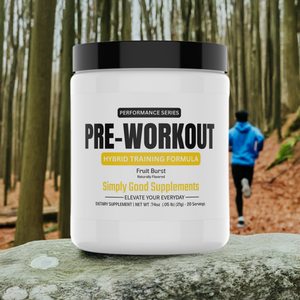
I formulated our Hybrid Pre-Workout with 150 mg of caffeine, alongside ingredients such as L-theanine, Alpha-GPC, and elevATP.
My approach has never been to cram as much caffeine as possible into a pre-workout. I wanted a formula that supports energy, focus, and performance without making excessive stimulant intake the main selling point.
The amount of caffeine in Hybrid is lower than the approximately 2–4 mg/kg range used in many of the gum studies, particularly for heavier athletes.
That's intentional from a formulation standpoint, but it also means we shouldn't assume the results from these higher-dose caffeine gum trials apply directly to Hybrid.
This review tested caffeinated chewing gum, not Hybrid Pre-Workout or its combination of ingredients.
I think caffeine gum makes sense for athletes who want a portable, fast-acting caffeine source, particularly when taking a conventional pre-workout drink isn't practical.
For someone who prefers a more comprehensive pre-workout formula, gum isn't necessarily a better alternative. It's simply another way to consume caffeine.
You can check out Hybrid Pre-Workout here if you're interested in how I've approached caffeine dosing in our formula.
What About the Side Effects of Caffeine Gum?
Caffeine is effective, but that doesn't mean it's free of drawbacks.
Higher caffeine intakes can increase the likelihood of nervousness, anxiety, gastrointestinal discomfort, elevated heart rate, and sleep disturbances.
Some people are considerably more sensitive to caffeine than others.
The review discussed the possibility that caffeine gum may produce fewer side effects than certain traditional caffeine delivery methods, but it did not establish that gum is consistently safer or better tolerated.
That's an important distinction.
Rapid absorption could be convenient, but it doesn't eliminate caffeine's systemic effects.
I would also be cautious about combining caffeinated gum with other caffeine-containing products.
If you take a pre-workout containing 150 mg of caffeine and then chew gum providing another 200 mg, you're consuming 350 mg before accounting for coffee, energy drinks, or other sources.
That total matters more than whether the caffeine came from gum, powder, or a beverage.
Caffeine can also interfere with sleep even when you don't feel particularly stimulated by it. For an athlete trying to improve performance, compromising recovery to gain a small acute advantage isn't always a worthwhile trade.
What Are the Limitations of This Meta-Analysis?
Although 25 studies is a respectable number, there are several limitations worth discussing.
First, the total sample included only 390 participants, and individual studies were relatively small.
The participants were also overwhelmingly male. Of the 390 people included, 359 were men and just 31 were women.
That makes it difficult to determine whether the results apply equally across sexes.
The researchers also found that most included studies had either some concerns or a high risk of bias.
That's particularly important when the average performance improvement is already very small.
The certainty of the evidence was rated low for the overall effect and low to very low across the subgroup analyses.
There were also limitations in how habitual caffeine intake was measured, differences in exercise protocols, and relatively few studies involving high habitual caffeine consumers.
Some subgroup findings were based on limited numbers of participants, making them vulnerable to changes when additional research becomes available.
Finally, the meta-analysis did not establish whether caffeine gum is more effective than equivalent doses delivered through capsules, coffee, or pre-workout drinks.
The review supports a small performance benefit compared with non-caffeinated controls. It does not establish that caffeine gum is the superior way to consume caffeine.
What I Think This Study Actually Tells Us
I think this is a useful review because it puts the benefits of caffeine gum into perspective.
Yes, caffeine gum can improve exercise performance.
The overall effect was statistically significant, and there were encouraging results for aerobic endurance, anaerobic performance, and jumping.
However, the average effect was trivial, and the evidence quality was limited.
I also think the training-status findings are interesting. Trained athletes appeared to benefit more, which makes sense when we're discussing performance improvements that may be relatively small.
For a competitive runner or cyclist, even a modest improvement could matter.
For someone exercising primarily for general fitness, the difference may be difficult to notice.
The most practical advantage of caffeine gum may be that it offers a convenient way to consume caffeine shortly before exercise.
I wouldn't choose caffeine gum because I expect it to outperform an appropriately dosed caffeine capsule or pre-workout. I'd choose it because the delivery method fits a particular training or competition situation.
That's a much more defensible conclusion than claiming caffeine gum is the next big breakthrough in sports nutrition.
The Bottom Line
A new 2026 systematic review and meta-analysis found that caffeinated chewing gum produced statistically significant improvements in exercise performance across 25 studies involving 390 participants.
The overall effect was trivial in magnitude, although aerobic endurance showed a small improvement.
Benefits were more consistently observed among trained athletes, low-to-moderate habitual caffeine consumers, and studies using ten minutes of chewing.
However, several subgroup comparisons were not statistically significant, and the overall certainty of evidence was low.
My takeaway is that caffeine gum works, but the benefits are small. Its greatest advantage may be the convenience of rapid caffeine delivery rather than a meaningful improvement over other caffeine sources.
If you're already using an appropriate amount of caffeine before training and getting good results, I don't see a compelling reason to switch.
But if you need a portable caffeine option that can be used shortly before competition, caffeine gum is certainly worth considering.
About the Author
Matt Mosman, MS, CISSN, CSCS, is the founder and Chief Science Officer of Simply Good Supplements. With a background in exercise science, sports nutrition, and strength and conditioning, Matt focuses on turning research into practical advice that athletes, parents, and everyday active people can actually use.
References
Miraftabi H, Berjisian E, Pickering C, Lopez-Samanes A, Girard O. Fast-Acting Caffeine Strategy: A Systematic Review and Meta-Analysis of the Ergogenic Effects of Caffeine Chewing Gum on Physical Performance. Sports Medicine - Open. 2026;12:133. https://doi.org/10.1186/s40798-026-01104-y