Can Choline Help Protect Your Brain? New Research Links Moderate Intake to Lower Dementia Risk
TLDR
A large 2026 prospective study and dose response meta analysis found that moderate dietary choline intake was associated with a lower risk of developing dementia in middle aged and older adults. In the primary U.S. cohort, people consuming about 318 to 357 mg of choline per day had a 32 percent lower risk of dementia compared with those consuming the least.
When researchers combined five prospective cohorts involving 137,607 adults and 2,459 dementia cases, dementia risk declined as choline intake increased up to approximately 465 mg per day, after which additional intake did not appear to provide further risk reduction.
This does not prove that choline supplements prevent dementia. The research examined choline consumed from food, not supplemental choline, and the study was observational. Still, the findings strengthen the case for getting adequate choline as part of an overall brain healthy diet.
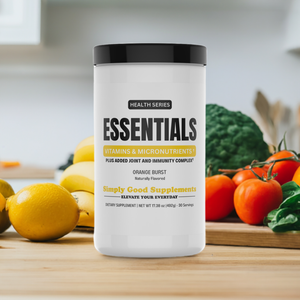
That is also one reason Simply Good Essentials includes 500 mg of CDP Choline as part of its broader vitamins and micronutrients formula. CDP Choline provides a source of choline, an essential nutrient involved in acetylcholine production and cell membrane structure.
Could Choline Be an Overlooked Nutrient for Brain Health?
When people think about nutrition for healthy aging, nutrients such as omega 3 fatty acids, vitamin D, magnesium, and antioxidants tend to get most of the attention.
Choline rarely makes the list.
That may be a mistake.
Choline is an essential nutrient involved in some of the most fundamental processes in the brain. It is needed to produce acetylcholine, an important neurotransmitter involved in memory and learning. Choline is also required to produce phospholipids that maintain the structure of cell membranes and plays a role as a methyl donor in metabolism.
These biological roles have led scientists to wonder whether getting enough choline throughout adulthood might influence cognitive aging.
A newly published study in Nutrition Journal provides one of the most comprehensive investigations of that question to date.
Researchers first followed more than 5,000 older Americans for nearly a decade. They then combined those findings with four other long term prospective studies.
The results suggest something interesting:
More choline was associated with lower dementia risk, but only up to a point.
What Is Choline?
Choline is an essential nutrient that your body needs for several important functions.
Among its most important roles are:
- Producing acetylcholine
- Maintaining cell membrane structure
- Supporting phospholipid synthesis
- Participating in methylation reactions
- Supporting normal liver function
- Supporting nervous system function
Of particular interest for brain health is acetylcholine.
Acetylcholine is a neurotransmitter involved in memory, learning, attention, and communication between nerve cells. Choline serves as the direct precursor needed to produce it.
Choline is also needed to produce compounds such as phosphatidylcholine and sphingomyelin, important components of neuronal cell membranes.
That gives choline two potentially important roles in the brain.
It provides raw material for a neurotransmitter involved in memory while also helping maintain the physical structure of brain cells.
Why Researchers Suspected Choline Might Matter for Dementia
Dementia develops over many years.
Long before memory symptoms become obvious, changes involving neurons, blood vessels, inflammation, metabolism, and cell signaling may already be occurring.
Choline participates in several biological pathways that could theoretically influence these processes.
The researchers identified several possibilities.
Choline helps produce acetylcholine, which is important for memory and learning.
Choline containing phospholipids help preserve neuronal membranes and cellular signaling.
Choline can also be converted into betaine, allowing it to participate in methylation reactions and homocysteine metabolism.
Elevated homocysteine has been associated with cognitive decline and cerebrovascular disease.
Choline may even influence mitochondrial function, oxidative stress, and epigenetic regulation.
These mechanisms make a relationship between choline intake and brain health biologically plausible.
But biological plausibility does not necessarily mean something prevents disease.
That is why long term human research matters.
The Study
Researchers began with data from the Health and Retirement Study, a long running study of older adults in the United States.
The analysis included 5,301 adults who were free of dementia at baseline.
Their average age was approximately 68.6 years, and about 59 percent were women.
Researchers estimated habitual dietary choline intake using a validated food frequency questionnaire.
Importantly, this included choline from foods only.
Supplemental choline was not included.
Participants were then followed for a median of 8.4 years.
During that period:
506 people developed dementia.
The researchers then compared dementia risk across different levels of choline intake while adjusting for numerous factors that could influence dementia risk, including age, sex, education, smoking, alcohol use, physical activity, body weight, diabetes, hypertension, heart disease, depression, overall diet, and several other nutrients.
Moderate Choline Intake Was Associated With the Lowest Risk
This is where the study gets especially interesting.
The relationship was not linear.
In other words, continuously increasing choline intake was not associated with continuously decreasing dementia risk.
Instead, moderate intake appeared to be the sweet spot.
Participants consuming approximately 318 to 357 mg of dietary choline per day had a 32 percent lower risk of developing dementia compared with those in the lowest intake group.
The hazard ratio was:
0.68
with a 95 percent confidence interval of:
0.49 to 0.92.
That means the association was statistically significant.
However, people in the highest choline intake category did not experience a statistically significant reduction in dementia risk.
Their hazard ratio was:
0.91
with a 95 percent confidence interval of:
0.66 to 1.25.
That tells us something important.
More was not necessarily better.
Researchers Then Looked at More Than 137,000 People
Rather than stopping with one cohort, the investigators performed a systematic review and dose response meta analysis.
They identified four previous prospective studies and combined those results with their new Health and Retirement Study analysis.
Together, the five cohorts included:
137,607 participants
and
2,459 cases of dementia.
The pooled results showed what researchers described as an L shaped relationship.
Dementia risk declined as dietary choline intake increased from low levels.
The lowest observed risk occurred around:
465 mg of choline per day
Beyond that point, increasing intake further did not appear to provide additional protection.
When researchers removed one cohort of particularly old participants from the analysis, the lowest risk point remained around 407 mg per day, suggesting the overall pattern was reasonably robust.
Moderate Intake Beat Low Intake
Researchers also compared broader intake categories.
Across the pooled prospective studies, people with moderate choline intake had approximately 29 percent lower dementia risk than people consuming the least.
The pooled hazard ratio was:
0.71
with a 95 percent confidence interval of:
0.53 to 0.94.
The highest intake category produced a hazard ratio of 0.73, but its confidence interval crossed 1.0, meaning that result was not statistically significant.
Once again, the pattern pointed toward:
Enough choline appears favorable. Excessively high intake does not clearly appear better.
Different Forms of Choline May Matter
Choline does not exist in just one form in food.
The researchers separately examined:
- Free choline
- Phosphocholine
- Glycerophosphocholine
- Phosphatidylcholine
- Sphingomyelin
The most interesting results involved phosphatidylcholine and sphingomyelin.
Moderate phosphatidylcholine intake was associated with a 38 percent lower dementia risk compared with the lowest intake category.
Moderate sphingomyelin intake was associated with a 30 percent lower risk.
The hazard ratios were:
Phosphatidylcholine: 0.62
Sphingomyelin: 0.70
These forms of choline are important structural components of cell membranes, which may help explain why they showed particularly interesting associations.
However, we should not conclude that these specific forms prevent dementia.
This was still observational research.
The Results Held Up After Multiple Additional Analyses
One concern with nutrition research is that people who eat more of one nutrient may simply have healthier lifestyles overall.
The researchers therefore performed numerous additional analyses.
They adjusted for factors including:
- APOE genotype
- Overall diet quality
- Dietary fat composition
- Cholesterol intake
- Previous cardiovascular disease
- Baseline cognitive function
They also removed dementia cases that occurred during the first four years of follow up to help reduce the possibility that early undiagnosed dementia had already changed participants' eating habits.
The relationship between moderate choline intake and lower dementia risk remained generally similar.
That strengthens confidence that the finding was not explained by one obvious confounding factor.
It still does not establish causation.
How Could Choline Potentially Support the Aging Brain?
Researchers discussed several mechanisms.
Choline Is Needed to Make Acetylcholine
Acetylcholine is one of the brain's major neurotransmitters.
It plays a central role in:
- Memory
- Learning
- Attention
- Neural signaling
Choline is its direct nutritional precursor.
The authors suggest that adequate choline availability may help maintain healthy cholinergic signaling as people age.
That does not mean consuming extra choline automatically produces more acetylcholine or improves memory.
But it illustrates why adequate choline status matters to normal brain function.
Choline Helps Build Brain Cell Membranes
Your brain contains billions of neurons surrounded by specialized cell membranes.
Phosphatidylcholine and sphingomyelin are important components of those membranes.
Adequate choline is necessary to synthesize them.
The authors propose that this may support neuronal membrane integrity and communication between brain cells.
That is particularly interesting because the strongest associations in the study involved phosphatidylcholine and sphingomyelin intake.
Choline Participates in Homocysteine Metabolism
Choline can be converted into betaine.
Betaine serves as a methyl donor and participates in metabolic pathways that help regulate homocysteine.
Higher circulating homocysteine has been linked with cognitive decline and cerebrovascular pathology.
The authors therefore suggest that adequate choline could potentially support brain health partly through one carbon metabolism and methylation pathways.
There May Also Be a Gut Microbiome Connection
Here is where the story becomes more complicated.
Choline can also be metabolized by gut bacteria into trimethylamine, or TMA.
The liver can then convert TMA into trimethylamine N oxide, better known as TMAO.
Higher TMAO has been associated with unfavorable cardiovascular and metabolic outcomes, although its exact role in neurodegeneration remains uncertain.
The authors suggest this could potentially explain why the relationship between choline and dementia appeared to plateau.
Adequate choline may be beneficial.
But consuming substantially more than needed may not continue producing additional benefits.
This is still a hypothesis, not something the study directly proved.
So How Much Choline Do You Actually Need?
Current nutrition guidelines use Adequate Intake, rather than an RDA, for choline because available evidence has not been sufficient to establish a traditional Recommended Dietary Allowance.
The paper notes that dietary recommendations commonly fall around 400 to 500 mg per day.
Interestingly, that sits remarkably close to the approximately 465 mg per day associated with the lowest dementia risk in the pooled analysis.
That does not mean 465 mg is now an established dementia prevention dose.
The study was observational and cannot establish an optimal therapeutic dose.
A better interpretation is that the findings support the importance of meeting normal physiological choline needs, not mega dosing choline in an attempt to prevent dementia.
Which Foods Contain Choline?
In the U.S. cohort, major dietary contributors included:
- Eggs
- Red and processed meats
- Poultry
- Nuts
The researchers also point to fish, lean meats, legumes, and other choline rich foods as useful dietary sources.
Eggs are particularly well known for their choline content because egg yolks are rich in phosphatidylcholine.
A varied diet that includes eggs, fish, poultry, lean meats, beans, legumes, nuts, and other whole foods can contribute significantly toward daily choline needs.
Where Simply Good Essentials Fits In
Food should remain the foundation of your nutrient intake.
But real life does not always produce a perfect diet every day.
That is one reason Simply Good Essentials was formulated as a broader daily vitamins and micronutrients product rather than simply another basic multivitamin. The current formula includes 500 mg of CDP Choline, along with vitamins, minerals, fiber, probiotics, magnesium, antioxidants, and additional micronutrients.
CDP Choline, also known as citicoline, provides a source of choline and is relevant to the same basic biology discussed in this research, including the role of choline in phospholipid membranes and acetylcholine production. Essentials specifically includes CDP Choline as part of its brain health support blend.
However, there is an important distinction.
This Study Did Not Test Essentials or CDP Choline Supplements
The researchers measured dietary choline from food.
They explicitly did not include supplemental choline intake in their analysis.
That means it would be inappropriate to claim that Essentials prevents dementia based on this study.
The reason the research is relevant to Essentials is simpler:
It reinforces the importance of choline as an essential nutrient involved in normal brain function and healthy aging.
Essentials provides a convenient supplemental source for people looking to help cover nutritional gaps, but it should complement a nutrient rich diet rather than replace one.
One of the Biggest Takeaways Is That More Is Not Always Better
Supplement culture often revolves around a simple idea:
If some is good, more must be better.
This study argues against that mindset.
The researchers found the strongest association at moderate choline intakes.
In the individual U.S. cohort, the lowest dementia risk occurred around the middle to upper middle intake range.
In the larger meta analysis, risk declined until approximately 465 mg per day and then leveled off.
The authors even caution that the high intake portion of their dose response analysis contained fewer participants, so the precise shape of the curve at higher intakes remains uncertain.
The goal should not be to consume as much choline as possible.
The goal should be to avoid chronically inadequate intake and meet your nutritional needs consistently.
Does Choline Prevent Dementia?
We cannot say that.
This may be the most important limitation of the entire study.
It was based on prospective observational cohorts, not randomized trials assigning people different amounts of choline and then tracking dementia for decades.
Researchers can therefore identify associations, but they cannot prove cause and effect.
People who consume moderate amounts of choline may differ from low choline consumers in ways that are difficult to measure perfectly.
Although the researchers adjusted for many lifestyle and dietary variables, residual confounding is still possible.
A responsible conclusion is:
Adequate dietary choline is associated with lower dementia risk, but we do not yet know whether increasing choline intake itself prevents dementia.
Important Limitations
There are several other limitations worth understanding.
Diet Was Measured Primarily at Baseline
Participants reported their diets using food frequency questionnaires.
Food intake can change over time, and people's memories of what they eat are imperfect.
The researchers acknowledge that this introduces measurement error.
Supplement Use Was Not Included
The analysis measured food derived choline but not choline from supplements.
This limits our ability to translate the findings directly into supplement recommendations.
Reverse Causation Is Possible
Dementia can develop for many years before diagnosis.
Early cognitive changes could potentially influence food choices before someone is formally diagnosed.
Researchers attempted to reduce this issue by excluding early dementia cases, and the results remained similar, but the possibility cannot be completely eliminated.
Only Five Cohorts Were Available for the Meta Analysis
Although the total number of participants was large, the meta analysis included only five prospective cohorts.
All were conducted in Western populations.
The authors specifically note that more research is needed in people with different dietary patterns, genetic backgrounds, and cultural environments.
The Exact Optimal Intake Remains Uncertain
The 465 mg turning point should not be treated like a prescription.
It represents the point associated with the lowest risk in the statistical model.
It does not prove that exactly 465 mg per day prevents dementia.
Simply Good Tip
Think of choline like many other essential nutrients.
Your goal is adequacy, not excess.
Build your intake around nutrient dense foods such as eggs, fish, poultry, lean meats, legumes, and nuts. If your diet is inconsistent or you want additional nutritional support, a comprehensive product such as Simply Good Essentials can help complement your diet and currently provides 500 mg of CDP Choline per serving alongside a broad spectrum of vitamins, minerals, fiber, probiotics, magnesium, and other micronutrients.
But based on this particular study, we should not assume that taking supplemental choline above your needs provides additional dementia protection.
The research actually points toward the opposite lesson:
Enough appears important. More does not necessarily appear better.
The Bottom Line
Choline may deserve considerably more attention in conversations about healthy brain aging.
This 2026 prospective cohort study and dose response meta analysis found that moderate dietary choline intake was associated with a lower risk of developing dementia.
In the Health and Retirement Study, adults consuming approximately 318 to 357 mg per day had a 32 percent lower risk of dementia than those consuming the least.
Across five prospective cohorts involving 137,607 people, dementia risk declined as dietary choline intake increased up to approximately 465 mg per day, after which additional intake did not appear to provide further benefit.
The biology makes sense.
Choline helps produce acetylcholine.
It contributes to neuronal cell membranes.
It participates in methylation and homocysteine metabolism.
And it plays several other fundamental roles in normal brain function.
But the research does not prove choline prevents dementia, nor did it test supplemental choline.
For now, the strongest takeaway is straightforward:
Make sure you are getting enough choline as part of an overall healthy diet, but do not assume that dramatically increasing your intake provides additional protection.
That is also the philosophy behind Simply Good Essentials. The goal is not mega dosing one nutrient. It is providing comprehensive nutritional support, including CDP Choline, to help cover important nutritional bases alongside a healthy diet.
References
- Chen H, Li T, Wu M, et al. Dietary Choline Intake and Incident Dementia in Middle Aged and Older Adults: A Prospective Cohort Study and Dose Response Meta Analysis. Nutrition Journal. 2026.
- Huang F, Guan F, Jia X, et al. Dietary choline intake is beneficial for cognitive function and delays cognitive decline: A 22 year large scale prospective cohort study from the China Health and Nutrition Survey. Nutrients. 2024;16:2845.
- Yuan J, Liu X, Liu C, et al. Is dietary choline intake related to dementia and Alzheimer's disease risks? Results from the Framingham Heart Study. American Journal of Clinical Nutrition. 2022;116:1201 to 1207.
- Niu YY, Yan HY, Zhong JF, et al. Association of dietary choline intake with incidence of dementia, Alzheimer disease, and mild cognitive impairment: A large population based prospective cohort study. American Journal of Clinical Nutrition. 2025;121:5 to 13.
- Karosas T, Wallace TC, Li M, et al. Dietary choline intake and risk of Alzheimer's dementia in older adults. Journal of Nutrition. 2025;155:2322 to 2332.
- Ylilauri MP, Voutilainen S, Lönnroos E, et al. Associations of dietary choline intake with risk of incident dementia and with cognitive performance: The Kuopio Ischaemic Heart Disease Risk Factor Study. American Journal of Clinical Nutrition. 2019;110:1416 to 1423.
Frequently Asked Questions
Is choline good for the brain?
Choline is an essential nutrient needed to produce acetylcholine, a neurotransmitter involved in memory and learning. It is also required to produce phospholipids that form neuronal cell membranes.
Does choline prevent dementia?
We do not know. This research found an association between moderate dietary choline intake and lower dementia risk, but because the studies were observational, they cannot prove that choline prevents dementia.
How much choline was associated with the lowest dementia risk?
In the meta analysis, dementia risk declined as dietary choline increased up to approximately 465 mg per day, after which the curve leveled off.
Is more choline better?
Not according to this study. Moderate intake was associated with the clearest benefit, while the highest intake categories did not consistently produce additional risk reduction.
What foods contain choline?
Major sources in the study included eggs, meats, poultry, and nuts, while the researchers also identify fish and legumes as useful choline rich foods.
Does Essentials contain choline?
Yes. Simply Good Essentials currently contains 500 mg of CDP Choline per serving as part of its vitamins and micronutrients formula. CDP Choline is included to support cognitive function and normal choline related pathways.
Does 500 mg of CDP Choline equal 500 mg of choline?
No. The 500 mg listed for Essentials refers to the amount of CDP Choline ingredient, not 500 mg of elemental choline. For that reason, it should not be directly compared with the dietary choline intake values reported in this dementia study.