Can Menthol Improve Performance in the Heat? What a New Review Reveals
When temperatures climb, every runner, cyclist, and triathlete starts looking for ways to stay cool.
Ice bandanas. Cold drinks. Cooling vests. Frozen hats.
And increasingly...
Menthol.
From menthol mouth rinses to cooling sprays and beverages, many athletes swear menthol helps them perform better during hot races.
But does it actually cool your body?
According to a new systematic review and network meta-analysis of 15 randomized controlled trials, the answer is surprising:
Menthol may improve exercise performance in the heat but it doesn't actually lower your core body temperature.
Instead, menthol appears to work by making you feel cooler, allowing some athletes to tolerate the heat better without meaningfully changing their physiological heat strain.
Let's explore what the research found—and how you can use menthol safely during summer training and racing.
Why Heat Hurts Performance
Hot weather places enormous stress on the body.
As exercise intensity increases, your muscles produce heat faster than your body can remove it.
To prevent overheating, your body responds by:
- Increasing sweat production
- Redirecting blood toward the skin
- Raising heart rate
- Increasing perceived effort
Eventually, many athletes slow down not simply because their muscles are tired, but because their brain senses increasing heat strain and encourages them to reduce their pace.
This protective response helps prevent dangerous elevations in body temperature.
How Menthol Works
Here's where things get fascinating.
Menthol doesn't physically cool your body.
Instead, it activates specialized cold-sensitive receptors known as TRPM8 receptors, located in the mouth and skin.
When these receptors are stimulated, your brain interprets the sensation as cooling even though your actual body temperature hasn't changed.
It's similar to the cooling sensation you experience after brushing your teeth or chewing peppermint gum.
Your mouth feels cold.
Your body isn't.
The Study
Researchers analyzed 15 randomized controlled trials that investigated menthol use during exercise in hot environments.
Unlike traditional reviews, this study used a network meta-analysis, allowing researchers to compare multiple menthol delivery methods even when they weren't directly compared in individual studies.
The review evaluated three primary approaches:
- Menthol ingestion
- Menthol mouth rinsing
- Topical menthol application
Exercise was performed in warm or hot environments of 25°C (77°F) or higher, making the findings particularly relevant for summer races and training sessions.
What Did Researchers Find?
The review identified several interesting trends.
Menthol Ingestion
Among all methods, menthol ingestion ranked highest for improving endurance performance.
Although not every comparison reached statistical significance, ingestion consistently showed the strongest probability of benefiting prolonged endurance exercise.
Menthol Mouth Rinse
Menthol mouth rinses appeared particularly promising for improving average power output during exercise.
Because rinsing stimulates cold receptors inside the mouth almost immediately, athletes may experience a rapid sensation of cooling without actually swallowing the menthol solution.
Topical Menthol
Perhaps surprisingly, topical menthol performed the worst overall.
Researchers noted that applying menthol to the skin may interfere with the body's natural cooling processes by reducing sweat evaporation in some situations.
As a result, topical products ranked lowest among the interventions studied.
The Most Interesting Discovery: Feeling Cooler Isn't the Same as Being Cooler
This may be the most important takeaway from the entire review.
Across multiple studies, menthol improved athletes' perception of heat without meaningfully changing key physiological measurements such as:
- Core body temperature
- Heart rate
- Overall thermal strain
Researchers described this as a decoupling between how hot athletes felt and how hot their bodies actually were.
In other words, menthol may help athletes tolerate discomfort during exercise in the heatbut it doesn't actually remove heat from the body.
That distinction is critical for both performance and safety.
Why Feeling Cooler Can Improve Performance
Exercise performance isn't determined by physiology alone.
Your brain constantly integrates information from:
- Body temperature
- Muscle fatigue
- Heart rate
- Hydration status
- Thermal comfort
If you perceive the environment as slightly less uncomfortable, you may be willing—or able to maintain a faster pace before choosing to slow down.
That's likely why menthol appears to improve endurance performance despite having little effect on actual body temperature.
Researchers believe this altered perception of thermal stress is one of the primary mechanisms behind menthol's performance-enhancing effects.
The Catch: The Evidence Isn't Definitive
While the findings are encouraging, the researchers also urge caution.
Although menthol ingestion ranked highest for endurance performance and mouth rinsing ranked highest for mean power output, many of the individual comparisons did not reach statistical significance. Additionally, the overall certainty of the evidence ranged from low to very low because of the relatively small number of studies and differences in study designs.
In other words, the results should be viewed as promising trends rather than definitive proof that one method of menthol delivery is superior.
Future research involving larger groups of athletes will help clarify which menthol strategies are most effective for different sports and environmental conditions.
An Important Safety Consideration
One of the biggest takeaways from this review has nothing to do with performance it has to do with safety.
Because menthol changes how hot you feel without significantly lowering your actual body temperature, athletes could unknowingly push themselves harder in dangerous conditions.
Researchers caution that menthol should never replace proven heat-management strategies, especially during prolonged exercise in hot and humid environments.
If you're using menthol during training or racing, continue to monitor:
- Hydration status
- Sweat losses
- Environmental conditions
- Signs of heat illness
- Pace and perceived exertion
Feeling cooler doesn't necessarily mean your body is under less heat stress.
Practical Tips for Using Menthol During Exercise
If you're considering menthol as part of your race-day strategy, here are a few evidence-based recommendations based on the current research:
✔ Reserve Menthol for Hot Conditions
The greatest benefits have been observed during exercise performed in warm or hot environments.
✔ Practice Before Race Day
Just like any nutrition or hydration strategy, experiment with menthol during training—not during your goal race.
✔ Don't Rely on Menthol Alone
Menthol may improve thermal comfort, but it doesn't replace hydration, electrolyte replacement, or external cooling methods.
✔ Pair Menthol With Proven Cooling Strategies
For the best results, combine menthol with strategies that actually reduce heat strain, such as:
- Ice bandanas
- Ice-filled arm sleeves
- Cold fluids
- Cooling towels
- Pre-cooling before exercise
- Staying well hydrated
These approaches work together by addressing both perception and physiology.
What About Humid Conditions?
Humidity deserves special attention.
When humidity is high, sweat evaporates less efficiently, making it harder for your body to cool itself.
Because menthol mainly changes thermal perception rather than actual heat loss, athletes should be especially cautious during hot, humid races where the risk of heat illness is elevated.
In these environments, objective cooling strategies become even more important.
The Bottom Line
This systematic review provides compelling evidence that menthol can help athletes feel cooler during exercise in the heat and that improved thermal comfort may translate into better performance.
Among the methods studied:
- Menthol ingestion showed the strongest trend for improving endurance performance.
- Menthol mouth rinses appeared most promising for improving average power output.
- Topical menthol generally ranked lowest.
However, the review also makes one thing abundantly clear:
Menthol does not meaningfully lower core body temperature.
Instead, it works by altering how your brain perceives heat, allowing some athletes to tolerate hot conditions more comfortably. Because of this, menthol should be viewed as a performance aid not a cooling strategy. It works best when paired with proper hydration, electrolyte replacement, and evidence-based heat management techniques.
As research continues, menthol may become another useful tool for endurance athletes competing in the heat but it should always be used thoughtfully and as part of a comprehensive race-day plan.
Simply Good Tip
Menthol may help you feel cooler, but it won't replace the basics of heat management.
Before reaching for menthol, make sure you've covered the fundamentals:
- Start workouts well hydrated.
- Replace fluids and sodium as you sweat.
- Use ice, shade, or cold towels when available.
- Adjust your pace to match the conditions.
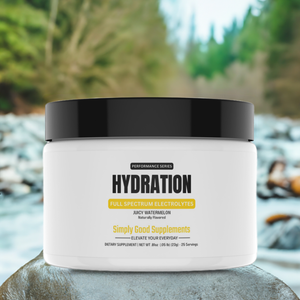
For long runs, rides, or races in the heat, pairing these strategies with a quality electrolyte drink like Simply Good Hydration can help replace the sodium and fluids lost through sweat while supporting hydration throughout your workout.
References
- Effects of Different Menthol Delivery Methods on Exercise Performance in Hot Environments: A Systematic Review and Network Meta-Analysis.
- Findings on menthol's effects on thermal perception, core temperature, and heart rate.
- Ranking of ingestion, mouth rinse, and topical menthol for endurance performance and power output.
- Assessment of evidence quality and interpretation of treatment rankings.
Methol FAQs
Does menthol actually cool your body during exercise?
No. According to this systematic review, menthol primarily changes how cool you feel by activating cold-sensitive receptors. It does not meaningfully lower core body temperature.
Is a menthol mouth rinse effective for runners?
A menthol mouth rinse showed promising results for improving average power output and may help reduce feelings of heat during exercise. However, the overall quality of the evidence is still considered low, so more research is needed.
What's the best way to use menthol in the heat?
Current evidence suggests menthol ingestion may offer the greatest potential benefit for endurance performance, while mouth rinsing may be useful for shorter, higher-intensity efforts. These findings are based on treatment rankings and should be interpreted cautiously until more high-quality research is available.
Can menthol replace hydration or cooling strategies?
No. Menthol should never replace proven heat-management strategies such as proper hydration, electrolyte replacement, ice, shade, or pre-cooling. It may improve thermal comfort, but it does not reduce the body's actual heat load.