Do Smelling Salts Actually Improve Strength and Athletic Performance?
If you've spent much time around powerlifters, strongman competitors, or athletes preparing for a big lift, you've probably seen someone use smelling salts.
They crack open a small capsule or bottle, take a quick sniff, and almost immediately react like they've been jolted awake.
Sometimes there's shouting. Sometimes there's pacing. And usually, there's a heavy barbell waiting nearby.
The idea is pretty straightforward. Smelling salts are supposed to give you an immediate burst of alertness and aggression that helps you perform better.
But I've always wondered how much of that actually translates into improved performance.
Feeling more fired up is one thing. Producing more force, lifting more weight, or generating more power is something else entirely.
A new 2026 systematic review and meta-analysis published in Brain Sciences examined exactly that question.
The researchers analyzed 10 studies involving 163 participants, looking at whether inhaling ammonia before exercise improved strength, power, sport-specific performance, heart rate, or perceived arousal.
And the results suggest that smelling salts might be considerably better at making you feel ready to perform than actually improving your performance.
TLDR
Smelling salts didn't significantly improve overall physical performance. Across 10 studies and 47 performance effect estimates, ammonia inhalation produced a small, statistically nonsignificant effect.
They did increase feelings of alertness and arousal. The pooled effect on subjective activation was relatively large, although that finding came from only two studies.
Maximal strength didn't meaningfully improve. The analysis found no statistically significant benefit for strength-related outcomes, including maximal force and one-repetition maximum testing.
Explosive performance might be a different story. Some individual studies reported improvements in rapid force production or repeated high-intensity exercise. A secondary sensitivity analysis also suggested a possible benefit, but the evidence remains preliminary.
Heart rate and perceived exertion weren't consistently affected. The physiological response was less predictable than the immediate sensation of being stimulated.
My takeaway: Smelling salts can make you feel more alert and psychologically activated, but there's currently little convincing evidence that they reliably help you lift heavier weights or perform better.
What Exactly Are Smelling Salts?
Smelling salts are ammonia-based inhalants that produce a strong, irritating vapor when opened or activated.
They've historically been used to stimulate people experiencing faintness, although their use in modern sports settings is primarily about increasing alertness before demanding physical efforts.
The mechanism is different from what most people think of when they hear the word stimulant.
When you inhale ammonia vapor, it irritates the nasal passages and upper respiratory tract.
That irritation activates sensory pathways, including the trigeminal system, producing an immediate reflexive response.
You may experience a sudden inhalation, increased alertness, facial discomfort, or a feeling of being jolted into action.
And that reaction can be pretty intense.
But smelling salts aren't supplying additional energy to your muscles or directly increasing your capacity to produce force.
Their proposed performance effects are primarily related to temporary changes in arousal and psychological readiness.
That distinction matters because being more alert doesn't automatically mean you're going to perform better.
How the Researchers Conducted the Study
The researchers performed a systematic review and three-level meta-analysis of controlled human studies.
They searched five scientific databases for studies involving ammonia inhalation before or during physical performance tasks.
To qualify, a study needed to include healthy adults, athletes, or physically active participants and compare ammonia inhalation with a placebo, sham inhalant, or no-inhalation condition.
The final analysis included:
- 10 controlled studies
- 163 participants
- 141 men and 22 women
- 47 physical performance effect estimates
Most participants were physically active or resistance-trained, although the studies also included professional golfers and military cadets.
The researchers examined several performance categories.
| Performance Category | Examples Evaluated |
|---|---|
| Maximal strength | One-repetition maximum, maximal isometric force, repetitions to failure |
| Power and explosiveness | Jump performance, Wingate cycling, rate of force development |
| Sport-specific skills | Golf putting, shooting accuracy, rifle assembly tasks |
| Psychological responses | Alertness, perceived activation, psyched-up energy |
| Physiological responses | Heart rate, perceived exertion and fatigue |
One important point: 47 effect estimates doesn't mean 47 separate studies.
Individual studies often reported several performance measurements, so the researchers used a statistical approach designed to account for multiple outcomes coming from the same participants.
The included studies were also small, with sample sizes ranging from 9 to 25 people.
That becomes important when interpreting the results.
Finding #1: Smelling Salts Didn't Significantly Improve Overall Performance
This was the main finding of the study.
When the researchers combined the available performance data, ammonia inhalation produced a standardized effect size of Hedges' g = 0.11 (95% confidence interval: -0.06 to 0.28; p = 0.17).
For context, a standardized effect size below 0.2 is generally considered trivial.
The confidence interval also crossed zero, meaning the analysis couldn't establish a statistically significant overall benefit.
The certainty of the evidence was rated very low.
So what does that actually mean?
It doesn't prove that smelling salts have absolutely no effect on anyone.
It means that when you look across the available controlled studies, there isn't convincing evidence that ammonia inhalation reliably improves physical performance.
And considering how commonly smelling salts are used before maximal lifts, I think that's a pretty important finding.
Finding #2: They Make You Feel More Alert, but That Doesn't Guarantee Better Performance
This is where the study gets interesting.
Although physical performance didn't significantly improve overall, subjective activation and arousal did.
The pooled effect size was 0.73 (95% confidence interval: 0.43 to 1.04; p = 0.02), which is generally considered a moderate-to-large effect.
Participants generally reported feeling more alert, activated, or psychologically prepared after inhaling ammonia.
That probably doesn't surprise anyone who's ever used smelling salts.
The sensation is immediate and difficult to ignore.
But the interesting part is the disconnect between psychological activation and actual performance.
You can feel significantly more prepared to lift a heavy weight without actually being capable of lifting more weight.
This is something I think athletes should understand.
A strong subjective sensation can be convincing. When something produces an immediate, noticeable effect, it's easy to assume it's improving performance.
But perception and performance aren't interchangeable.
There's also an important limitation here.
The arousal analysis was based on only two studies, even though those studies contributed nine effect estimates.
The evidence was rated low certainty.
So while increased alertness appears to be the most consistent effect of smelling salts, the exact magnitude of that response still needs confirmation.
Finding #3: Smelling Salts Don't Appear to Help You Lift Heavier Weights
This is probably the finding that will disappoint powerlifters the most.
Smelling salts are frequently used immediately before heavy squats, bench presses, and deadlifts.
The assumption is that the sudden increase in arousal will help recruit more muscle fibers, generate more force, and ultimately move more weight.
But the research doesn't provide much support for that assumption.
Across the strength-related outcomes, the researchers reported Hedges' g = 0.05 (95% CI: -0.13 to 0.23; p = 0.48).
That's essentially a trivial effect.
The individual studies help explain the result.
One study examining bench press one-repetition maximum performance found no significant improvement after ammonia inhalation.
Another study examining deadlift one-repetition maximum performance also found no meaningful benefit.
And a separate study investigating squat and bench press repetitions to failure reported no significant improvement.
In other words, smelling salts didn't consistently help participants lift heavier weights or complete more repetitions.
I think this is worth emphasizing because feeling more aggressive before a lift doesn't necessarily mean your muscles can produce more force.
Maximal strength depends on several factors, including muscle size, neural coordination, lifting technique, and the ability to produce force against a heavy external load.
A brief sensory stimulus isn't going to suddenly change most of those factors.
Could it help someone who struggles to mentally prepare for a maximal attempt? Possibly.
But that's a different claim from saying smelling salts reliably increase maximal strength.
And the available evidence doesn't establish that benefit.
Finding #4: Explosive Power Might Be Where Smelling Salts Have Some Potential
Although maximal strength outcomes were largely unimpressive, the findings for explosive performance were a little more interesting.
Some individual studies reported improvements in measures such as rate of force development and repeated high-intensity cycling performance.
Rate of force development refers to how quickly an athlete can generate force.
That's different from maximal strength.
Two athletes might be capable of producing the same maximum force, but one might reach that force considerably faster.
That distinction matters in activities such as sprinting, jumping, throwing, and rapid athletic movements.
The researchers initially found no statistically significant benefit for the power and explosive performance category.
The pooled effect was g = 0.16 (95% CI: -0.13 to 0.45).
However, when they removed certain influential observations in a sensitivity analysis, the estimate increased to g = 0.25 (95% CI: 0.02 to 0.49) and became statistically significant.
That sounds promising, but there's an important catch.
The positive finding emerged only after the researchers excluded selected observations.
And the statistical test comparing performance categories still didn't establish a significant difference between them.
So we can't confidently conclude that smelling salts improve explosive performance more than maximal strength.
What we can say is that there may be a small benefit under certain conditions, particularly when an athlete needs to generate force rapidly.
The researchers also discussed a study involving 12 physically active women who completed repeated 15-second Wingate cycling tests.
In that study, ammonia inhalation improved mean power output and increased feelings of alertness and psyched-up energy.
However, peak power did not significantly improve.
That difference is important.
Smelling salts might influence how an athlete sustains or initiates a brief, intense effort without necessarily increasing their absolute peak power.
It's an interesting possibility, but one that needs considerably more research before I'd consider it an established performance-enhancing strategy.
Finding #5: More Arousal Might Actually Be Counterproductive for Certain Sports
There's another side to this discussion that doesn't get much attention.
Higher arousal isn't always better.
Think about the difference between preparing for a maximal deadlift and preparing to sink a difficult golf putt.
The deadlift requires an intense physical effort.
The golf putt requires precision, coordination, and careful control of relatively small movements.
Those tasks have very different psychological demands.
One of the studies included in the review examined professional golfers performing a three-meter putting task.
Another investigated shooting accuracy and rifle assembly performance among military cadets.
Neither demonstrated a clear performance benefit from ammonia inhalation.
The researchers suggested that a strong irritant stimulus might be poorly suited to tasks requiring calm execution and fine motor control.
I think that's a reasonable interpretation, although the studies don't establish that smelling salts actively impair those skills.
It does highlight an important principle.
The psychological state that helps you perform one task may be completely inappropriate for another.
Getting extremely fired up before a heavy lift might feel useful.
Doing the same thing before a precision-based task could be distracting.
And even for strength and power sports, there may be a point where additional arousal stops being helpful.
The goal should be an appropriate level of readiness for the task, rather than simply maximizing stimulation.
Finding #6: Heart Rate and Perceived Exertion Didn't Consistently Change
Because smelling salts produce such an intense immediate reaction, you might expect them to cause a predictable increase in heart rate.
But the pooled findings weren't particularly convincing.
The researchers found a small-to-moderate estimated increase in heart rate, but it wasn't statistically significant.
Perceived exertion and fatigue also showed no clear overall improvement.
Here's how the primary results compared:
| Outcome | Effect Size (Hedges' g) | Statistically Significant? |
|---|---|---|
| Overall physical performance | 0.11 | No |
| Maximal strength | 0.05 | No |
| Power and explosive performance | 0.16 | No |
| Heart rate | 0.32 | No |
| Perceived exertion/fatigue | -0.17 | No |
| Subjective activation/arousal | 0.73 | Yes |
These results suggest that the most reproducible response was psychological rather than a measurable improvement in physical output.
But there's another distinction worth making.
A nonsignificant average heart rate response doesn't mean ammonia inhalation cannot acutely increase heart rate in an individual.
Some individual studies did report increases.
The pooled evidence was simply too inconsistent and imprecise to establish a reliable overall effect.
The same applies to fatigue.
Smelling salts may make someone feel temporarily more alert, but this analysis didn't show that they consistently reduce perceived effort or allow athletes to tolerate more work.
What About the Studies That Did Show Benefits?
One detail I appreciated about this meta-analysis was the researchers' willingness to investigate why the results differed between studies.
In the primary analysis, smelling salts didn't significantly improve overall performance.
But after excluding influential effect estimates, the pooled result changed to g = 0.21 (95% CI: 0.07 to 0.35).
That was statistically significant.
At first glance, someone could use that result to argue that smelling salts really do work.
I wouldn't go that far.
Sensitivity analyses are useful for determining how dependent a result is on particular observations.
They're not automatically more reliable than the original analysis.
In this case, the finding suggests that the overall effect may depend partly on the types of performance tasks included.
For example, a stimulus that increases arousal might be more relevant to explosive cycling than precision golf putting.
But the positive result also demonstrates that the evidence is sensitive to analytical decisions.
When a performance benefit appears only after excluding certain observations, I want to see that benefit replicated in additional well-controlled studies before recommending the intervention.
The original overall result remains the primary finding.
Are Smelling Salts Safe?
This is an important question, especially considering how casually smelling salts are used in some training environments.
Ammonia is an irritant.
The sharp sensation produced by smelling salts comes from irritation of the nose and upper respiratory tract.
That's the mechanism responsible for the immediate response athletes are seeking.
But it also means the product isn't completely harmless.
Potential concerns include irritation of the eyes, nose, and airways, particularly with excessive or inappropriate exposure.
People with asthma or other respiratory conditions may be especially sensitive to inhaled irritants.
It's also worth remembering that this meta-analysis was designed to evaluate acute performance and selected psychological and physiological outcomes.
It wasn't a comprehensive safety review, and it doesn't establish the long-term safety of repeated ammonia inhalation.
The studies were relatively small, and their exposure protocols varied.
That makes it difficult to draw firm conclusions about the risks associated with frequent use over months or years.
I would also avoid using smelling salts to push through dizziness, suspected concussion, or other concerning symptoms.
Masking how someone feels is not the same as addressing the underlying problem.
Personally, given the lack of convincing performance benefits, I don't see much reason to make ammonia inhalation a regular part of a training routine.
Why I Wouldn't Put Smelling Salts in the Same Category as Proven Performance Supplements
One thing I think is worth discussing is the difference between a product that produces a noticeable sensation and one that consistently improves performance.
Those aren't necessarily the same thing.
Smelling salts produce an immediate sensory response.
It's intense, unmistakable, and easy to associate with increased readiness.
But the studies in this review didn't demonstrate a consistent improvement in actual physical performance.
Compare that with something like caffeine.
Caffeine has been investigated across a much larger body of controlled exercise research, with evidence supporting improvements in several performance outcomes under appropriate conditions.
Its effects aren't identical for everyone, and habitual intake, dose, timing, and individual sensitivity all matter.
But there's a meaningful difference in the strength of the evidence.
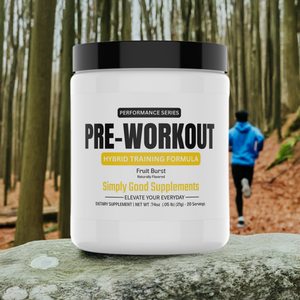
That's part of the thinking behind our Hybrid Pre-Workout formula.
It contains 150 mg of caffeine alongside ingredients such as L-theanine, Alpha-GPC, and elevATP.
I prefer building performance formulas around ingredients with plausible mechanisms and human research rather than simply chasing the most intense sensation possible.
To be clear, this smelling salts meta-analysis didn't compare ammonia inhalation with caffeine or our pre-workout.
So it doesn't establish that one is superior to the other.
But when I'm deciding what deserves a place in a performance routine, I care much more about measurable outcomes than how dramatic something feels.
The Biggest Limitations of This Study
Although I think this is a useful review, the underlying evidence has some significant weaknesses.
First, there were only 163 participants across all 10 studies. That's a small sample for making broad recommendations about athletic performance.
Second, the participants were predominantly male. Only 22 women were included, making it difficult to determine whether men and women respond differently.
Third, the ammonia inhalation protocols varied considerably. Some studies used capsules, others used crystals, and the timing between inhalation and performance wasn't standardized.
That matters because the response to ammonia appears to be extremely short-lived.
One study observed a heart rate increase approximately 15 seconds after inhalation, with less pronounced responses at other measurement points.
If an athlete inhales ammonia and then spends another minute preparing for a lift, the strongest effects may have already passed.
Fourth, blinding participants was particularly difficult.
It's hard to convince someone they've inhaled ammonia when they haven't. The smell and irritation are pretty unmistakable.
That creates an opportunity for expectations to influence subjective outcomes.
And finally, none of the 10 studies was judged to have an overall low risk of bias. Nine had some concerns, and one was rated high risk.
The researchers rated the certainty of the overall performance evidence very low.
That doesn't make the findings worthless, but it does mean we should be careful about treating the results as definitive.
So, Should You Use Smelling Salts Before a Workout?
If you're asking whether I'd recommend smelling salts to someone looking to improve strength or athletic performance, my answer would generally be no.
There just isn't enough convincing evidence that they provide a reliable benefit.
If you're a competitive strength athlete who already uses them, feels they help with psychological preparation, and tolerates them without problems, I can understand why you might want to continue.
But I'd recognize that the perceived benefit may be greater than the measurable performance benefit.
And I certainly wouldn't recommend using them before every set or workout.
There are other ways to prepare for a demanding physical effort.
A consistent warm-up, appropriate rest periods, familiar pre-performance routines, and adequate recovery all deserve attention.
For athletes who want to improve performance, I'd focus first on the things we know matter.
Training quality, sleep, nutrition, and consistent progression are going to have a much larger influence on long-term performance than a brief blast of ammonia.
The Bottom Line
This 2026 systematic review and meta-analysis provides one of the more comprehensive quantitative examinations of smelling salts and athletic performance to date.
Across 10 studies involving 163 participants, ammonia inhalation didn't significantly improve overall physical performance.
It also failed to produce consistent improvements in maximal strength, heart rate, or perceived exertion.
The clearest effect was an increase in subjective alertness and arousal.
There may be a small benefit for certain explosive or repeated high-intensity tasks, but those findings remain preliminary.
My takeaway is pretty simple: smelling salts are much better at making you feel fired up than they are at making you demonstrably stronger or more powerful.
If you enjoy the ritual, that's one thing.
But if you're expecting an immediate performance boost simply because the sensation is intense, the science doesn't currently support that expectation.
And personally, I'd rather spend my time and money on things that have a stronger track record of actually improving performance.
About the Author
Matt Mosman, MS, CISSN, CSCS, is the founder and Chief Science Officer of Simply Good Supplements. With a background in exercise science, sports nutrition, and strength and conditioning, Matt focuses on turning research into practical advice that athletes, parents, and everyday active people can actually use.
References
Liu S, Fan X, Tan Z, Gu J, Huang Q, Li H, Macgregor LJ, Deng H. Smelling Salts or Smoke and Mirrors? Acute Ammonia Inhalation, Arousal, and Physical Performance: A Systematic Review and Meta-Analysis. Brain Sciences. 2026;16(8):849. https://doi.org/10.3390/brainsci16080849