Does Boswellia Help Knee Pain? New 2026 Study Explained
Knee pain has a way of making even simple activities frustrating. Walking downstairs, getting out of a chair, or going for a longer walk can become uncomfortable when your knees start bothering you. For people dealing with osteoarthritis, that discomfort can gradually become part of everyday life.
There are plenty of supplements marketed for joint pain, but I've always been skeptical of products that promise to rebuild cartilage or eliminate inflammation. Most of those claims go well beyond what the research actually supports.
One ingredient I've found particularly interesting is Boswellia serrata, also known as Indian frankincense. It's been used in traditional medicine for centuries, but there's also a growing body of human research examining its effects on joint pain, stiffness, and inflammation.
A new 2026 randomized controlled trial published in Medicine investigated a highly concentrated Boswellia extract in adults with knee osteoarthritis. The researchers found significant improvements in pain, stiffness, physical function, and a blood marker of inflammation, with some benefits appearing within the first week.
The results are encouraging, but there are some important details about the extract, dosage, and study design that deserve a closer look.
TLDR
A 2026 randomized, double-blind, placebo-controlled trial examined whether a specialized Boswellia extract could improve symptoms in adults with mild to moderate knee osteoarthritis. Sixty participants were assigned to receive either 100 mg of Boswellia extract or a placebo daily for 60 days.
The main findings:
- Pain improved substantially. Participants taking Boswellia experienced a 62.6% reduction in their WOMAC pain score, compared with 12.8% in the placebo group.
- Joint stiffness decreased. Stiffness scores improved by 68.5% in the Boswellia group, compared with 19.2% with placebo.
- Some improvements appeared within seven days. Researchers observed statistically significant differences in pain and stiffness at the first follow-up.
- Inflammation markers decreased. High-sensitivity C-reactive protein (hs-CRP) fell by 78.9% in the Boswellia group, compared with 10.4% in the placebo group.
- The extract was well tolerated during the trial. One participant in the Boswellia group reported diarrhea, and no serious safety concerns were identified.
The biggest takeaway: Boswellia looks promising for managing knee osteoarthritis symptoms, but this study used a specific, highly concentrated extract. We shouldn't assume every Boswellia supplement will produce the same results.
What Is Boswellia Serrata?
Boswellia serrata is a tree native to parts of India, and its resin has been used in traditional Ayurvedic medicine for hundreds of years. You may also recognize it by its common name, Indian frankincense.
The resin contains several compounds called boswellic acids, which are believed to contribute to its biological activity. These compounds have been investigated for their effects on inflammatory signaling and joint discomfort.
One of the most studied boswellic acids is 3-acetyl-11-keto-beta-boswellic acid (AKBA). Researchers are particularly interested in AKBA because laboratory studies suggest it can influence enzymes and signaling pathways involved in inflammation.
However, there's an important problem with conventional Boswellia extracts. Many of these compounds have relatively poor water solubility and limited oral absorption, which means the amount you swallow isn't necessarily the amount that reaches your bloodstream.
That's why different Boswellia extracts can behave differently, even when the supplement labels appear similar.
How Might Boswellia Help With Joint Pain?
Osteoarthritis involves changes to cartilage, bone, and other tissues within a joint. Although it's often described as simple wear and tear, inflammatory signaling can also contribute to pain and the progression of symptoms.
Boswellic acids have been studied for their ability to influence several inflammatory pathways, including an enzyme called 5-lipoxygenase (5-LOX). This enzyme is involved in producing leukotrienes, which participate in inflammatory responses.
Laboratory research also suggests certain boswellic acids can affect other inflammatory mediators. These mechanisms provide a reasonable explanation for why Boswellia might help with joint discomfort, but laboratory findings don't automatically tell us how well a supplement will work in people.
That's where controlled human studies become useful.
The important question isn't whether Boswellia can influence an inflammatory enzyme in a laboratory. It's whether people taking it actually experience less pain and better joint function.
This new study attempted to answer that question.
How Was the Study Conducted?
Researchers enrolled 60 adults with mild to moderate knee osteoarthritis. Participants were between 40 and 75 years old and had experienced knee symptoms for at least three months.
The trial was randomized, double-blind, and placebo-controlled. That means participants were assigned to treatment groups randomly, and neither the participants nor the researchers evaluating them knew which treatment each person received.
The participants were divided into two groups:
|
Group |
Participants |
Daily supplement |
|---|---|---|
|
Boswellia |
30 |
100 mg OLNP-27 |
|
Placebo |
30 |
100 mg placebo |
The intervention lasted 60 days, with assessments at baseline and on days 7, 15, 30, and 60.
The researchers measured knee pain, stiffness, physical function, overall osteoarthritis symptoms, and high-sensitivity C-reactive protein, a blood marker associated with inflammation.
The primary outcome was the WOMAC score, a questionnaire commonly used in osteoarthritis research to assess pain, stiffness, and difficulty performing everyday activities.
Fifty-six participants completed the trial. All 30 participants in the Boswellia group finished, while four participants in the placebo group were lost to follow-up.
The Boswellia Extract Wasn't a Standard Formula
One detail that makes this study particularly interesting is the type of Boswellia used.
The researchers tested a specialized extract called OLNP-27, which was standardized to contain more than 40% AKBA. It was also formulated to disperse more effectively in water, with the goal of improving absorption.
That's a much more concentrated preparation than many conventional Boswellia extracts.
Participants received 100 mg of OLNP-27 daily, providing more than 40 mg of AKBA based on the extract's stated standardization.
The researchers proposed that improved dispersibility and a higher AKBA concentration could explain why benefits appeared relatively quickly. However, the study didn't directly compare OLNP-27 with a conventional Boswellia extract or measure blood AKBA concentrations in participants.
We can say that 100 mg of this specific extract produced positive results. We can't conclude that 100 mg of ordinary Boswellia powder would do the same thing.
That distinction matters when evaluating supplement labels.
Boswellia Significantly Reduced Knee Pain
Pain was one of the clearest outcomes in the study.
Researchers used two different measures to evaluate pain: the WOMAC pain score and a visual analogue scale (VAS), where participants rated their pain on a scale from 0 to 100.
After 60 days, participants taking Boswellia reported substantially greater improvements than those receiving placebo.
|
Pain measurement |
Boswellia |
Placebo |
|---|---|---|
|
WOMAC pain score reduction |
62.6% |
12.8% |
|
VAS pain score reduction |
61.2% |
12.6% |
The VAS results are particularly useful because they provide a more familiar measure of pain.
Participants taking Boswellia started with an average pain score of approximately 68 out of 100. By day 60, that average had fallen to approximately 26 out of 100.
In comparison, the placebo group's average pain score decreased from approximately 68 to 60.
That's a substantial difference, and the between-group results were statistically significant.
However, it's important to understand that these percentages represent changes in questionnaire scores, not the percentage of people who became pain-free. The study also doesn't tell us whether the improvements would persist after supplementation stopped.
Still, these are encouraging findings for an ingredient intended to help manage joint discomfort.
Improvements Appeared Within Seven Days
One of the more interesting findings was how quickly some participants began experiencing improvements.
At the first follow-up, just seven days after starting supplementation, the Boswellia group already demonstrated statistically significant reductions in pain and stiffness compared with placebo.
For example, the average VAS pain score decreased from approximately 68 to 60 during the first week in the Boswellia group. The placebo group's score decreased by less than two points over the same period.
The differences continued to grow over the following weeks.
By day 30, the average VAS pain score in the Boswellia group had fallen to approximately 32, and by day 60 it was approximately 26.
This suggests that the studied extract may begin improving knee osteoarthritis symptoms relatively quickly, although the largest improvements occurred after several weeks of consistent supplementation.
I wouldn't interpret these results as proof that Boswellia works within seven days for everyone. Individual responses weren't identical, and the trial was relatively small.
But the early separation between the treatment and placebo groups is worth paying attention to.
Boswellia Also Improved Joint Stiffness and Physical Function
Pain relief is important, but osteoarthritis affects more than how much your knee hurts. Stiffness and difficulty moving can make everyday activities frustrating, particularly after sitting for long periods or first getting out of bed.
The researchers found that Boswellia also significantly improved stiffness and physical function scores. After 60 days, the Boswellia group experienced a 68.5% reduction in WOMAC stiffness scores, compared with 19.2% in the placebo group.
Physical function scores improved by approximately 58.9% with Boswellia, compared with 19.1% with placebo. On this questionnaire, a lower score indicates fewer difficulties performing daily activities, so the reduction represents an improvement.
The overall WOMAC score, which combines pain, stiffness, and physical function, improved by 63.4% in the Boswellia group versus 17.3% in the placebo group.
These results suggest the benefits weren't limited to participants simply reporting less pain. They also reported meaningful improvements in how their knees felt and functioned during everyday activities.
However, the study relied primarily on participant-reported questionnaires. It didn't establish whether the extract improved cartilage structure, prevented joint deterioration, or restored damaged tissue.
The Study Also Found a Significant Reduction in Inflammation
One of the more interesting findings involved high-sensitivity C-reactive protein, commonly called hs-CRP.
CRP is a protein produced primarily by the liver in response to inflammatory signaling. Elevated blood concentrations can be associated with inflammation, although CRP isn't specific to the knee or any particular joint.
The researchers measured hs-CRP before and after supplementation to investigate whether improvements in osteoarthritis symptoms were accompanied by changes in this inflammatory marker.
The results were substantial.
|
Measurement |
Boswellia |
Placebo |
|---|---|---|
|
Baseline hs-CRP |
3.98 mg/L |
4.25 mg/L |
|
Day 60 hs-CRP |
0.84 mg/L |
3.81 mg/L |
|
Percentage reduction |
78.9% |
10.4% |
The reduction in the Boswellia group was statistically significant compared with placebo.
This is especially interesting because the study found improvements in both reported joint symptoms and a measurable blood marker associated with inflammation.
However, we shouldn't assume the reduction in CRP directly caused the improvements in knee pain. The study wasn't designed to establish that mechanism, and CRP can change for several reasons.
It also doesn't prove that Boswellia reduces every type of inflammation throughout the body. The researchers measured one circulating inflammatory marker, not the complete inflammatory response.
Still, the findings provide additional evidence that the extract may have biological effects beyond simply changing how participants perceived their pain.
Participants Taking Boswellia Used Less Pain Medication
Another interesting outcome was the use of rescue medication during the study.
Participants were permitted to use paracetamol, also known as acetaminophen, when needed under the supervision of the study physician.
Only 3 participants in the Boswellia group used rescue medication, compared with 9 participants in the placebo group.
The total amount of rescue medication used was also substantially lower in the Boswellia group.
Participants receiving Boswellia used a combined 11 tablets of 500 mg paracetamol, while participants receiving placebo used 75 tablets.
That's a noticeable difference, although the study didn't establish whether this particular outcome was statistically significant.
I think it's a useful supporting observation because it suggests the improvements reported on the pain questionnaires may have translated into less need for additional symptom relief.
However, Boswellia shouldn't be considered a proven replacement for prescribed medication based on this single study. The trial wasn't designed to directly compare Boswellia with commonly used osteoarthritis medications.
Is Boswellia Safe?
Boswellia was generally well tolerated during the 60-day intervention.
Only one participant in the Boswellia group reported an adverse event, which was diarrhea. Four participants in the placebo group reported adverse events, including gastrointestinal symptoms and common respiratory illnesses.
The researchers found no statistically significant difference in adverse event rates between groups, and no serious treatment-related safety concerns were identified.
That's encouraging, particularly because the study involved adults with an existing joint condition.
However, 60 days of safety data from 30 treated participants isn't enough to establish long-term safety.
Boswellia may cause gastrointestinal discomfort in some people, and anyone taking regular medications should consider potential interactions before adding a concentrated herbal extract.
The study also excluded several groups, including people with certain significant medical conditions and pregnant or breastfeeding women. Its safety findings therefore shouldn't automatically be generalized to everyone.
Does the Type of Boswellia Extract Matter?
Absolutely, and this is probably one of the most important practical points from the research.
Boswellia supplements can differ considerably in their concentration of active compounds, extraction methods, and formulations.
Some products list only the amount of Boswellia powder or extract. Others provide standardization information for total boswellic acids, while certain specialized extracts identify their AKBA concentration.
These details matter because 100 mg of one Boswellia extract isn't necessarily equivalent to 100 mg of another.
The extract used in this trial contained more than 40% AKBA and was specifically formulated for improved water dispersibility.
That means the results can't automatically be applied to conventional Boswellia products containing much lower concentrations of AKBA.
It's also worth remembering that higher AKBA content doesn't necessarily guarantee better results. The clinical outcome depends on the complete formulation, its absorption, and the actual dose studied.
When evaluating a Boswellia supplement, I would pay attention to the specific extract, its standardization, and whether human research supports the dose being used.
I wouldn't simply choose whichever product advertises the highest percentage of boswellic acids.
Where Does Simply Good Supplements Essentials Fit In?
Joint health is one of those areas where I think supplement formulations deserve a little more scrutiny.
There are plenty of products that combine a dozen ingredients, sprinkle in small amounts of each, and then market the formula as comprehensive joint support.
The problem is that having an ingredient on the label doesn't mean you're getting enough of it to produce a meaningful benefit.
That's something I try to keep in mind when evaluating the ingredients and dosages used in our own products.
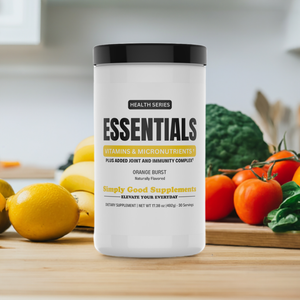
Our Simply Good Supplements Essentials is worth a look if you're interested in our broader daily health supplement lineup.
However, I want to make an important distinction. This study tested OLNP-27 at 100 mg daily, not Essentials. Without establishing that Essentials contains the same clinically studied extract at the same dose, it would be misleading to claim that this trial demonstrates the effectiveness of our product.
I think that's an important distinction for any supplement company to make. Research on an ingredient can help explain why it's interesting, but it doesn't automatically validate every finished product containing that ingredient.
What About Glucosamine, Chondroitin, and Collagen?
Boswellia isn't the only supplement investigated for joint health. Glucosamine, chondroitin, and collagen are also commonly used, although they have different proposed mechanisms and different levels of clinical evidence.
Glucosamine and chondroitin have been studied extensively in people with osteoarthritis. Some trials have reported improvements in symptoms, while others have found little or no meaningful benefit, and results can vary depending on the specific preparation.
Collagen supplements have also been investigated for joint discomfort and function. Some studies report modest benefits, but collagen isn't interchangeable with Boswellia, and improvements in symptoms don't necessarily demonstrate cartilage regeneration.
Boswellia is particularly interesting because of its potential effects on inflammatory signaling. This new trial adds evidence that certain standardized extracts may improve pain, stiffness, and function in people with knee osteoarthritis.
I wouldn't consider any of these supplements a guaranteed solution, and I certainly wouldn't assume that combining several ingredients automatically makes a product more effective.
The formulation, dose, quality of evidence, and individual response all matter.
What This Study Doesn't Tell Us
Although the results were encouraging, there are several limitations worth understanding.
First, the study was relatively small. Sixty participants were randomized, and only 56 completed the intervention. Larger trials are needed to determine how consistently these results can be reproduced.
Second, the intervention lasted only 60 days. We don't know whether the benefits would continue with longer supplementation or what would happen after participants stopped taking the extract.
Third, the study evaluated one specialized Boswellia preparation. It didn't compare different extracts or establish whether conventional Boswellia supplements would produce similar improvements.
Fourth, the outcomes focused on symptoms and a circulating inflammatory marker. The study didn't demonstrate cartilage repair, prevention of osteoarthritis progression, or structural improvements inside the knee joint.
Finally, the research was funded and supported by Olene Life Sciences, the company associated with the studied extract. One author was identified as the company's chief scientific officer.
Industry funding doesn't automatically invalidate research, and the randomized, double-blind, placebo-controlled design is a strength. However, it does make independent replication especially valuable.
I also noticed that some of the WOMAC reporting is less straightforward than I would like, including how the subscale scores are presented. That doesn't erase the reported differences between groups, but it's another reason to avoid treating the percentage improvements as definitive estimates of what everyone should expect.
What I Think This Study Actually Tells Us
I think Boswellia is one of the more interesting herbal ingredients being investigated for joint discomfort, particularly when we're talking about standardized extracts with human clinical evidence.
This study reported meaningful improvements across several outcomes, including pain, stiffness, physical function, and hs-CRP. The fact that some improvements appeared within seven days makes the results even more interesting.
However, the biggest takeaway isn't that everyone with knee pain should immediately start taking Boswellia.
It's that the specific extract and dose matter, and there's a meaningful difference between promising clinical evidence and proof that every Boswellia supplement works.
I also think it's worth keeping expectations realistic. Reducing osteoarthritis symptoms can be valuable, especially when those symptoms interfere with everyday activities, but symptom relief isn't the same thing as reversing joint damage.
Exercise, appropriate strength training, weight management when relevant, and other established approaches remain important parts of managing knee osteoarthritis.
Supplements may have a supporting role, but they shouldn't replace the basics.
The Bottom Line
A 2026 randomized controlled trial found that 100 mg daily of a specialized Boswellia extract significantly improved knee pain, stiffness, physical function, and hs-CRP concentrations in adults with mild to moderate knee osteoarthritis.
Some improvements appeared within seven days, with larger changes developing over the full 60-day intervention.
The results are promising, particularly because the researchers observed improvements across multiple measures rather than relying on a single pain questionnaire.
However, this was a small, industry-funded study using a specific extract containing more than 40% AKBA. Larger, independent trials are needed to confirm the findings and establish whether similar benefits occur with other Boswellia formulations.
My takeaway is that Boswellia deserves serious consideration as a potentially useful joint-support ingredient, but the research doesn't justify treating all Boswellia supplements as equivalent or promising that they can repair damaged joints.
About the Author
Matt Mosman, MS, CISSN, CSCS, is the founder and Chief Science Officer of Simply Good Supplements. With a background in exercise science, sports nutrition, and strength and conditioning, Matt focuses on turning research into practical advice that athletes, parents, and everyday active people can actually use.
References
Nirvanashetty S, Panda SK. High potency and water dispersible Boswellia extract reduces pain and inflammation in subjects with osteoarthritis of the knee: A randomized, double-blind, placebo-controlled trial. Medicine. 2026;105(38):e50686. https://doi.org/10.1097/MD.0000000000050686