How I Fueled and Hydrated for the Maah Daah Hey Trail Marathon
Running a marathon is hard. Running a trail marathon through the North Dakota Badlands, under a blazing sun, with temperatures climbing toward 110°F is something else entirely.
The Maah Daah Hey Trail Marathon is not a race where you can simply lock into marathon pace and cruise. The terrain constantly demands your attention. The course is an unrelenting series of ups and downs over uneven footing, with water crossings, cattle-pocked sections of trail, wildlife encounters, and virtually zero shade.
There is nowhere to hide from the sun.
I knew going into the race that fitness alone wasn't going to be enough. I needed to start well fueled, stay ahead of my carbohydrate and hydration needs, manage my body temperature, and, perhaps most importantly, respect the course.
My plan worked about as well as I could have hoped. I finished in 3:24, placed second overall, and won my age division. More importantly from a nutrition standpoint, I never bonked, never felt overheated, and stayed hydrated without ever developing that heavy, sloshy feeling that can ruin a race.
Here is exactly what I did.
TLDR
I carbohydrate loaded at 12 grams per kilogram of body weight per day for three days before the race. At 160 pounds, that worked out to roughly 870 grams of carbohydrate per day.
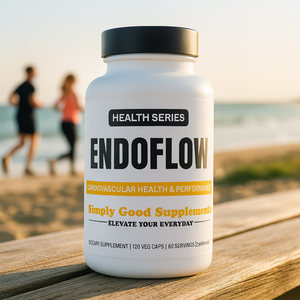
Three hours before the start, I ate a banana, Honey Stinger waffle, and Bobo's PB&J while drinking 16 ounces of water with 500 mg of electrolytes. I also took three capsules of EndoFlow.
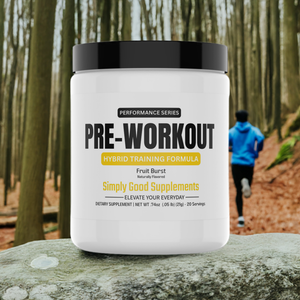
I took 20 grams of sodium bicarbonate 90 minutes before the race, one scoop of Hybrid Pre-Workout containing 215 mg caffeine 30 minutes before, and a gel approximately 15 minutes before the start.
During the race, I primarily fueled with GlycoFuel. I adjusted my carbohydrate intake based on the difficulty of the terrain, generally consuming 60 to 90 grams of carbohydrate per hour. I drank approximately 17 ounces of fluid and consumed roughly 500 mg of electrolytes per hour.
Cooling was equally important. I used ice bandanas at every aid station, drank cold fluids, doused myself with cold water, and wore a sun-protective shirt and hat.
Immediately after finishing, I drank three scoops of Recharge mixed into 24 ounces of water, followed by two 16-ounce Cokes. About four hours later, I celebrated properly with pizza.
My Fueling Started Three Days Before the Race
I didn't wait until race morning to start thinking about carbohydrates.
For the three days leading into the Maah Daah Hey, I targeted 12 grams of carbohydrate per kilogram of body weight per day.
At approximately 160 pounds, or 72.6 kilograms, that meant consuming roughly:
870 grams of carbohydrate per day.
Yes, that is a lot of carbohydrate.
But I wanted to arrive at the starting line with my muscle glycogen stores as full as possible. With the amount of climbing, heat, and sustained effort waiting for me, starting the race underfueled was something I wanted to avoid.
The important distinction here is that I didn't simply eat a big pasta dinner the night before the race and call it carb loading. I deliberately increased my carbohydrate intake for three consecutive days.
My Pre-Race Hydration Strategy
Hydration was another priority before I ever stepped onto the trail.
The evening before the race, I drank 16 ounces of water with approximately 500 mg of electrolytes.
I repeated that three hours before the start.
My goal wasn't to drink as much water as possible. I wanted to begin adequately hydrated without showing up at the starting line with a stomach full of fluid.
That distinction became even more important once the race started.
What I Ate on Race Morning
Three hours before the start, I ate:
- One banana
- One Honey Stinger waffle
- One Bobo's PB&J
I deliberately gave myself three hours to digest that meal before racing.
Then, about 15 minutes before the start, I consumed one energy gel to provide one final source of readily available carbohydrate before we headed onto the trail.
But food was only one part of my pre-race strategy.
The Supplements I Used Before the Race
I also had a very deliberate supplement protocol.
3 Hours Before: EndoFlow
Three hours before the race, I took three capsules of EndoFlow.
EndoFlow is the nitric oxide and blood flow supplement I use from Simply Good Supplements. I wanted it onboard well before the race started rather than waiting until I was already running.
90 Minutes Before: Sodium Bicarbonate
Approximately 90 minutes before the start, I consumed 20 grams of sodium bicarbonate.
Sodium bicarbonate acts as an extracellular buffer and is most commonly associated with high intensity exercise. For a race like this, I incorporated it into my pre-race routine rather than trying to take it during the event.
Sodium bicarbonate can also cause significant gastrointestinal problems in some athletes, so this isn't something I would recommend experimenting with for the first time on race morning.
30 Minutes Before: Hybrid Pre-Workout
Thirty minutes before the gun, I took one scoop of Hybrid Pre-Workout, providing 215 mg of caffeine.
That gave me my primary caffeine dose close enough to the start that I could take advantage of it during the race.
Then it was time to run.
Fueling the Maah Daah Hey Was Different From Fueling a Road Marathon
One thing that became obvious on the Maah Daah Hey is that effort isn't consistent.
On a flat road marathon, you might be able to settle into a rhythm and maintain a relatively predictable energy expenditure.
That wasn't happening here.
The course was constantly going up or down. The footing could be uneven. There were water crossings. There were sections torn up and pocked by cattle. You could encounter animals along the way.
And above all of it was the heat.
The sun was relentless. There was essentially zero shade, and temperatures eventually reached approximately 110°F.
Because the demands of the course changed throughout the race, I adjusted my fueling accordingly.
I Ate More Carbohydrates During the Harder Sections
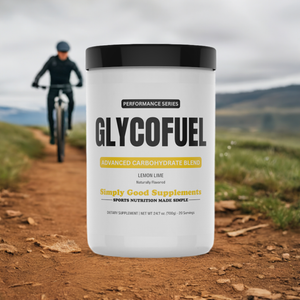
My primary fuel during the race was GlycoFuel.
Instead of consuming exactly the same amount every hour regardless of what was happening, I adjusted my intake based on the section of trail ahead of me.
During the easier sections, I typically used two scoops per hour, providing approximately:
60 grams of carbohydrate per hour.
During the harder portions of the course, I increased that to three scoops per hour, or approximately:
90 grams of carbohydrate per hour.
I mixed my GlycoFuel with water and targeted approximately 17 ounces of fluid per hour.
That put my carbohydrate intake generally between 60 and 90 grams per hour depending on the demands of the course.
For me, that worked extremely well.
I Trained My Gut Before Race Day
There is an important caveat to consuming that much carbohydrate.
Don't suddenly try 90 grams per hour on race day.
Your legs aren't the only thing you should train for an endurance race. You need to train your gut too.
During training, I practiced consuming the carbohydrates and fluids I intended to use during the race. That gave me confidence that my stomach could tolerate the intake while I was running hard.
That preparation paid off.
Despite consuming substantial amounts of carbohydrate and fluid throughout the race, I never felt bloated or sloshy.
My stomach felt good, my energy stayed consistent, and I never bonked.
My Hydration Target Was About 17 Ounces Per Hour
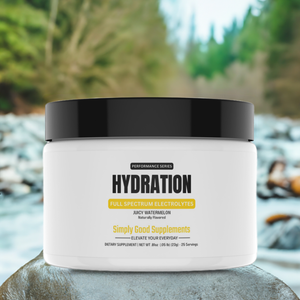
Alongside the GlycoFuel, I sipped on Hydration to supplement the electrolytes already coming from GlycoFuel.
My overall target was approximately:
17 ounces of fluid per hour
and
500 mg of electrolytes per hour.
One of my biggest concerns going into a race this hot was finding the balance between drinking enough and drinking too much.
I didn't want dehydration to become the limiting factor, but I also didn't want to spend the race with a stomach full of fluid bouncing around every time I descended a hill.
For me, this strategy hit the sweet spot.
I felt hydrated throughout the race without ever feeling bogged down or sloshy.
In 110°F Heat, Drinking Isn't Enough
I think this is one of the biggest lessons from the race.
When temperatures are approaching 110°F and you are running through exposed Badlands terrain with virtually no shade, hydration is only one part of managing heat stress.
I aggressively used external cooling as well.
At every aid station, I grabbed an ice bandana.
I drank cold fluids whenever possible.
I repeatedly doused my body with cold water.
I also wore a sun-protective shirt and hat to reduce my direct sun exposure.
Those strategies became increasingly important as the day heated up.
Instead of relying entirely on sweating and drinking to manage the heat, I was doing everything I reasonably could to reduce the amount of heat my body had to deal with in the first place.
I Never Bonked and Never Felt Overheated
The best fueling strategy is ultimately the one that lets you execute your race.
Mine worked almost perfectly.
I never bonked.
I never felt overheated.
I never felt dehydrated.
And despite consuming carbohydrates and fluids consistently throughout the race, I never experienced the dreaded sloshy stomach that can happen when your fluid intake exceeds what your gut can comfortably handle.
That allowed me to focus on actually racing.
And on a course like the Maah Daah Hey, there is plenty else demanding your attention.
Crossing the Finish Line in 3:24
Everything came together.
Despite the relentless climbing and descending, uneven terrain, water crossings, cattle-pocked trail, animal encounters, extreme heat, and complete exposure to the sun, I crossed the finish line in 3 hours and 24 minutes.
That was good enough for:
Second place overall.
And:
First place in my age division.
I'm obviously extremely happy with the result, but I'm equally happy with how my nutrition strategy performed.
I never reached the point where I felt like I was simply surviving because I had run out of energy. I was able to keep racing.
My Immediate Post-Race Recovery
Once I crossed the finish line, the goal shifted from performance to recovery.
My first priority was getting carbohydrate, protein, and fluid back into my body.
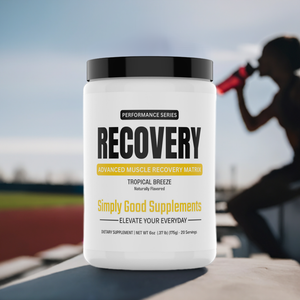
I mixed three scoops of Recharge into 24 ounces of water and drank it shortly after finishing.
Recharge provided an easy way for me to begin replenishing carbohydrates while also getting protein in without immediately having to sit down and eat a large meal.
And then came perhaps the most enjoyable part of my carefully engineered sports nutrition strategy:
Two 16-ounce Cokes.
After racing through that kind of heat, they tasted incredible.
Sometimes sports nutrition can be incredibly technical.
Sometimes you just really want a Coke.
Four Hours Later: Pizza
My appetite for a substantial meal eventually returned.
About four hours after finishing, I ate pizza.
At that point I wasn't worried about creating some elaborate "perfect" recovery meal. I had already started the recovery process with Recharge immediately after finishing.
Now I wanted calories, carbohydrates, protein, sodium, and, quite frankly, food that sounded good.
Pizza checked plenty of those boxes.
What I Would Tell Someone Racing the Maah Daah Hey
Nutrition matters enormously for this race, but my biggest advice goes beyond what you put in your bottles.
1. Do Heat Training
If race day could be brutally hot, prepare your body for it.
Don't expect fitness alone to carry you through hours of direct sun and extreme temperatures.
2. Don't Neglect Hills
This isn't a road marathon with a few hills thrown in.
The ups and downs are relentless.
Train accordingly.
3. Train Your Gut
If you're planning to consume 60 to 90 grams of carbohydrate per hour, practice it.
The same goes for hydration.
Use your long runs to figure out what your stomach can tolerate and give your gastrointestinal system time to adapt to your race-day strategy.
4. Pace Yourself
Respect this course.
It is very easy to burn matches early in a marathon. On the Maah Daah Hey, the terrain and heat make that mistake even more costly.
Run your own race and save something for later.
My Maah Daah Hey Fueling Strategy at a Glance
Three days before
12 g/kg carbohydrate per day, or approximately 870 grams per day at my 160-pound body weight.
Evening before
16 oz water + approximately 500 mg electrolytes.
3 hours before
Banana, Honey Stinger waffle, Bobo's PB&J, 16 oz water + 500 mg electrolytes, and 3 capsules EndoFlow.
90 minutes before
20 g sodium bicarbonate.
30 minutes before
1 scoop Hybrid Pre-Workout, providing 215 mg caffeine.
15 minutes before
1 energy gel.
During the race
Approximately 60 to 90 g carbohydrate per hour from GlycoFuel, roughly 17 oz fluid per hour, and approximately 500 mg electrolytes per hour, with additional electrolytes coming from Hydration.
Cooling
Ice bandana at every aid station, cold drinks, cold water over my body, sun-protective shirt, and hat.
Immediately after
3 scoops Recharge in 24 oz water, followed by two 16 oz Cokes.
About four hours later
Pizza.
The Bottom Line
The Maah Daah Hey demanded far more than simply being fit enough to run 26 miles.
I had to manage relentless terrain, unstable footing, hills, water crossings, animals, direct sun, and temperatures approaching 110°F.
My approach was to control as many variables as I could before the race even started.
I arrived with full glycogen stores. I started hydrated. I fueled consistently. I adjusted my carbohydrate intake to the demands of the course. I trained my gut beforehand. I stayed on top of electrolytes. And when the heat became extreme, I didn't rely on hydration alone. I actively cooled myself whenever I had the opportunity.
The result was about as good as I could have asked for: 3:24, second overall, first in my age group, no bonk, no overheating, and no stomach issues.
If I race the Maah Daah Hey again, there are always small things I could tweak.
But from a fueling and hydration standpoint?
I wouldn't change much.