Should You Take Caffeine Before Morning Workouts? What the Science Says
If you're someone who struggles through early morning workouts, new research suggests your coffee, or better yet, your pre-workout might be doing more than just waking you up.
Whether you're training for a marathon before work, hitting the gym at 6 a.m., or squeezing in a ride before the kids wake up, you've probably noticed something: morning workouts often feel harder.
It's not just in your head.
Your body naturally performs better later in the day thanks to your circadian rhythm; the internal clock that influences everything from body temperature to hormone production to muscle function. But a new 2026 study found something exciting:
Taking caffeine before a morning workout may help your performance reach levels normally only seen in the evening.
Let's dive into what the research found, what it means for athletes, and how to use caffeine to get the biggest performance boost.
Why Are Morning Workouts Harder?
Your body isn't equally prepared to perform at every hour of the day.
Research has consistently shown that strength, power, sprint ability, and even endurance performance tend to peak during the late afternoon and early evening. Scientists believe several factors contribute, including:
- Higher core body temperature
- Faster nerve conduction
- Improved muscle contractility
- More favorable hormone levels
- Greater neural drive to working muscles
In contrast, early mornings often come with:
- Reduced muscle force
- Lower power output
- Higher perceived effort
- Faster fatigue
That's one reason many athletes feel "flat" during early workouts even after getting enough sleep.
Fortunately, nutrition may help level the playing field.
The New Study
Researchers from the University of Lancashire wanted to answer one simple question:
Can caffeine eliminate the normal drop in morning performance?
To find out, they recruited 13 healthy recreationally active women who were light caffeine users.
Each participant completed three separate testing sessions:
- Morning with placebo
- Morning after consuming caffeine (6 mg/kg)
- Evening with placebo
Forty-five minutes before the caffeine trial, participants consumed 6 mg of caffeine per kilogram of body weight, which falls within the upper end of the evidence-based performance range recommended by sports nutrition experts.
Researchers then measured:
- Maximum muscle force
- Time to exhaustion
- Muscle activation
- Perceived effort
- Body temperature
What Did They Find?
The results were impressive.
Compared to the morning placebo trial, caffeine increased:
Peak Force by 33–45%
Participants produced substantially more force before and after the fatigue protocol when they consumed caffeine. In fact, their morning strength became statistically similar to what they produced during the evening session.
Time to Exhaustion Increased by 43%
Participants were able to continue exercising dramatically longer after taking caffeine.
Even more interesting?
Their morning endurance essentially matched evening performance.
Exercise Felt Easier
Despite working harder and lasting longer, participants actually reported lower ratings of perceived exertion (RPE).
This is one of caffeine's biggest performance advantages.
When exercise feels easier, you're often able to push harder before fatigue forces you to slow down.
Muscle Activation Increased
The researchers also measured electrical activity within the working muscles.
Caffeine increased muscle activation without changing markers of peripheral muscle fatigue, suggesting that caffeine's primary benefits came from the brain and nervous system—not from changing the muscle itself.
Why Does Caffeine Work?
Caffeine is one of the most researched sports supplements ever studied.
Its primary mechanism is surprisingly simple.
Throughout the day, your brain accumulates a molecule called adenosine. As adenosine builds up, you become sleepier and perceive exercise as harder.
Caffeine blocks adenosine receptors.
The result?
- Greater alertness
- Improved focus
- Reduced perception of effort
- Better motor unit recruitment
- Increased willingness to push harder
In this study, researchers believe these central nervous system effects largely explain why morning performance improved so dramatically, even though body temperature didn't change.
Does This Mean Everyone Should Take 6 mg/kg?
Not necessarily.
While 6 mg/kg worked well in this study, it's actually toward the upper end of current recommendations.
The International Society of Sports Nutrition (ISSN) recommends approximately 3–6 mg/kg about 30–60 minutes before exercise, depending on individual tolerance and the type of activity being performed.
For many athletes:
- 3 mg/kg provides excellent performance benefits.
- 4–5 mg/kg is often sufficient for races or particularly hard training sessions.
- 6 mg/kg may increase the likelihood of side effects such as jitters, anxiety, elevated heart rate, or gastrointestinal discomfort.
More isn't always better.
Finding your personal "sweet spot" is usually the best strategy.
Who Benefits Most?
Morning caffeine supplementation may be especially helpful if you:
- Train before work
- Race early in the morning
- Compete in HYROX events
- Lift weights before sunrise
- Do CrossFit morning classes
- Run or cycle before breakfast
- Feel sluggish during early workouts
While this particular study examined women, decades of previous research has shown that caffeine also improves endurance, strength, power, and repeated high-intensity exercise in both men and women.
What About Habitual Coffee Drinkers?
One question athletes often ask is:
"Does caffeine stop working if I drink coffee every day?"
The answer is...probably not.
Although habitual caffeine use may slightly reduce some of caffeine's effects in certain individuals, research generally shows that regular caffeine consumers still experience meaningful improvements in exercise performance.
That said, many athletes choose to save higher caffeine doses for races or key workouts rather than consuming large amounts every day.
Important Limitations
Although these findings are exciting, it's important not to overinterpret them.
This study included only:
- 13 participants
- Young recreationally active women
- Light caffeine users
- Laboratory-based strength testing
The improvements observed were also larger than what many previous caffeine studies have reported, meaning future research with larger groups is needed to confirm exactly how large these benefits are.
Still, the findings fit well with decades of evidence showing that caffeine is one of the most effective legal performance-enhancing supplements available.
Simply Good Pick: Fuel Your Morning Workout the Smart Way
If you regularly train early in the morning, a high-quality pre-workout can make getting out the door, and performing your best, a whole lot easier.
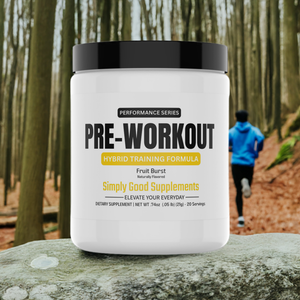
Our Hybrid Pre Workout was designed to deliver more than just an energy rush.
It combines evidence-based caffeine with performance-supporting ingredients like citrulline malate, beta-alanine, taurine, and electrolytes to help improve energy, focus, endurance, hydration, and training quality all without relying on proprietary blends or underdosed ingredients.
Whether you're heading out for a long run, attacking a heavy lifting session, or preparing for your next HYROX race, Hybrid Pre Workout provides research-backed ingredients in clinically effective doses so you can get the most from every morning workout.
Because your alarm clock shouldn't determine your performance.
How to Use Caffeine for Better Morning Performance
If you want to maximize your morning workouts:
- Consume caffeine 30–60 minutes before exercise.
- Aim for approximately 3–6 mg per kilogram of body weight.
- Start with the lower end of the range to assess tolerance.
- Avoid taking caffeine too late in the day if it interferes with your sleep.
- Remember that good sleep, nutrition, hydration, and consistent training still matter far more than any supplement.
Think of caffeine as the icing on the cake—not the cake itself.
The Bottom Line
If you've ever felt like your body simply doesn't cooperate during early morning workouts, science suggests you're not imagining it.
Our natural circadian rhythm tends to favor afternoon and evening performance.
But this new study found that consuming caffeine before morning exercise significantly improved strength, endurance, muscle activation, and perceived effort—bringing morning performance remarkably close to evening levels in healthy young women.
While more research is needed, the findings add to an already massive body of evidence showing that caffeine remains one of the safest, most effective, and most reliable ergogenic aids available.
So if you're tackling those early alarms, a strategically timed dose of caffeine may help your body perform like it's later in the day—even when the sun is just coming up.
Frequently Asked Questions
How long before a morning workout should I take caffeine?
Most research, including this study, shows the greatest benefits occur when caffeine is consumed 30–60 minutes before exercise, allowing blood caffeine levels to peak.
What's the best caffeine dose for exercise?
Current evidence supports approximately 3–6 mg per kilogram of body weight, although many athletes perform well at the lower end of that range.
Is coffee as effective as pre-workout?
Coffee can certainly improve performance because it contains caffeine. However, a quality pre-workout provides a known caffeine dose along with other evidence-based ingredients that may further support endurance, blood flow, hydration, and performance.
Is caffeine safe?
For most healthy adults, moderate caffeine intake is considered safe. However, individuals with certain medical conditions, those who are pregnant, or anyone sensitive to caffeine should consult a healthcare professional before using high doses.
References
- Singh A, Hesketh SJ. Caffeine ingestion improves morning neuromuscular performance to evening levels in healthy females. PLOS One. 2026;21(5):e0336199.
- Guest NS, et al. International Society of Sports Nutrition Position Stand: Caffeine and Exercise Performance. Journal of the International Society of Sports Nutrition. 2021.
- Grgic J, et al. Effects of caffeine intake on muscle strength and power: A systematic review and meta-analysis. JISSN. 2018.
- Southward K, Rutherfurd-Markwick KJ, Ali A. The effect of acute caffeine ingestion on endurance performance: A systematic review and meta-analysis. Sports Medicine. 2018.
- Pickering C, Grgic J. Caffeine and exercise: What next? Sports Medicine. 2019.