Should You Take Vitamin C With Collagen? What the Research Actually Says
If you've shopped for a collagen supplement recently, you've probably noticed that many products include vitamin C.
The explanation usually sounds simple:
"You need vitamin C to absorb collagen."
There's just one problem.
That's not really how it works.
Vitamin C absolutely plays an important role in making collagen inside the body. Severe vitamin C deficiency impairs normal collagen formation, which is one of the reasons scurvy causes problems such as poor wound healing and fragile connective tissue. PubMed
But that doesn't automatically mean you need to swallow vitamin C every time you take collagen peptides, or that adding hundreds of milligrams of vitamin C makes a collagen supplement work better.
There's an important difference between saying vitamin C is required for normal collagen synthesis and saying supplemental vitamin C is required with every serving of collagen.
Let's separate the two.
TLDR: Do You Need Vitamin C With Collagen?
Vitamin C matters for collagen production, but the marketing around combining the two often goes beyond what the research actually proves.
- Vitamin C is required for normal collagen synthesis. It acts as a cofactor for enzymes involved in building and stabilizing collagen. PubMed
- You do not need vitamin C to digest or "absorb" collagen peptides. Collagen is digested into amino acids and small peptides through normal protein digestion.
- The frequently cited exercise study combining gelatin and vitamin C used just 48 mg of vitamin C, not hundreds or thousands of milligrams. PubMed Central (PMC)
- That study found increased markers associated with collagen synthesis when 15 grams of gelatin plus vitamin C were consumed one hour before exercise, but it did not include a gelatin without vitamin C group. Therefore, it cannot tell us how much additional benefit the vitamin C provided. PubMed
- If you already consume enough vitamin C through your diet, there isn't strong evidence that taking a large additional dose every time you use collagen further increases the benefit.
- For athletes interested in tendons and ligaments, collagen or gelatin combined with appropriately timed mechanical loading may be more important than obsessing over a huge vitamin C dose.
- If your collagen already contains a modest amount of vitamin C, that's perfectly reasonable. I just wouldn't assume that more vitamin C automatically means more collagen synthesis.
The practical answer is pretty simple: make sure you're getting enough vitamin C overall. You probably don't need to megadose it with every scoop of collagen.
Why Does Your Body Need Vitamin C to Make Collagen?
To understand where the recommendation comes from, it helps to understand what your body actually does with collagen.
When you eat collagen peptides, your digestive system breaks them down into amino acids and smaller peptides.
Those components enter circulation and can then be used throughout the body.
Your body doesn't take a piece of collagen from your drink and directly glue it onto your Achilles tendon.
Instead, your cells build their own collagen.
That process requires several steps, and vitamin C plays an important role in some of them.
Vitamin C, also called ascorbic acid, acts as an essential cofactor for enzymes called prolyl hydroxylase and lysyl hydroxylase. These enzymes modify the amino acids proline and lysine during collagen formation. PubMed
Those modifications help collagen form its stable structure.
Think of collagen like a rope.
Producing the individual strands isn't enough. Those strands need to be arranged and stabilized correctly so the finished structure can handle force.
Vitamin C helps that process happen.
That's why vitamin C deficiency can cause such serious connective tissue problems.
Scurvy Shows Us What Happens When Vitamin C Is Missing
Severe vitamin C deficiency causes scurvy.
We don't see it nearly as often today, but the disease taught us a lot about the relationship between vitamin C and connective tissue.
When vitamin C becomes severely deficient, collagen production and stabilization become impaired.
The consequences can include poor wound healing, bleeding gums, fragile blood vessels, bruising, and other connective tissue problems. NCBI
So there's no question about the basic biology.
You need vitamin C to make normal collagen.
But here's where supplement marketing can make a leap.
If having too little vitamin C is bad for collagen synthesis, it doesn't necessarily follow that taking increasingly larger doses produces increasingly more collagen.
Biology often doesn't work that way.
Correcting a deficiency and providing more than enough of something are two very different situations.
You Don't Need Vitamin C to "Absorb" Collagen
This is probably the first misconception I'd clear up.
You'll sometimes see claims that:
"Collagen can't be absorbed without vitamin C."
That's inaccurate.
Your digestive system can digest collagen protein whether vitamin C is present in that meal or not.
Collagen contains large amounts of amino acids such as glycine and proline, along with hydroxyproline. Digestion releases amino acids and collagen derived peptides that can enter circulation.
Vitamin C's important role occurs primarily during the body's synthesis and maturation of new collagen, not as some kind of key that unlocks collagen absorption in your intestines.
That's an important distinction.
You can take collagen without simultaneously taking vitamin C and still digest it.
Where Did the Collagen Plus Vitamin C Idea Come From?
One of the most commonly cited studies in sports nutrition came from Gregory Shaw, Keith Baar, and colleagues.
It's an interesting study, but it's also frequently oversold.
Researchers recruited eight healthy recreationally active men and had them consume either 0, 5, or 15 grams of gelatin.
The drinks contained 48 mg of vitamin C.
One hour later, participants performed six minutes of rope skipping to provide a mechanical stimulus to connective tissue. PubMed Central (PMC)
The researchers found that gelatin increased circulating collagen related amino acids including glycine, proline, hydroxyproline, and hydroxylysine.
More interestingly, participants consuming 15 grams of gelatin one hour before exercise showed approximately twice the amount of an amino terminal propeptide of type I collagen in the blood compared with placebo, which the researchers interpreted as evidence of increased collagen synthesis. PubMed
That's a legitimately interesting finding.
But there's an important limitation.
The Study Didn't Actually Test Vitamin C Versus No Vitamin C
This gets overlooked constantly.
The study is often described as evidence that:
"Taking collagen with vitamin C increases collagen synthesis."
Technically, the study tested vitamin C enriched gelatin plus exercise.
It didn't include a group taking:
15 grams gelatin + vitamin C
versus
15 grams gelatin without vitamin C.
All treatments were provided in a beverage containing 48 mg of vitamin C. PubMed Central (PMC)
That means we cannot use this experiment to determine how much of the effect came from gelatin, how much came from vitamin C, or whether participants who already had adequate vitamin C status would have achieved essentially the same result without adding vitamin C to the drink.
Even an accompanying editorial pointed out that the collagen marker used was informative but not a direct measurement of new tendon collagen, and that whether the observed increase translates into meaningful clinical benefits requires additional research. American Journal of Clinical Nutrition
That's a much more accurate interpretation than saying:
"Science proves collagen only works when you add vitamin C."
It doesn't.
And Look at How Much Vitamin C They Actually Used
This is another detail I find interesting.
The study used 48 mg of vitamin C. PubMed Central (PMC)
Not 500 mg.
Not 1,000 mg.
Not some massive "collagen activation complex."
Forty eight milligrams.
That's an amount you can easily get from normal food.
For perspective, many fruits and vegetables provide meaningful amounts of vitamin C. Someone eating a reasonably varied diet containing foods such as citrus fruit, berries, peppers, broccoli, kiwi, potatoes, or tomatoes may already consume plenty.
This doesn't mean 48 mg is some scientifically established perfect dose for collagen synthesis either.
The study simply tells us that's the amount used in that particular experiment.
That's different from establishing a dose response relationship.
Does More Vitamin C Mean More Collagen?
This is where the evidence becomes much less convincing.
We know inadequate vitamin C can impair collagen synthesis.
We know vitamin C is required by enzymes involved in normal collagen formation. PubMed
What we don't have strong evidence for is the idea that an otherwise healthy person with adequate vitamin C status can continually increase collagen synthesis simply by taking larger and larger doses.
Think about it like filling a gas tank.
If the tank is empty, adding fuel makes a huge difference.
Once the tank has enough fuel for the job, pouring another five gallons over the side of the car doesn't make the engine run five times better.
The analogy isn't physiologically perfect, but the concept matters.
Required doesn't mean more is always better.
What If Your Diet Already Contains Plenty of Vitamin C?
This is the practical question.
If you're eating a varied diet with fruits and vegetables and you're meeting your vitamin C requirements, your collagen producing enzymes aren't sitting around waiting for a 1,000 mg vitamin C supplement before they're allowed to work.
That's why I wouldn't tell someone with a good diet that they must take a separate vitamin C supplement every time they take collagen.
Could adding a modest amount be reasonable?
Absolutely.
Is it necessary?
We don't have good evidence showing that supplemental vitamin C taken alongside collagen provides additional benefits in people who already have adequate vitamin C status.
Those are different claims.
The Timing Question Is Interesting Too
For athletes, I think timing collagen around training is actually more interesting than timing vitamin C.
Connective tissues respond to mechanical loading.
Exercise itself stimulates collagen synthesis. The Shaw study used this concept by providing gelatin and vitamin C one hour before six minutes of rope skipping. PubMed Central (PMC)
That timing allowed collagen derived amino acids to increase in circulation around the time the tissue received a mechanical stimulus.
The researchers also noted previous work suggesting that connective tissues can respond strongly to relatively short periods of loading separated by longer recovery periods. PubMed Central (PMC)
That creates a logical strategy for athletes concerned with tendon or ligament health:
Provide the raw materials and then give the tissue a reason to adapt.
That's a more biologically interesting concept than simply taking collagen whenever you remember.
Does That Mean You Should Take Collagen an Hour Before Training?
Potentially, especially if connective tissue is your primary reason for using collagen.
The Shaw study used gelatin one hour before loading, and this timing has influenced a lot of sports nutrition recommendations since then. PubMed
But I wouldn't turn exactly 60 minutes into another magical supplement window.
Research in this area is still developing.
A practical approach might be consuming collagen or gelatin somewhere around 30 to 60 minutes before exercise or rehabilitation work that loads the tissue you're trying to support.
For an Achilles tendon, that might mean calf raises, running, jumping, or rehabilitation exercises.
For a patellar tendon, that might involve squatting, jumping, or appropriately prescribed tendon loading.
For a shoulder, the loading stimulus would obviously be different.
Nutrition can provide building materials.
Mechanical loading tells the tissue what it needs to adapt to.
How Much Collagen Should You Take?
This is another area where supplement labels can get creative.
The classic Shaw experiment compared 5 grams and 15 grams of gelatin, with the stronger collagen synthesis response occurring with 15 grams. PubMed
That doesn't establish 15 grams as the perfect dose for every collagen product or every goal.
Gelatin and hydrolyzed collagen peptides aren't identical products, and different studies use different doses.
Still, much of the human research on collagen supplementation tends to use doses somewhere around 5 to 15 grams per day, depending on the outcome being investigated.
For connective tissue applications around exercise, I think the evidence is much easier to take seriously when you're talking about meaningful gram doses of collagen or gelatin rather than a token amount buried inside a proprietary blend.
A 500 mg sprinkle of collagen isn't the same thing as the doses used in much of the research.
What About Collagen for Skin?
Vitamin C is still biologically important for skin collagen.
Skin contains a substantial collagen matrix, and the same fundamental vitamin C dependent collagen synthesis pathways apply.
But again, there's a difference between saying:
"Vitamin C is important for skin collagen."
and:
"You need a large vitamin C supplement every time you take collagen peptides for your skin."
The first statement is well established.
The second is much harder to support.
Someone who is vitamin C deficient could certainly benefit from correcting that deficiency.
For someone already consuming enough, more supplemental vitamin C isn't automatically more collagen.
What About Joints and Cartilage?
This deserves another distinction.
Collagen is a major structural component of cartilage, tendons, ligaments, bone, and other connective tissues.
But swallowing collagen doesn't mean those peptides are delivered directly to one painful joint.
The proposed benefits of collagen supplementation involve providing collagen specific amino acids and bioactive peptides that may influence connective tissue metabolism.
Exercise and mechanical loading remain extremely important.
So if someone is taking collagen for knee health while being completely sedentary, sleeping poorly, carrying an inappropriate training load, or ignoring rehabilitation for an actual injury, I wouldn't expect the supplement to fix the underlying problem.
Supplements should support the bigger strategy, not replace it.
Who Should Pay More Attention to Vitamin C?
There are situations where I would care considerably more about vitamin C intake.
- Someone eating very few fruits and vegetables.
- Someone following an extremely restrictive diet.
- Someone with poor overall food intake.
- Someone with a condition that affects nutrient absorption.
- Someone showing signs of nutritional deficiency.
In those situations, making sure vitamin C intake is adequate becomes much more important.
But that's different from telling every healthy athlete that collagen is useless unless they take it with a separate vitamin C pill.
Should Collagen Supplements Include Vitamin C?
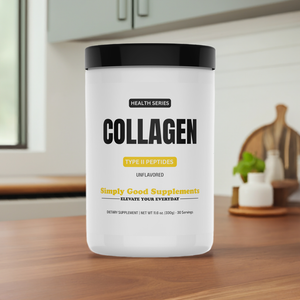
I don't think collagen supplements need to include vitamin C, and in most cases I'd actually prefer that they don't.
That might sound strange considering everything we've discussed about vitamin C being required for collagen synthesis, but there's an important difference between needing vitamin C in your body and needing vitamin C mixed into your collagen powder.
If someone is already consuming enough vitamin C through their normal diet, there isn't good evidence showing that adding supplemental vitamin C to every serving of collagen further increases collagen synthesis.
There are a few reasons I would leave it out.
- First, vitamin C isn't required for collagen digestion or absorption. Your digestive system can break collagen peptides down and absorb the resulting amino acids and peptides without vitamin C being present in the supplement.
- Second, adding vitamin C can create the impression that collagen won't work without it. That's misleading. The body needs adequate vitamin C status for normal collagen synthesis, but that vitamin C can come from the rest of your diet.
- Third, the often cited study using gelatin before exercise provided only 48 mg of vitamin C, and it did not compare gelatin plus vitamin C against the same amount of gelatin without vitamin C. Because of that study design, we can't conclude that adding vitamin C to the gelatin was responsible for the increased collagen synthesis marker. Shaw et al. study
- Fourth, including vitamin C encourages manufacturers to turn something simple into another marketing claim. You start seeing "enhanced absorption," "collagen activation," or very large vitamin C doses that aren't supported by evidence showing they make collagen peptides more effective.
There's also a practical formulation argument. If an ingredient doesn't need to be in the product, I don't see much reason to add it. Every additional ingredient takes up formula space, increases cost, complicates the label, and gives the manufacturer another variable to control for stability and shelf life.
I'd rather see that money and formula space go toward providing an appropriate dose of quality collagen.
This doesn't mean vitamin C is unimportant. It's essential for normal collagen production. It simply means vitamin C doesn't have to be inside the collagen supplement for your body to use collagen effectively.
If your diet contains adequate vitamin C, adding more to the collagen powder hasn't been shown to provide an additional advantage.
And if your diet doesn't contain enough vitamin C, I'd rather address that nutritional deficiency directly than depend on a collagen supplement to fix it.
Keep the collagen product simple. Get adequate vitamin C from your overall diet. There isn't a compelling reason the two have to be packaged together.
What I Would Actually Do
If my goal were supporting tendons, ligaments, or other connective tissue around training, I'd keep this pretty simple.
I'd make sure my overall diet provides enough vitamin C.
I'd use a meaningful dose of collagen peptides or gelatin.
I'd consider taking it roughly 30 to 60 minutes before the exercise or rehabilitation session that loads the tissue I'm trying to support.
And I wouldn't worry about taking hundreds or thousands of milligrams of vitamin C with it.
If the collagen supplement already contained a modest amount of vitamin C, great.
If it didn't, and I regularly ate fruits and vegetables, I wouldn't assume the collagen suddenly stopped working.
Most importantly, I'd remember that exercise provides the signal for connective tissue adaptation.
Nutrition supports that process.
Neither one completely replaces the other.
The Bottom Line
So, should you take vitamin C with collagen?
You need adequate vitamin C for normal collagen synthesis.
That part isn't controversial. Vitamin C is required by enzymes involved in producing and stabilizing collagen, and severe deficiency clearly damages connective tissue. PubMed
But that doesn't mean you need a separate vitamin C supplement every time you consume collagen.
It also doesn't mean 1,000 mg is better than 50 mg.
The famous study supporting collagen or gelatin before exercise used 15 grams of gelatin with only 48 mg of vitamin C, and it showed an increase in a marker associated with collagen synthesis. But because there wasn't a gelatin without vitamin C group, the study cannot tell us whether adding vitamin C provided additional benefit in participants who were already vitamin C sufficient. PubMed Central (PMC)
That's an important limitation.
My takeaway is pretty straightforward:
Make sure you're getting enough vitamin C. Don't assume you need a massive dose. Use a meaningful amount of collagen. And if your goal is tendon or ligament support, pair the nutrition with the appropriate exercise stimulus.
That's a much more defensible interpretation of the research than saying collagen "needs vitamin C to work."
About the Author
Matt Mosman, MS, CISSN, CSCS, is the founder and Chief Science Officer of Simply Good Supplements. With a background in exercise science, sports nutrition, and strength and conditioning, Matt focuses on turning research into practical advice that athletes, parents, and everyday active people can actually use.
References:
- Shaw G, Lee-Barthel A, Ross MLR, Wang B, Baar K. Vitamin C-enriched gelatin supplementation before intermittent activity augments collagen synthesis. American Journal of Clinical Nutrition. 2017;105(1):136–143. PubMed
- Pinnell SR. Regulation of collagen biosynthesis by ascorbic acid: a review. Yale Journal of Biology and Medicine. 1985;58(6):553–559. PubMed
- Peterkofsky B. Ascorbate requirement for hydroxylation and secretion of procollagen: relationship to inhibition of collagen synthesis in scurvy. American Journal of Clinical Nutrition. 1991;54(6 Suppl):1135S–1140S. PubMed