Free Lean Body Mass Calculator
Lean Body Mass Calculator
Estimate your fat-free mass, body fat mass, and body composition using your body fat percentage or established prediction equations.
If known, this is used for the primary lean mass calculation. Leave blank to use prediction equations.
Estimates target weight assuming lean mass stays unchanged. Not a recommendation to reach a particular body fat percentage.
--
Body Composition Breakdown
Calculation Methods Compared
| Method | Estimated Lean Mass |
|---|
Estimated Weight at Your Target Body Fat
This is a mathematical scenario assuming your lean mass remains constant. Actual changes in body composition are more complex.
Lean Body Mass Calculator: How Much of Your Body Weight Is Actually Fat-Free Mass?
Most people track their body weight.
Some track their body fat percentage.
But there's another measurement that can be particularly useful when evaluating body composition: lean body mass.
Let's say you weigh 180 pounds.
That number doesn't tell us how much of your body weight comes from muscle, organs, bones, water, or body fat.
It also doesn't tell us whether changes on the scale represent fat loss, muscle growth, or fluctuations in hydration.
Lean body mass helps provide a little more context.
It's especially useful if you're trying to lose body fat while preserving muscle, improve strength, or understand how your body composition changes over time.
But there's a misconception worth addressing right away.
Lean body mass is not the same thing as muscle mass.
And a higher lean body mass measurement doesn't automatically mean you've gained muscle.
We created our free Lean Body Mass Calculator to help you estimate your fat-free mass, compare established prediction equations, and see how changes in body fat percentage might affect your body weight.
TLDR
- Lean body mass represents your body weight minus fat mass. In common calculator use, it is treated as fat-free mass.
- Lean mass includes skeletal muscle, organs, bones, blood, water, and other non-fat tissues.
- You can calculate lean body mass using your body weight and estimated body fat percentage.
- If you don't know your body fat percentage, prediction equations such as Boer and James can provide an estimate.
- Lean body mass is useful for tracking body composition, but it should not be confused with skeletal muscle mass.
- Hydration changes can affect lean mass measurements, particularly when using bioelectrical impedance scales.
- Maintaining lean mass during weight loss is generally desirable, but changes in lean mass don't always reflect changes in muscle tissue.
Want to calculate yours? Use our free Lean Body Mass Calculator to estimate your lean mass, fat mass, and body composition.
What Is Lean Body Mass?
Lean body mass is the portion of your body weight that isn't classified as fat mass.
In simple terms:
Lean Body Mass = Total Body Weight − Fat Mass
If you weigh 180 pounds and have 36 pounds of body fat, your calculated lean body mass is:
180 − 36 = 144 pounds
That means approximately 144 pounds of your body weight consists of non-fat tissues.
But what exactly does that include?
Quite a bit.
Lean body mass includes:
- Skeletal muscle
- Organs such as the liver, heart, and kidneys
- Bones and connective tissues
- Blood
- Body water
- Other non-fat tissues
This is why someone with 150 pounds of lean body mass doesn't necessarily have 150 pounds of muscle.
In fact, skeletal muscle represents only one component of total lean mass.
Lean Body Mass vs. Fat-Free Mass
These terms are often used interchangeably, especially in online calculators.
Technically, some body composition models distinguish lean body mass from fat-free mass because lean body mass may include essential lipids found in certain tissues.
However, most practical body composition calculations use body weight minus fat mass as an estimate of fat-free mass.
That's the approach used in our calculator.
How to Calculate Lean Body Mass
There are several ways to estimate lean body mass.
The simplest method uses your body weight and body fat percentage.
Other methods use prediction equations based on height, weight, and sex.
Our calculator includes three approaches.
1. Calculate Lean Body Mass Using Body Fat Percentage
If you know your estimated body fat percentage, the calculation is straightforward.
Lean Body Mass = Body Weight × (1 − Body Fat Percentage ÷ 100)
Let's say you weigh 200 pounds and have an estimated body fat percentage of 20%.
First, convert body fat percentage to a decimal.
20 ÷ 100 = 0.20
Then subtract that number from one.
1 − 0.20 = 0.80
Finally, multiply by your body weight.
200 × 0.80 = 160 pounds of lean body mass
Your estimated fat mass would be:
200 − 160 = 40 pounds of fat mass
This method is easy to understand.
The limitation is that the calculation is only as accurate as your body fat percentage estimate.
If your actual body fat percentage is 25% rather than 20%, your calculated lean mass would be substantially different.
2. Boer Lean Body Mass Formula
The Boer equation was developed to estimate lean body mass using body weight, height, and sex.
It doesn't require a body fat percentage measurement.
For men:
Lean Body Mass (kg) = (0.407 × Weight in kg) + (0.267 × Height in cm) − 19.2
For women:
Lean Body Mass (kg) = (0.252 × Weight in kg) + (0.473 × Height in cm) − 48.3
Let's use a hypothetical male who weighs 180 pounds and is 5 feet 10 inches tall.
First, convert the measurements.
Weight: 81.6 kg
Height: 177.8 cm
Now calculate:
LBM = (0.407 × 81.6) + (0.267 × 177.8) − 19.2
LBM = 33.2 + 47.5 − 19.2
Estimated Lean Body Mass = 61.5 kg
That's approximately 135.6 pounds.
This is a prediction based on population data.
It isn't a direct measurement of body composition.
3. James Lean Body Mass Formula
The James equation is another commonly used method for estimating lean body mass.
For men:
Lean Body Mass (kg) = 1.1 × Weight (kg) − 128 × (Weight ÷ Height in cm)²
For women:
Lean Body Mass (kg) = 1.07 × Weight (kg) − 148 × (Weight ÷ Height in cm)²
The James and Boer equations can produce different estimates for the same person.
That's expected because they use different mathematical relationships.
One limitation of the James equation is that its predicted lean mass can behave unrealistically at higher body weights.
For that reason, I wouldn't rely on it as the only method for evaluating body composition.
Our calculator compares the available methods so you can see how the estimates differ.
Which Lean Body Mass Formula Is Most Accurate?
If you have a reasonably accurate body fat measurement, calculating lean mass directly from body weight and body fat percentage is generally more informative than using height-and-weight prediction equations alone.
But there's a catch.
Body fat measurements aren't necessarily accurate.
A consumer smart scale, skinfold assessment, or even a more sophisticated body composition device can produce different results.
Prediction equations such as Boer and James are convenient because they don't require specialized equipment.
However, they can be less reliable for people whose body composition differs substantially from the populations used to develop the equations.
This may include highly muscular athletes and individuals at the extremes of body weight.
For most people, I'd use the calculator as a starting point rather than treating the result as an exact measurement.
Lean Body Mass vs. Muscle Mass: What's the Difference?
This is probably the most important distinction in the entire article.
Lean body mass includes muscle.
But it also includes everything else that isn't classified as fat.
That means:
Lean body mass is not a measurement of skeletal muscle mass.
Let's say your smart scale reports that your lean body mass increased by four pounds over the past week.
Did you gain four pounds of muscle?
Almost certainly not.
Changes in glycogen storage, hydration, and gastrointestinal contents can all influence body composition measurements.
Muscle glycogen is stored along with water.
When glycogen stores increase, the associated water can increase measured lean mass even without a meaningful change in muscle protein.
This is particularly relevant for athletes who alternate between high-volume training, carbohydrate restriction, and carbohydrate loading.
A change in lean mass over a few days may reflect changes in hydration and glycogen rather than actual muscle growth or loss.
How Much Lean Body Mass Should You Have?
There isn't one universal target.
Lean body mass depends on your height, body size, sex, age, and body composition.
A taller person will generally have more lean mass than a shorter person.
A heavier person may also have more lean mass, even if they carry a higher body fat percentage.
This makes it difficult to compare absolute lean mass values between individuals.
For example, 150 pounds of lean mass could represent very different body compositions depending on whether someone weighs 170 pounds or 250 pounds.
That's why I prefer evaluating lean mass in the context of total body weight, body fat percentage, physical performance, and changes over time.
What Is Lean Body Mass Percentage?
Lean body mass percentage represents the proportion of your total body weight that isn't classified as fat.
The formula is:
Lean Mass Percentage = 100 − Body Fat Percentage
If your body fat percentage is 20%, your lean mass percentage is 80%.
If your body fat percentage is 15%, your lean mass percentage is 85%.
That doesn't mean 85% of your body weight is muscle.
It means approximately 85% is classified as non-fat mass.
How to Estimate Your Goal Weight Using Lean Body Mass
One useful application of lean body mass is estimating what your body weight might be at a different body fat percentage.
The formula is:
Target Body Weight = Lean Body Mass ÷ (1 − Target Body Fat Percentage ÷ 100)
Let's say you currently weigh 200 pounds with 20% body fat.
Your estimated lean body mass is:
200 × 0.80 = 160 pounds
Now suppose you want to estimate your body weight at 15% body fat.
Target weight = 160 ÷ 0.85
Estimated Target Weight = 188.2 pounds
That suggests a body weight of approximately 188 pounds if you maintain all 160 pounds of lean mass.
But there's an important limitation.
This assumes your lean mass remains completely unchanged.
In reality, weight loss can involve changes in muscle, water, glycogen, and other tissues.
And gaining or losing body fat doesn't always occur independently of changes in fat-free mass.
So I would treat this calculation as a mathematical scenario rather than a prediction of exactly what you'll weigh.
Our Lean Body Mass Calculator includes this feature.
Why Lean Body Mass Matters During Weight Loss
If you're trying to lose body fat, the number on the scale doesn't tell the entire story.
Two people can lose the same amount of body weight but experience different changes in body composition.
For example:
Person A loses 15 pounds, primarily from fat mass.
Person B loses 15 pounds, but a larger proportion comes from fat-free mass.
Even though their scale weight changes are identical, the outcomes are different.
Preserving muscle during weight loss is generally desirable because skeletal muscle contributes to strength, physical function, and long-term health.
Research suggests that several strategies can help support muscle retention during energy restriction.
Resistance Training
Strength training provides a stimulus for maintaining muscle.
Without that stimulus, the body has less reason to preserve muscle tissue during a prolonged calorie deficit.
Adequate Protein
Protein intake is another important consideration.
A meta-analysis by Morton and colleagues found that protein supplementation can support resistance-training-induced gains in muscle mass and strength, with benefits generally leveling off around 1.6 grams of protein per kilogram of body weight per day in the studied populations.
During energy restriction, particularly in lean and resistance-trained individuals, higher protein intakes may be useful.
The appropriate amount depends on training, energy intake, and individual circumstances.
Avoiding Excessively Aggressive Calorie Deficits
Larger calorie deficits can increase the difficulty of maintaining training performance and lean mass.
For many people, a moderate deficit is more sustainable and better aligned with preserving muscle.
If you're trying to lose fat, our Calorie Deficit Calculator can help estimate an initial calorie target.
Can You Increase Lean Body Mass?
Yes.
But remember that an increase in lean body mass doesn't always mean an increase in muscle tissue.
If your goal is to increase skeletal muscle mass, progressive resistance training is the primary stimulus.
Adequate protein and energy intake help support that process.
Over time, muscle growth can increase total lean mass.
However, short-term increases in measured lean mass may also result from greater glycogen storage and associated water retention.
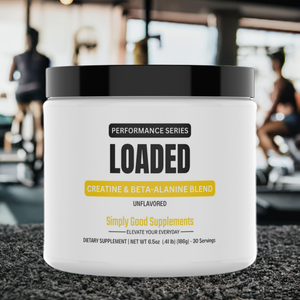
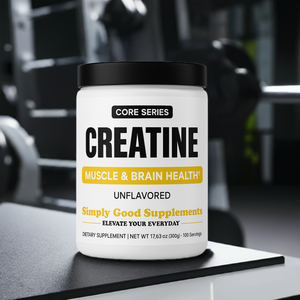
This is especially relevant when someone starts taking creatine.
Creatine supplementation can increase muscle creatine stores and often produces an initial increase in body mass.
Some of that early weight gain is associated with increased water content.
Over longer periods, when combined with resistance training, creatine can also support improvements in training performance and gains in fat-free mass.
But an immediate increase in lean mass after starting creatine shouldn't automatically be interpreted as new muscle tissue.
Does Lean Body Mass Affect Your Metabolism?
Yes.
Fat-free mass is one of the strongest predictors of resting energy expenditure.
Larger amounts of metabolically active tissue generally require more energy to maintain.
However, different tissues have different metabolic rates.
Organs such as the liver, brain, heart, and kidneys have much higher resting energy requirements per kilogram than skeletal muscle.
This is why the relationship between lean mass and metabolism is more complicated than simply counting pounds of muscle.
Still, knowing your estimated lean mass can be useful when evaluating resting energy requirements.
Our BMR Calculator includes the Katch-McArdle equation, which uses fat-free mass to estimate resting calorie expenditure.
How Is Lean Body Mass Measured?
There are several methods used to assess body composition.
Each has advantages and limitations.
DEXA Scans
Dual-energy X-ray absorptiometry, or DEXA, estimates bone mineral content, fat mass, and lean soft tissue.
It's commonly used in research and clinical settings.
DEXA can provide useful information about regional body composition.
However, results can still be affected by hydration, equipment, and testing procedures.
Bioelectrical Impedance Analysis (BIA)
BIA devices estimate body composition by measuring electrical impedance through body tissues.
Many consumer smart scales use this method.
They're convenient and can be useful for tracking trends under consistent conditions.
However, hydration status, recent exercise, food intake, and other factors can influence results.
Skinfold Measurements
Skinfold testing estimates subcutaneous fat thickness at specific body sites.
Those measurements are then entered into prediction equations to estimate body density or body fat percentage.
Results depend heavily on technician skill and the equation used.
Hydrostatic Weighing
Hydrostatic weighing estimates body density by comparing weight in air with weight underwater.
It has historically been used as a reference method for body composition assessment.
However, it requires specialized equipment and relies on assumptions about tissue density.
Air Displacement Plethysmography
Devices such as the Bod Pod estimate body volume using air displacement.
Combined with body weight, this allows body density and body composition to be estimated.
Like other methods, it has limitations and relies on specific assumptions.
Which Method Should You Use?
For someone simply trying to monitor body composition, consistency is often more important than constantly switching between measurement methods.
If you're using a smart scale, try to measure under similar conditions each time.
If you're using DEXA, use the same facility and follow similar preparation procedures when possible.
And don't overinterpret small changes.
Lean Body Mass for Endurance Athletes
Lean body mass can also be useful for runners, cyclists, triathletes, and other endurance athletes.
Body composition can influence performance, particularly in sports where moving body weight is a major component of the energy cost.
However, lower body weight doesn't automatically mean better performance.
Excessive weight loss can compromise muscle function, recovery, training quality, and health.
For endurance athletes, the goal should generally be an appropriate body composition that supports performance rather than simply minimizing body fat.
This is particularly important because low energy availability can contribute to Relative Energy Deficiency in Sport (REDs).
And since lean mass measurements are influenced by hydration and glycogen, endurance athletes should be especially careful when interpreting measurements taken after long workouts, races, or periods of carbohydrate restriction.
How Often Should You Measure Lean Body Mass?
You don't need to measure it every day.
In fact, daily measurements can be misleading because of normal fluctuations in body water and glycogen.
If you're trying to track changes in body composition, measuring every four to eight weeks under similar conditions is often more informative.
For example, if you're using a BIA scale, try to measure at approximately the same time of day and under similar hydration conditions.
Also consider tracking other indicators, including:
- Body weight trends
- Waist circumference
- Strength performance
- Training progress
- Progress photographs, if useful
No single measurement tells the complete story.
Common Mistakes When Calculating Lean Body Mass
Assuming Lean Mass Means Muscle
Lean mass includes much more than skeletal muscle.
Trusting a Single Body Fat Measurement
Even sophisticated body composition methods have measurement error.
Comparing Results From Different Devices
A smart scale and DEXA scan may produce different estimates because they use different methods and assumptions.
Interpreting Rapid Changes as Muscle Growth or Loss
Hydration and glycogen changes can affect lean mass measurements over short periods.
Treating a Target Body Fat Percentage as a Universal Goal
Healthy and performance-supporting body composition varies among individuals.
A calculator can estimate the weight associated with a chosen body fat percentage, but it cannot determine whether that target is appropriate.
Use Our Free Lean Body Mass Calculator
We created our free Lean Body Mass Calculator to help you better understand your body composition.
Enter your body weight, height, and sex used for the prediction equations.
If you know your approximate body fat percentage, you can enter that too.
The calculator will estimate:
- Lean body mass
- Fat mass
- Lean mass percentage
- Body fat percentage
- Boer equation estimate
- James equation estimate
- Estimated body weight at a selected target body fat percentage
It's a practical way to put your scale weight into better context.
Just remember that the numbers are estimates, not direct measurements of muscle mass.
Frequently Asked Questions
What is lean body mass?
Lean body mass is the portion of your body weight that isn't classified as fat mass. It includes muscle, organs, bones, water, and other non-fat tissues.
How do I calculate lean body mass?
Multiply your body weight by one minus your body fat percentage expressed as a decimal. For example, 180 pounds at 20% body fat gives an estimated lean mass of 144 pounds.
Is lean body mass the same as muscle mass?
No. Skeletal muscle is only one component of lean body mass. Lean mass also includes organs, water, bones, blood, and other tissues.
What is the difference between lean body mass and fat-free mass?
The terms are commonly used interchangeably, although some technical body composition models distinguish them based on essential lipids. Most online calculators use body weight minus fat mass.
What is a good lean body mass percentage?
There isn't one universal target. Lean mass percentage depends on body fat percentage, and appropriate body composition varies with age, sex, training, health, and individual goals.
Can you calculate lean body mass without knowing body fat percentage?
Yes. Prediction equations such as Boer and James estimate lean body mass using height, weight, and sex. However, these are population-based estimates.
Does creatine increase lean body mass?
Creatine supplementation can increase measured lean mass, partly through changes in muscle water content. When combined with resistance training over time, it can also support gains in fat-free mass.
Can you lose fat without losing lean body mass?
It's possible to preserve much of your lean mass during fat loss, particularly with resistance training, adequate protein, and an appropriate calorie deficit. However, some changes in measured lean mass may occur because of shifts in water and glycogen.
How accurate are lean body mass calculators?
Accuracy depends on the calculation method and input data. Equations provide estimates, while body-fat-based calculations depend on the accuracy of the body fat measurement.
How often should I check my lean body mass?
For tracking longer-term changes, measurements every four to eight weeks under similar conditions are often more useful than daily measurements.
References
- Boer P. Estimated lean body mass as an index for normalization of body fluid volumes in humans. American Journal of Physiology. 1984;247(4 Pt 2)–F636. https://doi.org/10.1152/ajprenal.1984.247.4.F632
- James WPT. Research on Obesity. London: Her Majesty's Stationery Office; 1976.
- Heymsfield SB, Wang Z, Baumgartner RN, Ross R. Human body composition: advances in models and methods. Annual Review of Nutrition. 1997;17:527–558. https://doi.org/10.1146/annurev.nutr.17.1.527
- Wang Z, Heshka S, Gallagher D, Boozer CN, Kotler DP, Heymsfield SB. Resting energy expenditure-fat-free mass relationship: new insights provided by body composition modeling. American Journal of Physiology-Endocrinology and Metabolism. 2000;279(3)–E545. https://doi.org/10.1152/ajpendo.2000.279.3.E539
- Morton RW, Murphy KT, McKellar SR, et al. A systematic review, meta-analysis and meta-regression of the effect of protein supplementation on resistance training-induced gains in muscle mass and strength in healthy adults. British Journal of Sports Medicine. 2018;52(6):376–384. https://doi.org/10.1136/bjsports-2017-097608
- Kreider RB, Kalman DS, Antonio J, et al. International Society of Sports Nutrition position stand: safety and efficacy of creatine supplementation in exercise, sport, and medicine. Journal of the International Society of Sports Nutrition. 2017;14:18. https://doi.org/10.1186/s12970-017-0173-z
- Mountjoy M, Ackerman KE, Bailey DM, et al. 2023 International Olympic Committee's (IOC) consensus statement on Relative Energy Deficiency in Sport (REDs). British Journal of Sports Medicine. 2023;57:1073–1097. https://doi.org/10.1136/bjsports-2023-106994
About the Author
Matt Mosman, MS, CISSN, CSCS, is the Founder and Chief Science Officer of Simply Good Supplements. With a background in exercise science, sports nutrition, and strength and conditioning, Matt focuses on translating scientific research into practical strategies for improving health, fitness, and athletic performance.