Can Collagen Help Female Runners Build Stronger Bones? New Research Explains
Can Collagen Help Female Runners Build Stronger Bones? New Research Says It Might
Most runners think about nutrition in terms of energy, recovery, and performance.
But there's another important piece of the puzzle that often gets overlooked: bone health.
Every stride places stress on the bones, tendons, and connective tissues of the lower body. Over time, that stress can help build stronger tissues—but only if the body has the nutrients it needs to adapt and recover.
That's why researchers have become increasingly interested in collagen supplementation, particularly among female endurance athletes.
A recent randomized, double-blind, placebo-controlled study published in Frontiers in Nutrition investigated whether collagen peptide supplementation could influence markers of bone formation and inflammation in premenopausal female runners.
The findings were encouraging.
Why Bone Health Matters for Female Runners
Running is an excellent form of exercise, but it also places repeated mechanical stress on the skeletal system.
While this stress can stimulate positive adaptations, female runners face several unique challenges that may increase their risk of bone-related issues, including:
- Stress fractures
- Low bone mineral density
- High training volumes
- Inadequate energy intake
- Hormonal fluctuations
Because of these factors, researchers continue searching for nutritional strategies that may help support bone remodeling and recovery in endurance athletes.
What Did the Researchers Study?
The study involved endurance-trained premenopausal female runners who were randomly assigned to receive either collagen peptides or a control supplement for four weeks.
Researchers measured several markers related to bone turnover and inflammation, including:
- P1NP (a marker of bone formation)
- CTX-1 (a marker of bone breakdown)
- IL-6 (an inflammatory cytokine)
- RANKL and OPG (proteins involved in bone remodeling)
The goal was to determine whether collagen supplementation could positively influence bone health and recovery processes in female runners.
Finding #1: Collagen Increased a Marker of Bone Formation
The most important finding was a significant increase in P1NP, a biomarker associated with type I collagen synthesis and bone formation.
The researchers observed a significant increase in P1NP among the women taking collagen peptides, while no meaningful change occurred in the control group. This suggests collagen supplementation may help stimulate bone-building processes in female runners.
While biomarkers don't directly measure bone density, increases in bone formation markers are generally considered positive signs that the body may be adapting favorably to training stress.
Finding #2: Collagen Reduced Inflammation
Another notable finding involved interleukin-6 (IL-6), an inflammatory marker that often rises in response to training stress.
The collagen group experienced a significant reduction in IL-6 concentrations over the four-week intervention, while the control group did not. Researchers reported a statistically significant difference between groups, suggesting collagen supplementation may help support a healthier inflammatory response following training.
While some inflammation is a normal part of exercise adaptation, excessive or prolonged inflammation can potentially interfere with recovery.
Support Your Training with High-Quality Collagen
The collagen used in this study was designed to provide the amino acids needed to support connective tissue and collagen synthesis.
While more research is still needed, the findings add to a growing body of evidence suggesting collagen supplementation may be beneficial for active individuals, particularly those participating in high-impact activities like running.
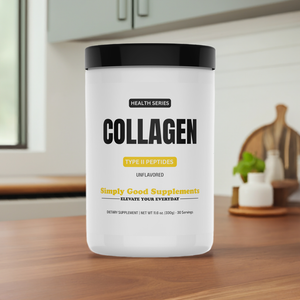
Support Recovery, Connective Tissue, and Healthy Aging with Simply Good Collagen
Simply Good Collagen provides high-quality collagen peptides that mix easily into coffee, smoothies, shakes, or water.
Whether you're training for your next race, looking to support joint health, or simply wanting to maintain healthy connective tissue as you age, collagen can be an easy addition to your daily routine.
- Grass-fed bovine collagen peptides
- Supports healthy skin, joints, and connective tissue
- Provides collagen-specific amino acids
- Mixes easily into hot or cold beverages
- Unflavored and versatile
Finding #3: Bone Breakdown Did Not Increase
Interestingly, collagen supplementation did not significantly affect CTX-1, a marker of bone resorption (bone breakdown).
This suggests the primary effect may be on promoting bone formation rather than reducing bone breakdown.
In other words, collagen appeared to support the building side of the remodeling equation rather than suppressing normal bone turnover.
What About Stress Fracture Prevention?
One question many runners will ask is whether collagen supplementation can prevent stress fractures.
Unfortunately, this study wasn't designed to answer that question directly.
Researchers measured biomarkers of bone metabolism rather than injury outcomes, so we can't conclude that collagen supplementation prevents stress fractures.
However, because bone formation is an important component of skeletal adaptation, the findings provide an interesting area for future research.
What Are the Limitations?
As promising as these findings are, it's important to recognize the study's limitations.
- The study included a relatively small number of participants.
- The intervention lasted only four weeks.
- Researchers measured biomarkers rather than actual bone density changes.
- The study focused specifically on premenopausal female runners.
Longer studies involving larger populations will be needed to determine whether these changes translate into meaningful improvements in bone health and injury risk.
The Bottom Line
This randomized controlled trial found that four weeks of collagen peptide supplementation increased a marker of bone formation and reduced an inflammatory marker in endurance-trained female runners.
While more research is needed, the findings suggest collagen supplementation may help support bone remodeling and recovery in female athletes exposed to high levels of repetitive impact.
For runners looking to support their training, recovery, and long-term connective tissue health, collagen may be a valuable addition to an overall nutrition and training strategy.
References
- Kuhlman et al. Effects of Collagen Peptide Supplementation on Bone Turnover, Cytokine, and Inflammatory Markers in Premenopausal Female Runners. Frontiers in Nutrition. 2026.
- Shaw G, Lee-Barthel A, Ross ML, Wang B, Baar K. Vitamin C–enriched gelatin supplementation before intermittent activity augments collagen synthesis. American Journal of Clinical Nutrition. 2017.
- Clark KL, Sebastianelli W, Flechsenhar KR, et al. 24-Week Study on the Use of Collagen Hydrolysate as a Dietary Supplement in Athletes with Activity-Related Joint Pain. Current Medical Research and Opinion. 2008.
- Close GL, Sale C, Baar K, Bermon S. Nutrition for the Prevention and Treatment of Injuries in Track and Field Athletes. International Journal of Sport Nutrition and Exercise Metabolism. 2019.