Can Creatine Help Long COVID Fatigue?
Millions of people have recovered from COVID-19, yet many continue to struggle with lingering symptoms months later. This condition—commonly known as Long COVID or Post-COVID Condition (PCC)—can make even simple daily activities exhausting.
For many people, fatigue is the most frustrating symptom. It's more than just feeling tired. Many Long COVID patients describe overwhelming physical and mental exhaustion that doesn't improve with rest.
Now, a new randomized controlled trial published in Frontiers in Nutrition suggests that one of the most well-researched sports supplements in the world—creatine monohydrate—may offer some relief.
Here's what the latest research found, how creatine may work, and what it means if you're dealing with persistent fatigue after COVID.
What Is Long COVID?
The World Health Organization defines Post-COVID Condition as symptoms that continue for at least three months after a COVID-19 infection and can't be explained by another diagnosis.
Common symptoms include:
- Persistent fatigue
- Muscle weakness
- Shortness of breath
- Brain fog
- Joint pain
- Reduced exercise tolerance
- Poor quality of life
According to the WHO, roughly 6% of people who contract COVID-19 develop Long COVID, although estimates vary depending on the population studied.
Why Researchers Looked at Creatine
Most people know creatine as a supplement for building muscle and improving athletic performance.
But creatine's primary job isn't helping you lift heavier weights.
Its real purpose is helping your cells produce energy.
Creatine is stored inside muscles as phosphocreatine, where it helps rapidly regenerate ATP—the body's primary energy currency.
When ATP production is impaired, fatigue becomes much more likely.
Researchers believe this may be especially important in Long COVID because mounting evidence suggests many patients experience:
- Mitochondrial dysfunction
- Reduced cellular energy production
- Impaired phosphocreatine metabolism
- Persistent inflammation
These changes may contribute to the crushing fatigue many patients experience.
The New Study
Researchers from São Paulo State University conducted a randomized, single-blind, placebo-controlled pilot trial involving adults experiencing Long COVID fatigue.
Participants
- 67 adults enrolled
- 58 completed the study
- Average age: 52 years
- Approximately 75% were women
Everyone participated in a supervised rehabilitation exercise program three times per week.
Participants were randomly assigned to receive:
- 6 grams/day creatine
- 18 grams/day creatine
- 6 grams/day maltodextrin (placebo)
The intervention lasted approximately four weeks.
What Happened?
The researchers measured fatigue using the Revised Piper Fatigue Scale, a validated questionnaire commonly used in fatigue research.
The Results Were Surprising
The group taking 6 grams per day experienced:
✅ Significant reductions in fatigue
✅ Improved handgrip strength
✅ Very few side effects
The 18-gram group, however, did not experience the same improvements.
Researchers also found no significant improvements in:
- Lung function
- Walking distance
- Body composition
- Anxiety
- Depression
- Quality of life scores
This suggests creatine may specifically improve fatigue and muscle function rather than every aspect of Long COVID.
How Much Better Was Fatigue?
Compared with placebo, participants taking 6 grams daily showed a statistically significant improvement in fatigue scores.
They also increased handgrip strength by approximately 4.4 kilograms of force, an important marker because grip strength is closely associated with overall physical function and health outcomes.
Interestingly, more wasn't better.
The group taking 18 grams daily saw no meaningful improvements, suggesting there may be an optimal dose rather than a "more is better" approach.
Why Might Creatine Help?
Researchers believe several mechanisms may explain the improvements.
1. Better ATP Production
Creatine increases phosphocreatine stores inside muscle.
Those stores rapidly regenerate ATP during activity, helping muscles maintain energy production.
2. Improved Mitochondrial Function
Emerging evidence suggests SARS-CoV-2 can impair mitochondrial function.
Creatine has been shown in experimental research to support mitochondrial health and improve cellular energy metabolism.
3. Reduced Neuromuscular Fatigue
Creatine has consistently been shown to delay fatigue during exercise and improve recovery between bouts of activity.
Although Long COVID differs from athletic performance, both involve limitations in energy production.
4. Possible Brain Benefits
Previous studies have found that people with Long COVID may have lower creatine concentrations in both skeletal muscle and certain regions of the brain.
Earlier research also reported improvements in symptoms such as:
- Brain fog
- Body pain
- General fatigue
- Concentration
after longer-term creatine supplementation.
Is Creatine Safe for People with Long COVID?
One of the biggest questions surrounding creatine isn't whether it works—it's whether it's safe.
The good news is that creatine is one of the most extensively researched dietary supplements in the world, with hundreds of studies supporting its safety when used appropriately in healthy individuals. While research in Long COVID is still emerging, the results from this new study are encouraging.
Most participants tolerated creatine well, and the reported side effects were generally mild and temporary. The most common complaints were nausea, bloating, and mild digestive discomfort, particularly in the higher-dose (18 g/day) group. Importantly, these symptoms typically resolved within the first few days and did not require medical treatment.
Researchers also observed a small increase in blood creatinine levels—a completely expected finding when supplementing with creatine. Elevated creatinine in this context does not necessarily indicate kidney damage because creatinine is a normal breakdown product of creatine metabolism. No clinically meaningful kidney problems or serious adverse events were reported during the study.
As always, individuals with pre-existing kidney disease or other medical conditions should speak with their healthcare provider before beginning any new supplement.
Why Didn't the Higher Dose Work Better?
One of the most interesting findings from this study is that 6 grams per day improved fatigue, while 18 grams per day did not.
Normally, you'd expect a larger dose to produce greater results—but biology doesn't always work that way.
The researchers suggested several possible explanations:
- Higher doses may cause greater gastrointestinal discomfort, reducing adherence.
- Creatine's benefits may follow a non-linear dose-response, meaning more isn't always better.
- Cellular hydration and energy metabolism may respond differently at higher doses.
- Individual differences in body size and metabolism may influence the ideal dose.
In other words, the optimal dose for improving Long COVID fatigue may actually be moderate rather than high. More research will be needed to determine exactly why.
It's Important to Keep This Study in Perspective
Although these findings are exciting, they shouldn't be viewed as definitive proof that creatine is a treatment for Long COVID.
There are several important limitations:
- The study included only 58 participants who completed the protocol.
- It lasted just four weeks.
- It was considered a pilot study, meaning it's designed to explore promising therapies before larger clinical trials.
- All participants also completed a supervised rehabilitation program, so creatine wasn't tested in isolation.
Larger and longer studies are needed before firm recommendations can be made.
Still, randomized placebo-controlled trials are considered one of the strongest forms of clinical evidence, making these results particularly encouraging.
What Does This Mean for Athletes?
Even if you haven't had Long COVID, this research adds to a growing body of evidence suggesting creatine's benefits extend well beyond building muscle.
Researchers continue to investigate creatine for:
- Brain health
- Healthy aging
- Recovery from injury
- Cognitive performance
- Sleep deprivation
- Neurological disorders
- Fatigue-related conditions
Its role as an energy-supporting compound makes it an exciting area of research far outside the weight room.
The Bottom Line
For years, creatine has been recognized as one of the most effective supplements for improving strength, power, and muscle performance.
Now, researchers are beginning to explore whether those same energy-producing benefits may help people living with Long COVID.
In this new randomized controlled trial, 6 grams of creatine per day significantly reduced fatigue and improved muscle strength, while maintaining an excellent safety profile over four weeks.
Although larger studies are still needed, these findings offer hope for individuals struggling with persistent fatigue after COVID-19—and reinforce creatine's growing reputation as one of the most versatile supplements in sports nutrition and health.
If future studies confirm these findings, creatine could become a simple, affordable nutritional strategy to complement exercise rehabilitation in people recovering from Long COVID.
Simply Good Tip
If you're considering creatine, consistency matters more than complicated loading protocols.
A high-quality creatine monohydrate taken daily is the form used in the overwhelming majority of clinical research—including this latest Long COVID study.
Whether your goal is improving strength, supporting recovery, enhancing cognitive performance, or simply maintaining overall health, choosing a pure, third-party tested creatine monohydrate is the smartest place to start.
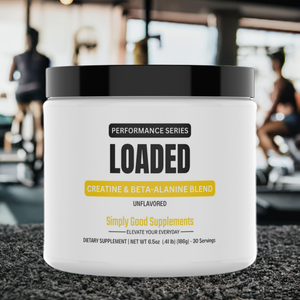
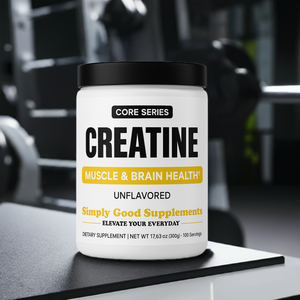
👉 Looking for a clean, effective creatine? Check out Simply Good Creatine Monohydrate—made with one simple ingredient and no unnecessary fillers.
References
- Santos MSC, et al. Creatine supplementation on fatigue related to post-COVID-19 condition—fatigue study: a randomized controlled trial. Frontiers in Nutrition. 2026.
- World Health Organization. Post COVID-19 Condition (Long COVID).
- Slankamenac J, et al. Eight-week creatine-glucose supplementation alleviates clinical features of long COVID. Journal of Nutritional Science and Vitaminology. 2024.
- Slankamenac J, et al. Effects of six-month creatine supplementation on patient- and clinician-reported outcomes in post-COVID-19 fatigue syndrome. Food Science & Nutrition. 2023.
- Molnar T, et al. Mitochondrial dysfunction in Long COVID: Mechanisms, consequences, and therapeutic approaches. GeroScience. 2024.