Can Simply Rinsing Your Mouth with Carbs Make You Faster?
Imagine improving your performance without swallowing a single gram of carbohydrates.
It sounds too good to be true.
But for more than two decades, researchers have been studying a surprisingly simple performance strategy known as carbohydrate mouth rinsing (CHO-MR). Instead of drinking a sports drink or eating an energy gel, athletes simply swish a carbohydrate solution around their mouth for a few seconds before spitting it out.
The idea seems almost ridiculous—until you look at the science.
A growing body of research suggests that simply detecting carbohydrates in your mouth can activate specific areas of the brain involved in motivation, reward, and effort perception. The result? You may feel like exercise is easier and even perform slightly better, despite consuming virtually no calories.
A 2026 study published in PLOS One adds to this growing evidence, finding that carbohydrate mouth rinsing improved cycling performance, reduced ratings of perceived exertion (RPE), and increased activation in the brain's prefrontal cortex—all without changing heart rate or blood lactate levels.
Let's explore how this unusual strategy works and when it might actually help.
What Is Carbohydrate Mouth Rinsing?
Carbohydrate mouth rinsing is exactly what it sounds like.
An athlete places a carbohydrate-containing drink in their mouth, swishes it around for approximately 5–10 seconds, and then spits it out instead of swallowing.
Unlike traditional sports nutrition strategies, the goal isn't to provide fuel to your muscles.
Instead, the goal is to stimulate receptors in the mouth that send signals directly to the brain.
Those signals appear to influence how hard exercise feels—and that can affect performance.
How Can Your Mouth Affect Performance?
At first glance, it doesn't make much sense.
If no carbohydrate reaches your muscles, how could performance improve?
The answer lies in your brain.
Researchers have identified carbohydrate-sensitive receptors in the mouth that activate several brain regions involved in:
- Reward
- Motivation
- Motor control
- Decision making
- Perception of effort
Earlier brain imaging studies demonstrated activation of the:
- Primary taste cortex
- Striatum
- Anterior cingulate cortex
- Dorsolateral prefrontal cortex (DLPFC)
within seconds of carbohydrate exposure—even when nothing was swallowed.
The newest research supports these findings, showing greater oxygenation of both sides of the dorsolateral prefrontal cortex following carbohydrate mouth rinsing during exercise.
The Brain May Be the Real Performance Limiter
One of the most fascinating ideas in endurance physiology is that fatigue isn't determined solely by your muscles.
Your brain constantly monitors:
- Body temperature
- Energy availability
- Muscle fatigue
- Motivation
- Perceived effort
These signals influence pacing decisions long before your muscles completely fail.
The authors suggest carbohydrate mouth rinsing may modify this central regulation process by increasing activity in areas of the brain responsible for executive function and effort perception.
In simple terms:
Your muscles may be capable of producing more work than your brain is currently allowing.
What Did the New Study Find?
Researchers recruited trained cyclists who completed multiple 4-kilometer cycling time trials under three different conditions:
- Carbohydrate mouth rinse
- Placebo mouth rinse
- Music listening
The carbohydrate mouth rinse consistently produced the best results.
Compared with placebo and music, cyclists experienced:
- Faster time-trial performance
- Lower ratings of perceived exertion
- Greater activation of the prefrontal cortex
- Better maintenance of executive function
Interestingly, heart rate and blood lactate concentrations did not differ between conditions, suggesting the improvements weren't caused by changes in metabolism or cardiovascular function.
Instead, the improvements appear to originate in the brain.
Less Effort, Better Performance
One of the most important findings involved perceived exertion.
Athletes consistently reported that the effort felt easier after carbohydrate mouth rinsing.
This supports decades of research suggesting that lowering perceived effort—even slightly—can improve endurance performance.
Imagine two identical athletes producing the same power.
If one athlete feels like the effort is slightly easier, they're often willing to maintain that pace longer.
That small psychological advantage can translate into measurable performance gains.
Does It Actually Make You Faster?
Yes—but don't expect miracles.
The performance improvements observed in the study were modest.
Cyclists finished roughly 5–10 seconds faster during a 4-kilometer time trial after carbohydrate mouth rinsing compared to placebo.
That may not sound like much.
But in competitive sports, a 1–2% improvement can mean the difference between finishing on the podium and finishing in the middle of the pack.
Meta-analyses of carbohydrate mouth rinse studies have similarly concluded that the strategy can improve endurance performance, particularly during exercise lasting approximately 30–75 minutes.
When Does Carbohydrate Mouth Rinsing Work Best?
Current evidence suggests the greatest benefits occur during:
- Cycling time trials
- Running races
- Rowing
- High-intensity endurance exercise
- Events lasting roughly 30–75 minutes
It appears especially useful when athletes begin exercise in a fasted or low-glycogen state.
For longer races, carbohydrate ingestion remains the preferred strategy because your muscles eventually require additional fuel.
When Probably Doesn't It Help?
Carbohydrate mouth rinsing isn't a magic trick.
Research suggests it may provide little benefit when:
- Exercise lasts only a few minutes
- Athletes are already fully fueled and consuming carbohydrates throughout the event
- Performance is primarily limited by strength rather than endurance
In these situations, traditional carbohydrate intake generally provides greater benefits.
How to Perform a Carbohydrate Mouth Rinse
Most studies use a 6–8% carbohydrate solution, similar to many sports drinks.
A typical protocol looks like this:
- Swish 20–30 mL of a carbohydrate drink in your mouth
- Rinse for 5–10 seconds
- Spit it out
- Repeat every 10–15 minutes during exercise if desired
Because very little carbohydrate is swallowed, this strategy provides minimal calories while still stimulating oral carbohydrate receptors.
Product Spotlight: Fuel Your Performance—Inside and Out
While carbohydrate mouth rinsing can be a useful strategy for shorter, high-intensity efforts, actually consuming carbohydrates remains the gold standard for longer endurance events.
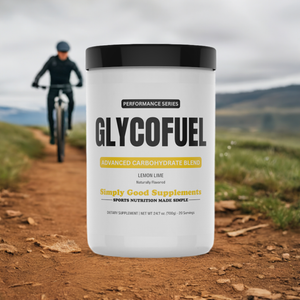
That's where Simply Good Supplements GlycoFuel comes in.
Fuel provides rapidly digestible carbohydrates designed to help maintain blood glucose, preserve glycogen stores, and support sustained performance during long runs, rides, races, and training sessions.
Whether you choose to drink it during endurance exercise or experiment with carbohydrate mouth rinsing before swallowing, GlycoFuel gives you a versatile option backed by the same science showing carbohydrates remain one of the most effective ergogenic aids available.
👉 Learn more here:
https://simplygoodsupps.com/collections/shop-all/products/fuel
Should You Try It?
Carbohydrate mouth rinsing is:
- Safe
- Simple
- Inexpensive
- Easy to test during training
Because responses vary between individuals, the best approach is to experiment before race day.
You may discover it's a useful tool for:
- Short cycling races
- 5K and 10K running
- Hard interval sessions
- Time trials
- Situations where eating or drinking isn't practical
Like any performance strategy, it's another tool—not a replacement for smart training and nutrition.
The Bottom Line
Carbohydrate mouth rinsing may be one of the most fascinating performance strategies in sports nutrition.
Rather than fueling your muscles directly, it appears to improve performance by influencing your brain.
The latest research demonstrates that simply rinsing your mouth with a carbohydrate solution can increase activity in the prefrontal cortex, reduce perceived exertion, preserve cognitive performance, and produce modest improvements in cycling performance—all without changing heart rate, blood lactate, or consuming meaningful calories.
For athletes competing in short, high-intensity endurance events, carbohydrate mouth rinsing may offer a small but meaningful performance advantage.
And when every second counts, even small advantages are worth exploring.
References
- Park SB, Oh K, Yang G, et al. Carbohydrate Mouth Rinsing Enhances Prefrontal Cortex Oxygenation, Executive Function, and Cycling Performance. PLOS One. 2026.
- Carter JM, Jeukendrup AE, Jones DA. The effect of carbohydrate mouth rinse on 1-hour cycle time trial performance. Medicine & Science in Sports & Exercise. 2004.
- Chambers ES, Bridge MW, Jones DA. Carbohydrate sensing in the human mouth: effects on exercise performance and brain activity. Journal of Physiology. 2009.
- Brietzke C, Franco-Alvarenga PE, Coelho-Júnior HJ, et al. Effects of Carbohydrate Mouth Rinse on Cycling Time Trial Performance: A Systematic Review and Meta-analysis. Sports Medicine. 2019.
- Jeukendrup AE, Chambers ES. Oral carbohydrate sensing and exercise performance. Current Opinion in Clinical Nutrition & Metabolic Care. 2010.