Creatine for Women Isn't New: The Truth Behind the Trend
Why the Latest Supplement Trend Is Mostly Marketing
If you spend enough time on social media, you might think scientists just discovered that women can take creatine.
Search for “creatine for women” and you will find an explosion of videos, articles, podcasts, and supplements promoting creatine specifically for women. Some products even combine creatine with collagen, electrolytes, or other ingredients and package it as a new category of female focused supplementation.
There is just one problem with the trend:
Creatine has always been for women.
The growing attention around creatine and women is actually a positive development. Women have historically been underrepresented in sports nutrition research, and more research into female physiology is absolutely warranted. But the idea that creatine itself is suddenly a “women’s supplement” or that women require a fundamentally different form of creatine is largely marketing.
Creatine monohydrate has been studied for decades. Women have been using it for decades. And the basic reasons for taking it have not suddenly changed.
TLDR
Creatine is having a moment among women, but creatine for women is not a new discovery.
Research suggests creatine can support strength, high intensity exercise performance, muscle function, and potentially aspects of cognitive health in women. Researchers are also increasingly interested in how creatine may benefit women during different stages of life, including menopause.
However, none of this means women need a special “female creatine.”
For most healthy women who choose to supplement, 3 to 5 grams of creatine monohydrate per day remains a simple, evidence based approach.
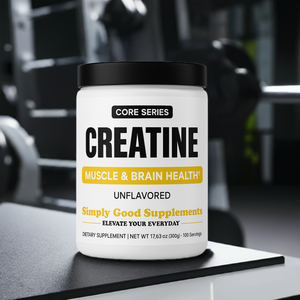
If you want a straightforward option, Simply Good Supplements Creatine Monohydrate provides 5 grams of pure, unflavored creatine monohydrate per serving with no fillers, sweeteners, or unnecessary ingredients.
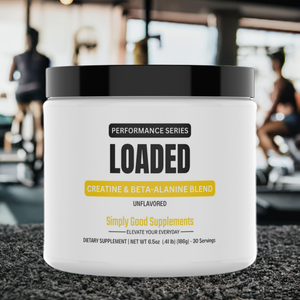
If you want creatine plus another evidence based performance ingredient, Simply Good Supplements Loaded combines 3 grams of creatine monohydrate with 3.2 grams of beta alanine per serving.
The takeaway is simple: Creatine did not suddenly become good for women. Creatine has always been for women.
Why Is Creatine Suddenly Being Marketed to Women?
Creatine has traditionally been associated with bodybuilding.
For decades, supplement advertisements tended to feature muscular men lifting heavy weights. Creatine containers often looked like they belonged in the back corner of a hardcore bodybuilding gym.
That branding probably did creatine a disservice.
Creatine is not a steroid, hormone, testosterone booster, or male specific supplement. It is a naturally occurring compound involved in cellular energy production.
Your body already makes creatine, and you also obtain small amounts through foods, particularly meat and fish.
Supplemental creatine simply increases the amount of creatine available to tissues such as skeletal muscle.
As the conversation around women's strength training, muscle preservation, healthy aging, and performance has grown, creatine has naturally entered the discussion.
The supplement did not change.
The audience being marketed to did.
Women Have Been Taking Creatine for Decades
The current trend can make it sound as though researchers recently discovered that creatine works in women.
That is misleading.
Research specifically examining creatine supplementation in women goes back decades.
A major review published in Nutrients examined creatine across the female lifespan and discussed research involving premenopausal women, postmenopausal women, exercise performance, body composition, mood, and cognition. The authors concluded that creatine may have important applications for women throughout different stages of life, while also acknowledging that women remain underrepresented in creatine research.
The International Society of Sports Nutrition has also identified creatine as one of the supplements with the strongest evidence for female athletes and recommends 3 to 5 grams per day.
So, yes, researchers are learning more about creatine specifically in women.
But that is very different from saying creatine has only recently become appropriate for women.
What Does Creatine Actually Do?
To understand why creatine works for both women and men, it helps to understand what creatine actually does.
Your muscles require energy in the form of adenosine triphosphate, better known as ATP.
During intense exercise, ATP is rapidly depleted.
Your phosphocreatine system helps regenerate ATP so your muscles can continue producing high levels of force.
Supplementing with creatine increases the body's creatine and phosphocreatine availability, which can help support repeated high intensity efforts and training capacity. Creatine supplementation has consistently been shown to increase intramuscular creatine concentrations and can improve exercise performance and training adaptations.
Over time, being able to perform slightly more work during training may contribute to greater training adaptations.
That mechanism is not exclusively male.
Women have the same phosphocreatine energy system.
Creatine May Actually Be Particularly Interesting for Women
The interesting part of the emerging research is not that scientists suddenly discovered women can use creatine.
It is that researchers are beginning to investigate whether creatine could have additional applications during different stages of a woman's life.
Female physiology changes substantially throughout the lifespan. Menstruation, pregnancy, postpartum periods, perimenopause, and menopause all involve hormonal changes that may affect metabolism and physiology.
Researchers have proposed that changes in creatine synthesis, transport, creatine kinase activity, and phosphocreatine resynthesis could make creatine particularly interesting during some of these stages.
That is where the science gets interesting.
Rather than creating an entirely separate category called “women's creatine,” researchers are asking a much better question:
Are there certain situations in which women might benefit particularly from increasing creatine availability?
That question is still being investigated.
Creatine and Strength in Women
Strength and muscle function are among the most established reasons people take creatine.
Research in women suggests creatine supplementation can improve strength and exercise performance, particularly when combined with an appropriate training program. The female focused ISSN position stand describes beneficial outcomes involving strength, hypertrophy, and exercise performance in both trained and untrained female populations.
This is important because strength is not just about lifting heavier weights.
Maintaining strength and skeletal muscle is associated with physical function, athletic performance, and the ability to remain active as we age.
Women do not need a special form of creatine to potentially obtain these benefits.
They need an evidence based form of creatine at an appropriate dose.
Creatine May Become Even More Relevant With Age
One of the most interesting areas of creatine research involves older women.
Loss of skeletal muscle becomes increasingly important with aging, particularly during and following menopause.
Resistance training remains one of the most important strategies for preserving muscle and strength, but creatine may complement that training.
Research has investigated creatine supplementation in postmenopausal women for potential effects on muscle size, strength, physical function, and bone health. A 2026 systematic review and meta analysis specifically examined creatine monohydrate for lean mass, strength, and bone density in postmenopausal women, highlighting just how much attention this area is now receiving.
This makes creatine potentially relevant far beyond athletes trying to improve their gym performance.
A woman in her 50s, 60s, or 70s trying to maintain strength and physical function may have just as much reason to be interested in creatine as a 25 year old athlete.
What About Creatine and the Brain?
Another reason creatine has escaped its traditional bodybuilding reputation is growing research into its role outside skeletal muscle.
Your brain requires tremendous amounts of energy, and the creatine phosphocreatine system also plays a role in brain energy metabolism.
Researchers are investigating creatine supplementation for cognition, mood, sleep deprivation, and other neurological applications.
Female focused research has suggested potential benefits related to mood and cognition, possibly through effects on brain energy availability. However, this area of research is still developing and is less established than creatine's role in muscular performance.
This is an exciting area of research, but consumers should be cautious when supplement companies turn preliminary findings into definitive promises.
Creatine is promising.
It is not magic.
Do Women Need a Special Type of Creatine?
This is where the marketing gets ahead of the science.
You may now see products advertised as:
“Creatine for Her.”
“Women's Creatine.”
“Creatine for Hormonal Health.”
“Menopause Creatine.”
There is nothing inherently wrong with creating a product designed or flavored for women.
But women do not need pink creatine.
They do not need a fundamentally different creatine molecule either.
Creatine monohydrate remains the most extensively researched form of supplemental creatine and is considered highly effective for improving high intensity exercise capacity and supporting training adaptations.
That is also why we keep our Simply Good Supplements Creatine Monohydrate incredibly simple.
Each serving provides:
5 grams of creatine monohydrate.
That's it.
It is unflavored and contains no fillers, sweeteners, colors, or unnecessary ingredients, making it easy to add to water, a protein shake, smoothie, or another daily beverage.
Shop Simply Good Supplements Creatine Monohydrate
No female specific formulation.
No trendy proprietary blend.
No unnecessary ingredients added simply to make the label longer.
Just an evidence based form of creatine at a straightforward daily dose.
What If You Want More Than Just Creatine?
Creatine is not the only well researched supplement that can support exercise performance.
Women who regularly strength train, perform intervals, compete in functional fitness, sprint, cycle, or participate in other high intensity activities may also be interested in beta alanine.
Beta alanine works differently from creatine.
While creatine helps regenerate ATP during intense muscular work, beta alanine increases muscle carnosine concentrations. Carnosine helps buffer the increasing acidity associated with high intensity exercise, which is why beta alanine is frequently used to support muscular endurance during hard efforts.
That is the idea behind Simply Good Supplements Loaded.
Loaded combines:
3 grams of creatine monohydrate
3.2 grams of beta alanine
Rather than creating a “women's creatine” filled with trendy extras, Loaded combines two established performance ingredients with different but complementary roles.
Creatine helps support rapid energy regeneration for strength and power, while beta alanine is aimed more at helping sustain high intensity exercise as fatigue builds.
Shop Simply Good Supplements Loaded Creatine + Beta Alanine
For women primarily interested in creatine, our standalone Creatine Monohydrate provides the full 5 gram daily serving.
For women who train hard and want creatine plus beta alanine in one simple product, Loaded provides another option.
Neither needs to be marketed specifically to women to work for women.
Does Creatine Make Women Bulky?
This is another myth that has likely kept many women away from creatine.
Creatine does not suddenly make someone bulky.
Creatine can support increases in lean mass when combined with resistance training, but substantial muscle growth still requires an appropriate training stimulus, nutrition, and time.
Creatine may also increase cellular hydration because additional water can be stored within muscle.
That is not the same thing as gaining body fat.
In fact, research specifically examining adverse outcomes in women found no significant increase in total adverse events or body weight attributable to creatine supplementation compared with controls.
If your goal is becoming stronger, maintaining muscle, or improving training quality, creatine should not automatically be avoided because of fears that it will make you “bulky.”
Is Creatine Safe for Women?
Creatine monohydrate has one of the most extensive safety records in sports nutrition.
A systematic review and meta analysis specifically examining creatine monohydrate safety in women included data from hundreds of female participants and found no association with serious adverse events or significant increases in gastrointestinal problems, weight gain, or measures of kidney or liver dysfunction.
Broader creatine research has similarly found creatine monohydrate to be well tolerated in healthy individuals when used appropriately.
That does not mean everyone should automatically take creatine.
Anyone with an existing medical condition, taking medications that could affect kidney function, or who has been advised to restrict supplements should discuss supplementation with an appropriate healthcare professional.
Pregnancy also deserves additional caution. Researchers are interested in creatine during pregnancy, but that does not mean routine supplementation during pregnancy should be assumed appropriate without guidance from a healthcare professional.
How Much Creatine Should Women Take?
For most healthy women interested in creatine supplementation, things can remain remarkably simple:
Take 3 to 5 grams of creatine monohydrate per day.
That is also the daily range recommended in the ISSN position stand addressing nutrition for female athletes.
You do not necessarily need to cycle it.
You do not need to take it only on workout days.
You do not need to time it precisely before your workout.
And you certainly do not need to pay a premium simply because the container says “for women.”
Consistency matters much more than finding the perfect time of day.
A loading phase can increase muscle creatine stores more quickly, but it is not required. Taking a standard daily dose consistently will gradually increase creatine stores as well.
If you want a simple 5 gram daily dose, one serving of Simply Good Supplements Creatine Monohydrate provides exactly that.
If you prefer to combine creatine with beta alanine for additional high intensity training support, Loaded provides 3 grams of creatine monohydrate alongside 3.2 grams of beta alanine.
The best choice depends on your goals, not your gender.
So Is “Creatine for Women” a Myth?
Yes and no.
Creatine being beneficial for women is absolutely not a myth.
In fact, the increased attention being given to creatine and women's health is long overdue.
What is misleading is the implication that scientists recently discovered a new category of supplementation called “creatine for women.”
Women have always had a creatine phosphocreatine energy system.
Women have always produced creatine.
Women have always consumed creatine through food.
Women have been included in creatine research for decades.
And women have been using creatine successfully long before it became a social media trend.
What is genuinely changing is the amount of attention being paid to female specific creatine research, including how different stages of a woman's life may influence creatine metabolism and its potential benefits.
That research is valuable.
Turning it into the idea that women suddenly need their own special creatine product is mostly marketing.
The Bottom Line
The recent popularity of creatine among women should largely be viewed as a good thing.
For years, creatine was unnecessarily pigeonholed as a bodybuilding supplement for men. More women discovering one of the most extensively studied sports supplements available is progress.
But we should separate increased awareness from scientific discovery.
Creatine did not suddenly become good for women. Creatine has always been for women.
What is changing is our understanding of just how many ways women may potentially benefit from it throughout their lives.
And supplementation does not need to become complicated just because creatine is trending.
If you want creatine and nothing else, Simply Good Supplements Creatine Monohydrate provides 5 grams of pure, unflavored creatine monohydrate per serving.
Shop Simply Good Supplements Creatine Monohydrate
If performance is your primary goal and you also want beta alanine, Simply Good Supplements Loaded combines 3 grams of creatine monohydrate with 3.2 grams of beta alanine in one simple formula.
Shop Simply Good Supplements Loaded
Because when it comes to creatine, women do not need a pink container, a special proprietary blend, or an entirely new formulation.
They need the same thing everyone else does:
An evidence based dose of an evidence based ingredient.
References
- Smith Ryan AE, Cabre HE, Eckerson JM, Candow DG. Creatine Supplementation in Women's Health: A Lifespan Perspective. Nutrients. 2021;13(3):877.
- Kerksick CM, et al. International Society of Sports Nutrition Position Stand: Nutritional Concerns of the Female Athlete. Journal of the International Society of Sports Nutrition. 2023.
- Kreider RB, Kalman DS, Antonio J, et al. International Society of Sports Nutrition Position Stand: Safety and Efficacy of Creatine Supplementation in Exercise, Sport, and Medicine. Journal of the International Society of Sports Nutrition. 2017;14:18.
- de Guingand DL, et al. Risk of Adverse Outcomes in Females Taking Oral Creatine Monohydrate: A Systematic Review and Meta Analysis. Nutrients. 2020.
- Naddafha S, Antonio J, Kreider RB, Stout JR. Creatine Monohydrate for Lean Mass, Strength, and Bone Density in Postmenopausal Women: A Systematic Review and Meta Analysis. Journal of the International Society of Sports Nutrition. 2026.