Should You Stack Creatine With Protein Powder? Here Is What the Science Says
TLDR
Yes, creatine and protein powder make an excellent stack, especially if your goals include building muscle, getting stronger, recovering from hard training, or preserving lean mass as you age.
Protein provides the essential amino acids your muscles need to repair and build new tissue. Creatine helps your muscles rapidly regenerate ATP, allowing you to produce more force and potentially complete more high quality training over time. Research shows both can independently support resistance training adaptations, and several trials have found impressive gains when they are used together.
But there is an important distinction:
You do not need to mix creatine and protein together for either one to work.
Creatine works primarily by gradually increasing muscle creatine stores, so daily consistency matters more than timing. Protein works best as part of an overall diet that supplies enough protein throughout the day.
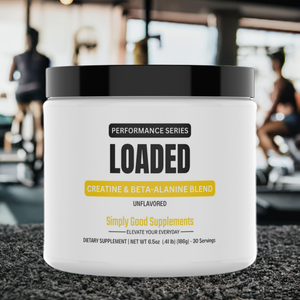
For a simple approach, add Simply Good Creatine Monohydrate to your favorite protein shake. If you want creatine plus beta alanine for training performance, Loaded provides 3 grams of creatine monohydrate plus 3.2 grams of beta alanine per serving. And after long or demanding workouts where you also need carbohydrates, Recharge combines whey isolate with multiple carbohydrate sources, electrolytes, and additional recovery ingredients.
Should You Take Creatine and Protein Powder Together?
Creatine and protein powder may be two of the most popular supplements in sports nutrition.
They are also two of the most researched.
But because both are associated with muscle growth and recovery, people often assume they do essentially the same thing.
They do not.
In fact, that is exactly why combining them makes sense.
Protein helps provide the building blocks for muscle.
Creatine helps provide the energy to train that muscle harder.
One supports the construction process.
The other helps power the work that stimulates the construction process in the first place.
So rather than asking whether you should choose creatine or protein, a better question for many athletes is:
Why not use both?
What Does Protein Actually Do?
Resistance training creates a powerful stimulus for muscle adaptation.
But training alone cannot build muscle out of nothing.
Your body needs amino acids.
When you consume high quality dietary protein, it is digested into amino acids that enter circulation and become available for tissue repair and remodeling.
Essential amino acids, particularly leucine, help stimulate muscle protein synthesis, or MPS.
Muscle protein synthesis is essentially the process through which your body builds new muscle proteins.
Exercise and protein work especially well together.
The International Society of Sports Nutrition concludes that resistance exercise and protein ingestion both stimulate muscle protein synthesis, with the two working synergistically when protein is consumed around resistance exercise.
That is why protein powder can be useful.
It is not magical.
It is simply a convenient way to get a concentrated dose of high quality protein and essential amino acids.
How Much Protein Do You Need?
For most healthy people who exercise regularly, the ISSN recommends approximately:
1.4 to 2.0 grams of protein per kilogram of body weight per day
as a sufficient range for building and maintaining muscle.
For someone weighing 180 pounds, or approximately 82 kilograms, that equals roughly:
115 to 164 grams of protein per day.
For individual meals, a commonly recommended target is approximately:
20 to 40 grams of high quality protein
or roughly:
0.25 grams per kilogram of body weight per serving.
Those meals should ideally contain sufficient essential amino acids and leucine and be distributed throughout the day.
Protein powder becomes useful when food alone makes those targets inconvenient.
Creatine Has a Completely Different Job
Creatine is not protein.
It is not an amino acid supplement designed primarily to stimulate muscle protein synthesis.
Instead, creatine helps support one of the body's fastest energy systems.
Your muscles use ATP, or adenosine triphosphate, as immediate cellular energy.
During activities such as:
- Heavy lifting
- Sprinting
- Jumping
- High intensity intervals
- Explosive sports
ATP is consumed extremely quickly.
Your muscles use phosphocreatine to help regenerate ATP so you can continue producing high amounts of force.
Creatine supplementation increases the amount of creatine and phosphocreatine stored in muscle.
That can potentially allow you to:
Perform more repetitions.
Maintain greater power.
Recover better between hard efforts.
Train at a higher quality over time.
And those small improvements in training can accumulate into greater strength and muscle adaptations.
Creatine Works
Creatine is one of the rare supplements where the overall evidence is remarkably consistent.
A recent systematic review and meta analysis examining adults younger than 50 found that adding creatine to resistance training produced significantly greater increases in both upper body and lower body strength compared with resistance training plus placebo.
Another recent meta analysis examining 61 controlled trials found that creatine combined with resistance training increased fat free mass by an average of approximately:
1.39 kilograms
compared with control conditions.
A separate meta analysis looking specifically at direct measurements of individual muscles found a smaller effect on regional hypertrophy, which is a useful reminder that some of the increase in fat free mass seen with creatine can reflect intracellular water as well as actual muscle growth.
The overall takeaway is still strong:
Creatine consistently improves training performance and strength, and it can support greater gains in lean mass when paired with resistance training.
So What Happens When You Combine Creatine and Protein?
Now we get to the important part.
Creatine and protein target different limitations.
Imagine building muscle like constructing a house.
Protein delivers the:
Lumber, concrete, wiring, and building materials.
Creatine helps provide:
More energy to the construction crew.
Having more construction materials does not necessarily increase the crew's energy.
Giving the crew more energy does not magically supply the building materials.
You need both sides of the equation.
That is the rationale behind combining them.
Research Has Tested Creatine Plus Whey Protein Directly
One classic randomized study divided resistance training men into three groups:
Whey protein
Whey protein plus creatine
or
Placebo.
After six weeks of resistance training, the creatine plus whey group experienced greater increases in lean tissue mass than either whey protein alone or placebo.
Bench press strength also increased significantly more with the creatine plus whey combination.
That certainly supports stacking them.
But it does not necessarily mean that creatine and whey have some unique chemical interaction when mixed into the same shaker bottle.
The more likely explanation is much simpler.
Both supplements independently support training adaptations through complementary mechanisms.
Another Study Found Similar Results in Older Men
Researchers have also studied creatine and protein together in older adults.
In one randomized trial involving men between 59 and 77 years old who resistance trained for 10 weeks, participants received creatine plus protein, creatine alone, or placebo.
The creatine plus protein group increased lean tissue mass by approximately:
5.6 percent
compared with:
2.2 percent with creatine alone
and
1.0 percent with placebo.
The combination group also experienced a greater increase in bench press strength.
That suggests the combination may be particularly useful when the goal is maximizing muscle preservation or growth while resistance training.
But Not Every Study Shows an Extra Benefit
This is where the science requires some nuance.
Not every trial finds that adding creatine to protein produces dramatically better results than protein alone.
For example, a randomized trial involving older adults with frailty compared resistance training plus whey protein with resistance training plus whey protein and creatine.
Both groups improved physical function, but there were no statistically significant differences between groups.
Why the mixed results?
There are many possibilities:
- Training status
- Age
- Creatine dose
- Protein intake
- Baseline diet
- Training program
- Study duration
- Sample size
- Starting muscle creatine concentrations
Supplements generally produce modest incremental benefits rather than transforming outcomes overnight.
Creatine Does Not Make Protein Work Better
This is an important misconception.
Adding creatine to your protein shake does not appear to magically increase the amount of protein your body absorbs.
Creatine does not suddenly make whey protein more anabolic.
Likewise, protein is not required for your muscles to absorb creatine.
They simply have complementary effects.
Protein supports:
Muscle protein synthesis and tissue repair.
Creatine supports:
ATP regeneration, strength, power, and training capacity.
That makes them a logical stack without requiring some special synergy between the two powders.
Do You Have to Take Them at the Same Time?
No.
This may be the easiest part of the entire article.
You can mix creatine directly into your protein shake.
Or you can take them several hours apart.
Creatine works by gradually saturating muscle creatine stores.
Once those stores are elevated, the important thing is keeping them elevated.
Research comparing creatine before versus after resistance training has not established a major advantage to one timing strategy. One randomized trial involving male and female collegiate athletes gave 5 grams of creatine either before or after training while participants also consumed whey protein and carbohydrate. Both creatine timing strategies produced similar overall training adaptations.
For most people:
Take creatine whenever you are most likely to remember it.
If adding it to your daily protein shake improves consistency, that's a great strategy.
How Much Creatine Should You Take?
For most adults, a practical maintenance dose is:
3 to 5 grams of creatine monohydrate per day.
A comprehensive review of common creatine questions concluded that recommended doses of approximately 3 to 5 grams per day are well tolerated and effective for most healthy people.
You can also use a loading protocol.
A traditional approach is approximately:
20 grams per day
divided into several servings for:
5 to 7 days
followed by:
3 to 5 grams per day.
Loading simply saturates your muscles faster.
It is not required.
Taking 3 to 5 grams every day will eventually achieve the same general goal.
Creatine Monohydrate Is Still the Standard
Walk into a supplement store and you will see:
- Creatine hydrochloride
- Buffered creatine
- Creatine nitrate
- Creatine ethyl ester
- Various proprietary creatine blends
But the strongest evidence still supports plain creatine monohydrate.
A critical review of creatine forms concluded that no alternative form had been consistently shown to outperform creatine monohydrate.
That is why both of the Simply Good options discussed below use creatine monohydrate.
Option 1: Add Simply Good Creatine to Your Protein Shake
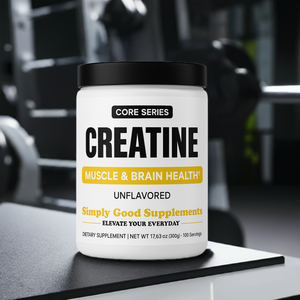
The simplest option is Simply Good Creatine Monohydrate.
Each serving provides:
5 grams of creatine monohydrate
with no flavors, sweeteners, fillers, or additional ingredients.
Because it is unflavored, you can mix it directly into a shake, coffee, smoothie, or whatever beverage you already drink each day.
Shop Simply Good Creatine Monohydrate
This is the option I would choose if your primary goal is simple:
Get a full research standard dose of creatine every day.
You can take one scoop alongside your protein after training, with breakfast, or at any other consistent time.
Option 2: Use Loaded if You Want Creatine Plus Beta Alanine
If your training involves substantial high intensity work, Loaded gives you a different type of stack.
One serving contains:
3,000 mg creatine monohydrate
plus
3,200 mg beta alanine.
Shop Loaded Creatine & Beta Alanine
Creatine and beta alanine complement one another in a different way.
Creatine primarily supports rapid ATP regeneration and repeated explosive efforts.
Beta alanine increases muscle carnosine stores, helping buffer acidity during demanding high intensity exercise.
That makes Loaded particularly useful for:
- HYROX
- CrossFit
- Interval running
- Strength training
- Sprint training
- Functional fitness
- Repeated high intensity efforts
The key with both creatine and beta alanine is consistent daily supplementation.
They work through gradual changes in muscle stores rather than by providing a one time stimulant effect before your workout.
Should You Add Extra Creatine if You Use Loaded?
Possibly.
Loaded provides 3 grams of creatine monohydrate per serving, which falls at the lower end of the commonly researched 3 to 5 gram daily range.
For many people, 3 grams daily is enough to increase muscle creatine stores over time.
If you specifically want to consume 5 grams per day, you could use Loaded as your base and add additional plain creatine.
The important thing is to count your total daily intake rather than mindlessly stacking multiple creatine containing products.
Option 3: Stack Creatine With Recharge After Hard Training
For demanding workouts, especially endurance sessions, hybrid training, long runs, races, or high volume lifting, there is another piece of the recovery puzzle:
Carbohydrates.
That is where Recharge becomes useful.
Recharge is not simply a protein powder.
It combines:
Whey protein isolate
with several carbohydrate sources including:
Dextrose
Fructose
Cluster Dextrin
and
Brown rice flour
along with electrolytes, leucine, L Carnitine L Tartrate, and additional recovery ingredients.
That gives you three different recovery targets:
Protein helps rebuild muscle.
Carbohydrates help replenish glycogen.
Creatine helps replenish and maintain muscle creatine stores.
For a hard training day, mixing your daily creatine into Recharge is an extremely simple recovery stack.
Why Carbs Matter Too
If you just finished a long run, hard cycling session, HYROX workout, race, or demanding interval session, protein alone does not completely address recovery.
Exercise can deplete muscle glycogen.
Carbohydrate intake helps replenish those glycogen stores.
Sports nutrition recommendations emphasize carbohydrate intake when rapid glycogen recovery is necessary, while protein supplies amino acids needed for repair and remodeling.
This is why Recharge makes more sense after a demanding glycogen depleting workout than simply drinking whey protein in isolation.
Its current formula combines fast and slower carbohydrate sources with whey isolate and electrolytes specifically for post exercise recovery.
Protein Plus Creatine Is Not Just for Bodybuilders
There is a tendency to associate both supplements with bodybuilding.
That misses a much larger group of people who can potentially benefit.
Consider an endurance athlete.
More muscle and strength can improve:
- Running economy
- Hill climbing
- Sprint ability
- Resistance to fatigue
- Injury resilience
Creatine may also support high intensity surges, finishing speed, and strength training outside of endurance sessions.
Protein helps repair the muscle damage associated with long and hard exercise.
The combination therefore has relevance far beyond bodybuilding.
It May Be Particularly Valuable as You Age
The protein plus creatine conversation becomes even more important after middle age.
Aging is associated with gradual losses in muscle mass, strength, and physical function.
Resistance training becomes increasingly important.
So does adequate protein.
Creatine may provide another layer of support.
Recent evidence in older populations continues to suggest that creatine combined with resistance exercise can support lean mass and strength, although the size of the effect varies between studies and populations.
That makes protein plus creatine one of the more evidence based supplement combinations for supporting healthy muscle across the lifespan.
Should You Take Creatine on Rest Days?
Yes.
Remember that creatine is about muscle saturation.
It is not like caffeine, where you take it and feel an acute effect 30 minutes later.
If you are supplementing with creatine, take it:
Every day.
Training days.
Rest days.
Vacation days.
The exact time matters much less than consistency.
Simply Good Creatine provides 5 grams per scoop and is specifically designed for daily use.
Should You Take Protein on Rest Days?
Also yes, assuming you need it to hit your protein target.
Muscle recovery does not stop when the workout ends.
Exercise can increase muscle protein synthesis for many hours after training, and your muscles continue remodeling during recovery.
Your total daily protein intake is more important than only drinking protein immediately after workouts.
If you already get enough protein from food on a rest day, you do not necessarily need a shake.
Protein powder is a tool.
Your total protein intake is the actual goal.
Is There a Perfect Post Workout Window?
Not really.
The idea that you have exactly 30 minutes after training or your workout is wasted is outdated.
Post workout protein certainly works.
But the anabolic response to exercise lasts much longer than 30 minutes.
The ISSN notes that the muscle building effects of resistance exercise can remain elevated for at least 24 hours, although they gradually decline.
A practical approach is simply to consume a high quality protein feeding within a few hours around your training.
If you train fasted or have not eaten protein for several hours, consuming protein relatively soon afterward becomes more useful.
A Simple Stack for Strength and Muscle
You do not need a complicated supplement schedule.
For someone primarily focused on strength and muscle, a simple strategy could look like this:
Every day: 3 to 5 grams of creatine monohydrate.
Daily nutrition: Enough protein to reach approximately 1.4 to 2.0 grams per kilogram per day if you train regularly.
Around training: A 20 to 40 gram serving of high quality protein when useful for reaching your daily target.
Training: Progressive resistance exercise.
That is the foundation.
Everything else is secondary.
Which Simply Good Stack Makes the Most Sense?
If you want the simplest possible combination, use:
Protein powder + Simply Good Creatine Monohydrate
because the creatine provides a full 5 gram serving and mixes easily with almost anything.
If you perform substantial high intensity training and want beta alanine too, use:
Protein powder + Loaded
which gives you 3 grams of creatine plus 3.2 grams of beta alanine.
If you just finished a demanding workout and need a more complete recovery strategy, use:
Creatine or Loaded + Recharge
because Recharge supplies whey isolate, carbohydrates, and electrolytes to address muscle repair, glycogen replenishment, and rehydration.
The right choice depends on your training.
One Thing You Should Not Do
Do not accidentally double or triple your creatine intake simply because several products contain it.
Read your labels.
For example:
Loaded already provides 3 grams of creatine.
Simply Good Creatine provides 5 grams.
That does not mean combining them is inherently dangerous for a healthy person, but there is generally little reason to keep adding creatine once you have reached an effective daily amount.
More is not automatically better.
What About Kidney Health?
Creatine has probably been accused of damaging kidneys more than almost any other sports supplement.
In healthy individuals, research has not demonstrated that recommended creatine doses impair kidney function.
One source of confusion is that creatine supplementation can increase blood creatinine, which is commonly used as a marker when estimating kidney function.
Creatinine is also a breakdown product of creatine.
So a modest increase in creatinine does not automatically indicate kidney damage.
The broader creatine literature supports the safety of recommended creatine monohydrate supplementation in healthy individuals.
People with existing kidney disease or other significant medical conditions should discuss supplementation with their healthcare professional.
The Most Important Ingredient Is Still Training
There is one final reality worth emphasizing.
Neither creatine nor protein powder builds impressive muscle while you sit on the couch.
They work best because they help you get more from an effective training program.
Resistance training provides the stimulus.
Protein supplies amino acids.
Creatine helps support training capacity.
Adequate calories and carbohydrates help fuel the work.
Sleep allows adaptation.
This is why supplements should be viewed as multipliers of good habits, not replacements for them.
Simply Good Tip
If you already drink a shake every day, adding creatine to it may be the easiest way to make creatine supplementation automatic.
You do not need a complicated protocol.
For straightforward daily creatine, use Simply Good Creatine Monohydrate.
For creatine plus beta alanine, use Loaded.
After long, hard, or glycogen depleting training, pair either strategy with Recharge to add whey protein, carbohydrates, and electrolytes.
The best stack is ultimately the one that fills the gaps created by your training.
The Bottom Line
So, should you stack creatine with protein powder?
Yes, for most people who train regularly, it makes a lot of sense.
Not because creatine makes protein more anabolic.
Not because protein magically increases creatine absorption.
And not because they have to be consumed in the same shaker bottle.
They simply do different jobs exceptionally well.
Protein supplies the amino acids required for muscle repair and growth.
Creatine increases muscle creatine availability and helps support strength, power, repeated high intensity performance, and training adaptations.
Research has found greater lean mass and strength gains in some trials when creatine and whey protein were combined with resistance training, while broader research independently supports both adequate protein intake and creatine supplementation for improving training adaptations.
For most athletes, the priorities should be simple:
Train progressively.
Eat enough protein.
Take 3 to 5 grams of creatine consistently.
Eat enough carbohydrates to support your training.
Recover well.
If you already have those basics covered, protein and creatine are about as logical a supplement stack as you can build.
Frequently Asked Questions
Can I put creatine directly in my protein shake?
Yes. There is no need to take them separately. Mixing creatine monohydrate into a protein shake is a convenient way to consume both consistently.
Is it better to take creatine before or after a workout?
Current evidence does not establish a meaningful advantage to taking creatine immediately before versus immediately after training. Daily consistency is more important because creatine works by gradually increasing muscle creatine stores.
How much creatine should I take?
A practical dose for most people is 3 to 5 grams of creatine monohydrate every day. Loading can saturate muscle stores faster but is not required.
How much protein should I take with creatine?
You do not need a specific amount of protein to make creatine work. For supporting muscle protein synthesis, approximately 20 to 40 grams of high quality protein per feeding is a useful general target, while total daily intake is more important.
Should I take creatine on days I do not exercise?
Yes. Daily use helps maintain elevated muscle creatine stores.
Is Loaded enough creatine for the day?
Loaded provides 3 grams of creatine monohydrate per serving, which falls within the commonly recommended 3 to 5 gram daily range. It also provides 3.2 grams of beta alanine.
What is the difference between Loaded and Creatine Monohydrate?
Loaded provides 3 grams of creatine monohydrate plus 3.2 grams of beta alanine, making it a good option for athletes focused on both power and high intensity endurance.
Simply Good Creatine Monohydrate provides 5 grams of pure creatine monohydrate with no additional ingredients.
When would I use Recharge instead of a regular protein shake?
Recharge makes the most sense following harder or longer workouts where you need more than protein alone. It combines whey isolate with several carbohydrate sources and electrolytes to support muscle repair, glycogen restoration, and rehydration.
References
- Jäger R, Kerksick CM, Campbell BI, et al. International Society of Sports Nutrition Position Stand: Protein and Exercise. Journal of the International Society of Sports Nutrition. 2017;14:20.
- Kerksick CM, Arent S, Schoenfeld BJ, et al. International Society of Sports Nutrition Position Stand: Nutrient Timing. Journal of the International Society of Sports Nutrition. 2017;14:33.
- Burke DG, Chilibeck PD, Davidson KS, Candow DG, Farthing J, Smith Palmer T. The Effect of Whey Protein Supplementation With and Without Creatine Monohydrate Combined With Resistance Training on Lean Tissue Mass and Muscle Strength. International Journal of Sport Nutrition and Exercise Metabolism. 2001;11:349 to 364.
- Candow DG, Little JP, Chilibeck PD, et al. Low Dose Creatine Combined With Protein During Resistance Training in Older Men. Medicine & Science in Sports & Exercise. 2008;40:1645 to 1652.
- Kreider RB, Kalman DS, Antonio J, et al. International Society of Sports Nutrition Position Stand: Safety and Efficacy of Creatine Supplementation in Exercise, Sport, and Medicine. Journal of the International Society of Sports Nutrition. 2017;14:18.
- Antonio J, Candow DG, Forbes SC, et al. Common Questions and Misconceptions About Creatine Supplementation: What Does the Scientific Evidence Really Show? Journal of the International Society of Sports Nutrition. 2021;18:13.
- Kreider RB, Jäger R, Purpura M. Bioavailability, Efficacy, Safety, and Regulatory Status of Creatine and Related Compounds: A Critical Review. Nutrients. 2022;14:1035.
- Forbes SC, et al. Effects of Creatine Supplementation and Resistance Training on Muscle Strength Gains in Adults Younger Than 50 Years: A Systematic Review and Meta Analysis. 2024.
- Recent systematic review and dose response meta analysis of 61 controlled trials examining creatine supplementation and resistance training found significantly greater gains in fat free mass with creatine.