Do Supplements Make Blood Flow Restriction Training Better?
TLDR
A 2026 systematic review and meta analysis examined nine randomized controlled trials involving 181 healthy adults to determine whether nutritional supplements make blood flow restriction training more effective. The answer depends on what you are trying to improve. Supplements did not clearly increase maximal strength or muscle growth beyond BFR training alone, but they produced a significant improvement in muscular endurance and fatigue resistance.
The supplements studied included creatine, caffeine, beta alanine, whey protein, collagen, betaine, and dietary nitrate. The most interesting results involved supplements that may help athletes tolerate the extreme metabolic stress and fatigue created by BFR training.
What Is Blood Flow Restriction Training?
Blood flow restriction training, commonly called BFR training, involves placing specialized cuffs around the upper portion of an arm or leg while exercising.
The cuffs restrict venous blood flow out of the working muscle while only partially restricting arterial blood flow into it.
What makes BFR particularly interesting is that it allows athletes to create a substantial muscular stimulus while lifting relatively light loads, often around 20 to 30 percent of one repetition maximum. This can stimulate strength and muscle adaptations while placing less mechanical stress on the joints and surrounding tissues.
That makes BFR potentially useful for athletes who want to add training volume without constantly lifting heavy weights. It is also one reason BFR has become increasingly popular in rehabilitation and among older adults.
There is a catch, however.
BFR can be brutally uncomfortable.
The restricted blood flow creates local hypoxia and encourages metabolites such as lactate and hydrogen ions to accumulate within the working muscle. That metabolic environment contributes to the training stimulus, but it also accelerates fatigue and discomfort.
That raises an interesting question:
Could supplements help athletes tolerate BFR training better and potentially get more out of it?
A new study attempted to answer exactly that.
What Did the New Study Investigate?
Researchers Zhao and Zhai published a systematic review and meta analysis in Frontiers in Nutrition in May 2026 titled Combined Effects of Blood Flow Restriction Training and Nutritional Intervention on Muscle Adaptations.
Rather than testing one supplement, the researchers combined evidence from randomized controlled trials examining several different nutritional strategies alongside BFR training.
The final analysis included:
9 randomized controlled trials
181 healthy adults
Multiple BFR protocols
Several different nutritional supplements
Researchers specifically examined three outcomes:
1. Maximal strength
2. Muscular endurance
3. Muscle hypertrophy
The supplements studied included caffeine, creatine, beta alanine, collagen, whey protein, betaine, and nitrate. Some interventions involved a single dose before exercise, while others lasted between two and eight weeks.
And the results were surprisingly clear in one area.
Supplements Significantly Improved Muscular Endurance With BFR
The biggest finding from the entire analysis involved muscular endurance.
Five studies evaluated whether supplements improved muscular endurance during BFR training.
When researchers combined those results, supplementation produced a significant improvement in muscular endurance compared with BFR alone or BFR plus placebo.
The effect size was:
SMD = 0.90
95% CI = 0.55 to 1.25
p < 0.00001
An effect size of 0.90 is substantial. The researchers classified effects between 0.61 and 1.20 as moderate.
Even more interesting, statistical heterogeneity was 0 percent, meaning the direction of the endurance benefit was relatively consistent among the included studies.
This does not mean every supplement produced the same benefit, and the authors emphasized that the small number of studies requires caution.
But it raises an interesting possibility:
Supplements may be particularly useful for helping athletes resist fatigue during BFR rather than making BFR better at increasing maximal strength.
Why Would Supplements Improve BFR Endurance?
This finding makes physiological sense.
Blood flow restriction creates an unusually demanding metabolic environment.
Oxygen delivery is restricted.
Metabolites accumulate.
Fatigue develops rapidly.
Muscles also have less opportunity to restore phosphocreatine between sets.
Supplements that improve energy availability, buffering capacity, blood flow, or tolerance to discomfort could therefore be particularly useful during BFR.
And several of the supplements included in the review target exactly those mechanisms.
Creatine Plus BFR Training
Creatine is one of the most established sports supplements available, but its interaction with BFR is particularly interesting.
During repeated muscular contractions, phosphocreatine helps rapidly regenerate ATP, which your muscles use for energy.
BFR may interfere with phosphocreatine resynthesis because blood flow remains restricted during both exercise and portions of the recovery period.
Increasing intramuscular creatine stores could theoretically help muscles maintain repeated contractions before reaching failure.
One study included in the review used a traditional creatine loading protocol:
20 grams per day for five days
followed by:
5 grams per day for eight weeks
The creatine group completed more repetitions to failure at 30 percent of one repetition maximum.
However, the researchers emphasized that the included studies did not directly measure phosphocreatine kinetics, so this mechanism remains plausible rather than proven.
Dietary Nitrates May Be Particularly Interesting for BFR
Nitrate was another intriguing supplement included in the review.
Dietary nitrate can increase nitric oxide availability, which influences vasodilation and blood flow.
Normally, improving blood flow during BFR might sound contradictory. After all, the entire purpose of the cuff is to restrict blood flow.
But nitrate may potentially improve local perfusion and partially counter some of the ischemic stress occurring inside the working muscle without eliminating the BFR stimulus.
One study provided 140 mL of nitrate rich beetroot juice containing 8.1 mmol of nitrate approximately 2.5 hours before exercise.
Another used 525 mg of nitrate per day for three days followed by 1,050 mg on the testing day.
The review notes that nitrate rich beetroot juice extended time to failure during sustained isometric contractions. Researchers proposed that improved microvascular blood flow and possibly changes in calcium handling could contribute to this effect.
Importantly, nitrate appeared more useful for fatigue resistance than maximal strength.
The authors noted that current evidence does not show that nitrate induced improvements in blood flow translate into meaningful improvements in maximal voluntary contraction.
What About Caffeine?
Caffeine may help BFR performance for an entirely different reason.
BFR hurts.
The combination of pressure, restricted blood flow, metabolite accumulation, and repeated contractions can create substantial discomfort.
Caffeine stimulates the central nervous system and may alter how athletes perceive effort and discomfort.
One study included in the analysis found that acute caffeine intake increased the total number of repetitions performed and reduced pain ratings during BFR exercise.
The caffeine protocols examined in the review included approximately:
6 mg per kilogram of body weight taken one hour before exercise.
For a 165 pound athlete, or roughly 75 kilograms, that would equal approximately 450 mg of caffeine, which is a substantial dose and not necessarily appropriate for everyone.
Interestingly, caffeine did not appear to improve maximal strength under BFR conditions.
So once again, its potential advantage seems to involve helping athletes perform more work or tolerate fatigue rather than increasing peak force production.
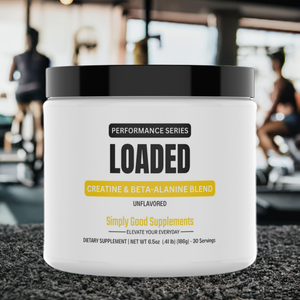
What About Beta Alanine?
Beta alanine is another supplement that seems perfectly suited to the metabolic demands of BFR, at least theoretically.
Beta alanine increases muscle carnosine concentrations.
Carnosine helps buffer hydrogen ions that accumulate during intense exercise, which may help delay fatigue during demanding efforts.
One study included in the analysis used 4.8 grams of sustained release beta alanine per day.
However, the meta analysis did not find evidence that beta alanine or the other functional supplements produced additional improvements in maximal strength.
That is not necessarily surprising.
Beta alanine is primarily associated with improving the muscle's ability to tolerate metabolic stress. It would therefore make more physiological sense for it to influence repeated muscular work than a single maximal contraction.
Does Protein Make BFR Better for Building Muscle?
This may be the most surprising finding in the paper.
You might expect combining BFR with protein to produce substantially greater muscle growth.
That did not happen.
Four studies evaluated muscle morphology using measurements such as muscle cross sectional area and muscle thickness.
The combined result showed:
SMD = 0.31
95% CI = minus 0.14 to 0.77
p = 0.18
In other words, supplementation did not significantly increase muscle hypertrophy beyond BFR training alone in the available studies.
That does not mean protein is unnecessary for building muscle.
Far from it.
Instead, the researchers suggest that BFR itself may already create such a powerful anabolic stimulus that detecting an additional effect from supplementation becomes difficult.
BFR stimulates pathways involved in muscle protein synthesis through metabolic stress, mechanical tension, cell swelling, and mTORC1 signaling.
Baseline nutrition also matters.
In one study involving trained participants, additional whey protein did not significantly outperform placebo, but those participants were already consuming more than 1.6 grams of protein per kilogram per day.
If someone is already eating enough protein to maximize the response to resistance training, simply adding more protein may not produce additional measurable muscle growth.
That is very different from saying protein does not matter.
Supplements Did Not Increase Maximal Strength Either
Seven studies evaluated maximal strength.
Again, supplementation did not provide a statistically significant advantage.
The pooled effect was:
SMD = minus 0.09
95% CI = minus 0.37 to 0.20
p = 0.55
There was also no significant difference when researchers separated participants according to supplement type, training status, or intervention duration.
Why?
One explanation is that maximal strength depends heavily on neurological factors such as motor unit recruitment, synchronization, neural drive, and the phosphagen energy system.
Many of the supplements evaluated in this study primarily influence metabolism and fatigue resistance, which may matter more when performing repeated contractions than during a single maximal effort.
BFR Training May Already Be Doing Most of the Heavy Lifting
There is another important explanation for the lack of additional strength and hypertrophy.
BFR itself works.
The review notes that low load BFR can produce substantial strength and hypertrophy adaptations despite using much lighter resistance than traditional heavy strength training.
One trial discussed by the authors found that the BFR only group increased maximal voluntary contraction by approximately 20.5 percent after four weeks.
Another found similar improvements in one repetition maximum between the placebo and protein supplementation groups after three weeks.
When the training stimulus itself is already producing large adaptations, there may simply be less room for a supplement to produce an additional measurable improvement.
So Which Supplements Look Most Promising?
This study does not establish one definitive "best supplement for BFR."
That is an important distinction.
The researchers pooled several very different nutritional interventions together, and there were too few studies to confidently rank individual supplements.
However, the results provide an interesting framework for thinking about supplementation.
Instead of asking:
"What supplement will make BFR build more muscle?"
A better question might be:
"What supplement could help me tolerate the metabolic demands of BFR and maintain performance longer?"
Based on the mechanisms and individual studies discussed in the paper, creatine, nitrate, caffeine, and potentially beta alanine are particularly interesting because each targets an aspect of fatigue or repeated exercise performance.
But the evidence remains preliminary.
What This Means for Athletes
The practical takeaway from this research is surprisingly simple.
If your primary goal with BFR is maximal strength or muscle growth, supplements may not dramatically amplify the adaptations you are already getting from BFR.
Your priorities should remain:
Proper BFR programming.
Adequate calories.
Sufficient daily protein.
Progressive training.
Recovery.
Sleep.
However, if your goal is to perform more repetitions, resist fatigue, or maintain training quality during metabolically demanding BFR sessions, certain supplements may become more useful.
That is where this meta analysis found its clearest benefit.
Important Limitations
There are several reasons not to get carried away with these results.
Only nine studies and 181 participants were included.
Several individual outcomes were based on even fewer studies.
Most participants were male, with only two studies including women.
BFR cuff pressures and training protocols varied.
Supplement types, dosages, and timing varied substantially.
Some studies evaluated acute supplementation while others lasted several weeks.
There were no long term follow ups beyond 12 weeks.
The authors also noted that publication bias could not be reliably ruled out because fewer than 10 studies were available for each pooled outcome.
So while the endurance finding is compelling, it should be considered promising rather than definitive.
The Bottom Line
Supplements may make blood flow restriction training better, but probably not in the way many athletes expect.
This 2026 systematic review and meta analysis found that adding nutritional supplements to BFR training did not clearly produce greater improvements in maximal strength or muscle hypertrophy.
But supplementation did significantly improve muscular endurance.
That distinction matters.
BFR already provides a strong stimulus for muscle and strength adaptations. Where supplements may provide more value is by helping athletes deal with the intense metabolic environment created by restricted blood flow.
Creatine may help support repeated high intensity contractions.
Nitrates may influence blood flow, oxygenation, and fatigue resistance.
Caffeine may improve exercise tolerance and reduce perceived discomfort.
Beta alanine may help buffer some of the metabolic stress associated with repeated contractions.
But we still need considerably more research before we can confidently determine the ideal supplement, dosage, and timing strategy for BFR.
For now, the evidence suggests a useful way to think about supplementation and blood flow restriction training:
Do not necessarily expect supplements to make you stronger from BFR. They may help you do more work before fatigue wins.
References
- Zhao B, Zhai H. Combined effects of blood flow restriction training and nutritional intervention on muscle adaptations: a systematic review and meta analysis. Frontiers in Nutrition. 2026;13:1762391. doi:10.3389/fnut.2026.1762391.
- Cognetti DJ, Sheean AJ, Owens JG. Blood flow restriction therapy and its use for muscle strength and hypertrophy in rehabilitation and sports medicine. Journal of Strength and Conditioning Research. 2022;36:2853 to 2861.
- Ma F, He J, Wang Y. Blood flow restriction combined with resistance training on muscle strength and thickness improvement in young adults: a systematic review, meta analysis, and meta regression. Frontiers in Physiology. 2024;15:1379605.
- Pearson SJ, Hussain SR. A review on the mechanisms of blood flow restriction resistance training induced muscle hypertrophy. Sports Medicine. 2015;45:187 to 200.
- Souza DB, Duncan M, Polito MD. Acute caffeine intake improves lower body resistance exercise performance with blood flow restriction. International Journal of Sports Physiology and Performance. 2018;14:216 to 221.
- Sousa Silva R, Cholewa JM, Pessoa KA, et al. Creatine supplementation combined with blood flow restriction and traditional resistance training: effects on muscle strength, thickness, endurance, and body composition. Applied Physiology, Nutrition, and Metabolism. 2023;48:417 to 426.
- Pessôa KDEA, Cholewa JM, Sousa Silva R, et al. Does beta alanine supplementation potentiate muscle performance following 6 weeks of blood flow restriction or traditional resistance training? International Journal of Exercise Science. 2023;16:999 to 1011.
- Hoon MW, Fornusek C, Chapman PG, Johnson NA. The effect of nitrate supplementation on muscle contraction in healthy adults. European Journal of Sport Science. 2015;15:712 to 719.
- Papadopoulos S, Dipla K, Triantafyllou A, et al. Beetroot increases muscle performance and oxygenation during sustained isometric exercise, but does not alter muscle oxidative efficiency and microvascular reactivity at rest. Journal of the American College of Nutrition. 2018;37:361 to 372.
- Lin YT, Wu CL, Wu CC, et al. Neuromuscular adaptations to caffeine supplementation in low load resistance training with blood flow restriction. Journal of the International Society of Sports Nutrition. 2025;22:2561676.