Why Your Post Workout Recovery Drink Should Have Carbs And Protein
TLDR
Protein gets most of the attention after a workout, but protein alone does not completely address recovery. Hard and prolonged exercise can deplete muscle glycogen, while exercise also increases the need for muscle repair and remodeling.
Carbohydrates help replenish glycogen. Protein provides the amino acids needed to stimulate muscle protein synthesis. Combining the two gives your body the raw materials it needs to refuel and rebuild, which is especially important for athletes who train hard, train frequently, or need to perform again soon.
That is exactly why we formulated Simply Good Recharge with both carbohydrates and high quality protein instead of making it another protein only recovery shake.
Protein Is Only Half of the Recovery Equation
Walk through almost any gym after a workout and you will see athletes drinking protein shakes.
There is a good reason for that.
Exercise, particularly resistance training, stimulates muscle protein turnover. Consuming high quality protein around training provides essential amino acids that support muscle protein synthesis and the repair and remodeling of muscle tissue.
The International Society of Sports Nutrition recommends roughly 20 to 40 grams of high quality protein per feeding, or about 0.25 grams per kilogram of body weight, as a general target for maximizing muscle protein synthesis.
But there is another side of recovery that gets considerably less attention.
You also need to replace the fuel you just burned.
And that is where carbohydrates come in.
What Happens to Your Fuel Stores During Exercise?
Your muscles store carbohydrate in the form of glycogen.
Think of muscle glycogen as one of your body's onboard fuel tanks.
During hard exercise, your muscles break down glycogen to provide glucose that can rapidly be converted into energy.
The harder and longer you exercise, the more glycogen you are likely to use. High volume training is particularly demanding on glycogen stores, and low glycogen availability can compromise your ability to perform subsequent hard exercise.
This becomes especially important for:
- Runners
- Cyclists
- Triathletes
- CrossFit athletes
- Team sport athletes
- High volume strength athletes
- People training twice per day
- Anyone competing on consecutive days
If you finish a hard workout and only consume protein, you have addressed one part of recovery.
You have provided amino acids for muscle repair.
But you have not directly provided much of the carbohydrate your body needs to replenish the glycogen you just used.
Carbohydrates Refill the Tank
Post workout carbohydrate intake increases the availability of glucose that can be used to rebuild muscle glycogen.
A systematic review and meta analysis examining short term recovery found that consuming carbohydrate after exercise significantly increased muscle glycogen resynthesis compared with consuming water or a nonnutritive beverage.
This is particularly important when recovery time is limited.
If you have another hard training session later that day, a race the next morning, or several days of demanding training in a row, restoring glycogen quickly becomes a priority.
For athletes who need very rapid glycogen restoration, the International Society of Sports Nutrition recommends carbohydrate intake of approximately 1.2 grams per kilogram of body weight per hour during the first several hours of recovery.
For a 165 pound athlete, which is roughly 75 kilograms, that could mean around 90 grams of carbohydrate per hour during an aggressive short term glycogen restoration strategy.
That does not mean everyone needs 90 grams of carbohydrate after every workout.
A 30 minute easy jog and a three hour bike ride obviously create very different recovery demands.
But it illustrates an important point:
Carbohydrates are not the enemy after exercise. For athletes, they are part of the recovery process.
Protein Rebuilds the Muscle
While carbohydrates help restore fuel, protein has a different job.
It supplies essential amino acids that your body uses to repair and remodel muscle tissue.
Exercise and protein intake work together to stimulate muscle protein synthesis. Research supports consuming roughly 20 to 40 grams of high quality protein per serving, depending on factors such as body size, age, exercise type, and the amount of muscle involved.
Leucine appears to be particularly important.
Leucine is an essential amino acid that acts as a nutritional signal involved in initiating muscle protein synthesis. The ISSN recommends protein servings that provide approximately 700 to 3,000 milligrams of leucine, along with a complete profile of essential amino acids.
This is one reason whey protein is so popular for post workout nutrition. It is rapidly digested, contains all nine essential amino acids, and naturally provides a relatively high amount of leucine.
Carbs Plus Protein: Refuel and Rebuild
This is where the logic behind a complete recovery drink becomes clear.
Carbohydrates help you refuel.
They provide the substrate needed to replenish muscle and liver glycogen.
Protein helps you rebuild.
It provides essential amino acids needed for muscle protein synthesis and tissue repair.
Put them together and you have a recovery strategy that addresses two of the major nutritional demands created by hard exercise.
Refuel + Rebuild = Better Recovery Nutrition
This is particularly useful after long endurance sessions, high volume strength workouts, races, tournaments, or any training session that creates significant glycogen depletion and muscle stress.
A 2025 review of post exercise recovery nutrition similarly concluded that carbohydrate is central to restoring glycogen while protein supports muscle recovery and positive protein balance.
Does Adding Protein Make Glycogen Replenishment Faster?
This is where we need to clear up an important misconception.
You will sometimes hear that combining protein with carbohydrate automatically increases glycogen replenishment more than carbohydrate alone.
That is not always true.
A meta analysis examining 20 studies found that adding protein did not significantly increase glycogen synthesis when carbohydrate and protein conditions were matched for total energy. The advantage appeared when protein added additional calories to the recovery feeding rather than replacing carbohydrate.
Another systematic review reached a similar conclusion. When adequate carbohydrate is consumed, adding protein does not appear to further accelerate muscle glycogen resynthesis.
However, when carbohydrate intake is below the amount needed to maximize glycogen restoration, adding protein can be useful. Research suggests approximately 0.8 grams of carbohydrate per kilogram per hour combined with 0.2 to 0.4 grams of protein per kilogram per hour can support rapid recovery when consuming 1.2 grams of carbohydrate per kilogram per hour is impractical.
More importantly, protein is not included only for glycogen.
It has its own recovery job.
Carbohydrates replenish fuel. Protein supports muscle repair and remodeling.
That is the real reason a comprehensive recovery drink should contain both.
What About the "Anabolic Window"?
You've probably heard that you have exactly 30 minutes after exercise to slam a recovery shake or your workout is wasted.
Fortunately, your body is not quite that unforgiving.
Muscle remains sensitive to protein for many hours after exercise, and your total daily protein intake is ultimately more important than hitting an exact minute on the clock. The anabolic effect of exercise can persist for at least 24 hours, although it gradually diminishes.
However, consuming nutrients soon after training can still be useful, particularly when you have not eaten recently or need to recover quickly for another session.
Carbohydrate timing becomes especially important when the time between demanding workouts is short. If you have less than several hours before your next session, starting carbohydrate intake soon after exercise can help maximize glycogen restoration.
So instead of thinking of recovery as a magical 30 minute window, think of it as an opportunity:
The sooner you begin supplying your body with the nutrients it needs, the sooner the recovery process can begin.
Endurance Athletes Have Even More Reason to Include Carbs
For runners, cyclists, triathletes, and other endurance athletes, a protein only recovery shake can be particularly incomplete.
A long run or ride can use a substantial amount of glycogen.
Replacing that carbohydrate becomes important if you expect to train hard again the following day.
Research consistently identifies carbohydrate availability as a major factor determining the rate of post exercise glycogen restoration and subsequent endurance capacity when recovery time is limited.
That means your post long run recovery drink should not just contain protein.
It should help replace the carbohydrate you burned, too.
Strength Athletes Should Not Be Afraid of Post Workout Carbs Either
Carbohydrates are sometimes treated as optional for strength athletes because resistance training is associated primarily with muscle protein synthesis.
But lifting uses glycogen too.
The amount depends on workout volume, intensity, rest periods, and the amount of muscle being trained. High volume bodybuilding, CrossFit, circuit training, and repeated high intensity sets can create meaningful carbohydrate demands.
If your goal is to train hard again tomorrow, recovering your fuel stores makes sense.
The ISSN notes that carbohydrate consumed alone or with protein around resistance exercise can support glycogen availability and training adaptations.
Protein provides the building blocks.
Carbohydrates help provide the fuel to do it again.
Why We Made Recharge With Carbs AND Protein
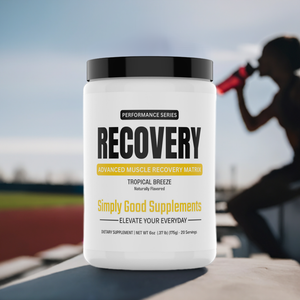
This science is exactly why we created Recharge Protein & Carb Recovery Formula.
We did not want to make another protein shake.
Recharge was designed as a complete post workout recovery drink that addresses refueling, rebuilding, and rehydration in one formula.
Recharge combines ultra filtered whey protein isolate with multiple carbohydrate sources, including Cluster Dextrin®, fructose, and brown rice flour. The formula also includes sodium, potassium, and magnesium to help replace electrolytes and support rehydration after training.
The carbohydrate blend serves different recovery needs. Glucose based carbohydrates can contribute to muscle glycogen restoration, while fructose is particularly useful for restoring liver glycogen after prolonged exercise. Research on post exercise carbohydrate metabolism supports using glucose and fructose based carbohydrates as part of aggressive glycogen restoration strategies.
Recharge also contains leucine, L Carnitine L Tartrate, and AstraGin® as part of its broader recovery formula.
The idea is simple:
Replace what training took out of you and provide what your body needs to rebuild.
Who Benefits Most From a Carb and Protein Recovery Drink?
Not every workout requires an elaborate recovery strategy.
If you walked for 30 minutes and are about to eat a balanced dinner, you probably do not need a specialized recovery drink.
But carbs plus protein become much more valuable as training demands increase.
A recovery drink can be particularly useful after:
- Long runs and rides
- Hard interval workouts
- High volume resistance training
- CrossFit and functional fitness sessions
- Races and competitions
- Training lasting longer than 60 to 90 minutes
- Two a day training sessions
- Back to back competition days
- Workouts when your next meal is several hours away
The shorter the recovery period and the harder the training, the more important deliberate recovery nutrition becomes.
How Much Carbohydrate and Protein Do You Need After Exercise?
There is no perfect amount for everyone.
Your recovery needs depend on your body size, training duration, intensity, goals, and how soon you need to perform again.
For protein, a practical target for many athletes is:
20 to 40 grams of high quality protein after training.
For carbohydrates, the amount depends much more heavily on the workout.
If you have less than four hours before another demanding session and need maximum glycogen restoration, research supports approximately:
1.2 grams of carbohydrate per kilogram of body weight per hour.
Another option is approximately:
0.8 grams of carbohydrate per kilogram per hour plus 0.2 to 0.4 grams of protein per kilogram per hour.
If you have a full day before your next hard workout, there is generally less urgency. Your overall carbohydrate and protein intake across the remainder of the day becomes increasingly important.
Recovery Is More Than Protein
Protein deserves its reputation as an important recovery nutrient.
But recovery involves more than rebuilding muscle.
After a demanding workout, your body may need to:
Replenish glycogen.
Repair and remodel muscle.
Replace fluids and electrolytes.
Prepare for your next training session.
Protein addresses one major piece of that puzzle.
Carbohydrates address another.
That is why combining the two makes so much sense for athletes who train hard and want to recover well enough to do it again.
The Bottom Line
If your current post workout routine consists of nothing but a scoop of protein powder and water, you may be overlooking one of the most important parts of recovery.
Carbohydrates replenish the fuel you used.
Protein provides the amino acids needed to repair and rebuild muscle.
For athletes performing long, intense, or frequent training sessions, combining carbohydrates and protein after exercise provides a more complete recovery strategy than focusing exclusively on protein.
That is the philosophy behind Recharge from Simply Good Supplements. Instead of making you choose between a protein shake and a carbohydrate recovery drink, Recharge combines both, along with electrolytes and additional recovery focused ingredients, in one convenient post workout formula.
Because a hard workout does more than stress your muscles.
It burns fuel too.
Refuel. Rebuild. Recharge.
References
- Kerksick CM, Arent S, Schoenfeld BJ, et al. International Society of Sports Nutrition position stand: nutrient timing. Journal of the International Society of Sports Nutrition. 2017;14:33.
- Jäger R, Kerksick CM, Campbell BI, et al. International Society of Sports Nutrition position stand: protein and exercise. Journal of the International Society of Sports Nutrition. 2017;14:20.
- Margolis LM, Allen JT, Hatch McChesney A, Pasiakos SM. Coingestion of carbohydrate and protein on muscle glycogen synthesis after exercise: A meta analysis. Medicine & Science in Sports & Exercise. 2021;53(2):384 to 393.
- Craven J, Desbrow B, Sabapathy S, et al. The effect of consuming carbohydrate with and without protein on the rate of muscle glycogen resynthesis during short term post exercise recovery: A systematic review and meta analysis. Sports Medicine Open. 2021.
- van Loon LJC. Nutritional strategies to promote postexercise recovery. International Journal of Sport Nutrition and Exercise Metabolism. 2010;20(6):515 to 532.
- Areta JL, et al. Nutritional strategies to improve post exercise recovery and subsequent exercise performance: A narrative review. Sports Medicine. 2025.
- Betts JA, Williams C. Short term recovery from prolonged exercise: Exploring the potential for protein ingestion to accentuate the benefits of carbohydrate supplements. Sports Medicine. Research summarized in subsequent reviews of post exercise glycogen restoration.