Does Magnesium Help You Sleep?
Magnesium has become one of the go-to supplements for people struggling with sleep.
Spend a few minutes searching for ways to fall asleep faster, stay asleep longer, or wake up feeling more rested, and you'll probably come across recommendations for magnesium glycinate, magnesium citrate, or magnesium L-threonate.
Some people swear by it. Others take it every night without noticing much of a difference.
And the supplement industry certainly hasn't been shy about promoting magnesium as a sleep aid.
But how much of that reputation is actually supported by clinical research?
A new 2026 systematic review published in the Journal of Dietary Supplements examined randomized controlled trials investigating magnesium supplementation and sleep in adults.
The researchers evaluated 15 clinical trials, including 12 focused on sleep or insomnia and three additional trials involving sleep disturbances associated with movement disorders or nighttime muscle cramps.
Their conclusion was considerably less enthusiastic than much of the marketing surrounding magnesium.
Some studies reported improvements in sleep quality, insomnia symptoms, or daytime functioning. Others found no meaningful benefit compared with placebo.
And the overall certainty of the evidence was low to very low.
I think this is an important study because it helps separate magnesium's established importance as an essential mineral from the much less certain claim that taking additional magnesium will improve your sleep.
TLDR
- Magnesium did not consistently improve sleep. Across the randomized controlled trials, results were mixed, with several studies finding no meaningful benefit over placebo.
- Some studies reported improvements in insomnia symptoms. One 2025 trial found that magnesium bisglycinate modestly reduced insomnia severity, but the additional improvement over placebo was small.
- Magnesium L-threonate showed some promising secondary benefits. Certain studies reported improvements in daytime functioning, sleep-related impairment, or wearable-derived measurements, but conventional insomnia and sleep-disturbance scores did not consistently improve.
- There is no convincing evidence that one magnesium form is best for sleep. The review included several forms of magnesium, but no study directly compared different formulations against one another.
- More magnesium did not necessarily mean better sleep. The researchers couldn't identify a consistent relationship between magnesium dose, treatment duration, and sleep improvement.
- Objective sleep measurements were especially inconsistent. Some self-reported improvements weren't confirmed by actigraphy or other device-based measurements.
My takeaway: Magnesium is an essential nutrient, and correcting inadequate intake matters. But the evidence doesn't currently support treating magnesium supplementation as a reliable, stand-alone solution for insomnia.
Why Magnesium Might Affect Sleep in the First Place
Before getting into the individual studies, it's worth understanding why magnesium is even considered a potential sleep aid.
Magnesium is involved in hundreds of enzymatic reactions throughout the body. It contributes to normal muscle function, nerve signaling, energy metabolism, and the regulation of several physiological systems.
There are also plausible mechanisms connecting magnesium to sleep.
One involves the NMDA receptor, which participates in excitatory signaling in the nervous system. Magnesium helps regulate this receptor, potentially influencing neuronal excitability.
Another proposed pathway involves GABA, the primary inhibitory neurotransmitter in the central nervous system. GABA signaling plays an important role in relaxation and sleep regulation.
Magnesium may also influence stress-response pathways, cortisol activity, and processes associated with melatonin production.
These mechanisms help explain why researchers are interested in magnesium supplementation.
But there's an important distinction.
A nutrient can play an essential role in normal sleep physiology without additional supplementation necessarily improving sleep in someone who already consumes enough of it.
That's what makes randomized controlled trials so important.
How the Researchers Conducted the Review
The researchers searched five major scientific databases and clinical trial registries for studies published through June 1, 2026.
They focused specifically on randomized controlled trials involving oral magnesium supplementation.
Importantly, magnesium needed to be the only active intervention, or the study needed a separate magnesium-only treatment group.
That meant trials combining magnesium with melatonin, zinc, or other active ingredients were excluded unless magnesium's independent effects could be evaluated.
The final review included:
| Study Characteristic | Details |
|---|---|
| Total randomized controlled trials | 15 |
| Main sleep and insomnia trials | 12 |
| Movement- or cramp-related trials | 3, analyzed separately |
| Magnesium forms | Oxide, citrate, bisglycinate, chloride, gluconate, L-threonate, and proprietary preparations |
| Elemental magnesium doses | Approximately 75–729 mg/day where reported |
| Main trial durations | 2–12 weeks per treatment condition |
| Evidence certainty | Low to very low |
The researchers examined self-reported sleep quality, insomnia severity, time needed to fall asleep, sleep duration, daytime functioning, and objective sleep measurements.
One detail I appreciated was their decision not to combine all the studies into a single meta-analysis.
The populations, doses, magnesium forms, and sleep measurements were simply too different to justify one pooled effect estimate.
Instead, they systematically compared the findings and assessed the certainty of the evidence.
That was a reasonable decision. A single numerical estimate can look authoritative even when the studies contributing to it are measuring substantially different things.
Finding #1: Magnesium May Reduce Insomnia Symptoms, but the Benefits Are Small
One of the more interesting studies included in the review was a 2025 randomized controlled trial involving 155 adults who reported poor sleep quality.
Participants received either 250 mg of elemental magnesium from magnesium bisglycinate or a placebo for four weeks.
Researchers measured insomnia symptoms using the Insomnia Severity Index (ISI).
Here's what happened:
| Group | Change in Insomnia Severity After 4 Weeks |
|---|---|
| Magnesium bisglycinate | -3.9 ISI points |
| Placebo | -2.3 ISI points |
| Additional improvement with magnesium | 1.6 ISI points |
The between-group difference was statistically significant (p = 0.049), with a small effect size (Cohen's d = 0.2).
The magnesium group improved significantly more than the placebo group.
That's encouraging, but the magnitude matters.
The additional improvement was only 1.6 points on the ISI, and the standardized effect size was small.
It's also worth noticing that the placebo group improved substantially.
That doesn't mean the magnesium effect was imaginary. It means some of the improvement in both groups occurred independently of the magnesium supplement.
An older 2012 trial involving 46 older adults with primary insomnia also reported improvements in insomnia severity, sleep efficiency, and sleep-onset latency using magnesium oxide.
However, that trial was small and had methodological limitations.
Meanwhile, other studies found no significant magnesium-specific improvement in insomnia severity.
My interpretation: Magnesium may modestly reduce insomnia symptoms in certain adults, but the results aren't consistent enough to consider it a reliable treatment.
Finding #2: Improvements in Sleep Quality Were Inconsistent
This is where the evidence becomes considerably less impressive.
Several studies used the Pittsburgh Sleep Quality Index (PSQI), a validated questionnaire that assesses different aspects of sleep quality.
If magnesium were a consistently effective sleep supplement, you'd expect reasonably repeatable improvements across these studies.
That's not what happened.
Trials involving adults with polycystic ovary syndrome, fibromyalgia, cognitive complaints, and poor sleep generally failed to demonstrate clear magnesium-specific improvements on global sleep-quality measurements.
One 2024 trial did report better sleep-diary ratings.
Participants receiving a proprietary magnesium preparation reported a 32% improvement in diary-rated sleep quality, compared with 16% in the placebo group.
The difference was statistically significant.
However, the same trial did not demonstrate a clear magnesium-specific benefit using research-grade actigraphy.
That matters because the participants' perceptions of their sleep improved more than the objective measurements demonstrated.
I don't think subjective sleep improvements should be dismissed. Feeling like you're sleeping better is a meaningful outcome.
But when self-reported improvements aren't consistently supported by objective measurements, we need to be careful about claiming that a supplement actually increases sleep duration or changes sleep architecture.
The review found no consistent evidence that magnesium improves overall sleep quality across adult populations.
Finding #3: Magnesium L-Threonate May Help Daytime Functioning More Than Sleep Itself
Magnesium L-threonate has received considerable attention because of claims involving brain health, cognitive performance, and sleep.
The review included several trials investigating this form.
One 2025 study enrolled 100 adults aged 18–45 who were dissatisfied with their sleep.
Participants received magnesium L-threonate providing 145 mg of elemental magnesium daily, or placebo, for six weeks.
The researchers measured sleep disturbance, sleep-related daytime impairment, restorative sleep, and wearable-derived sleep estimates.
The magnesium group experienced a greater reduction in sleep-related impairment:
- Magnesium: 6.35-point reduction.
- Placebo: 3.38-point reduction.
- Between-group interaction: p = 0.043.
That suggests a possible benefit in how sleep problems affect daytime functioning.
But the researchers found no significant difference in the measures of sleep disturbance or restorative sleep, and no clear improvement in Oura Ring sleep estimates.
Another magnesium L-threonate trial reported selected improvements in wearable-derived sleep and daytime-function outcomes, but not in insomnia severity.
I find this distinction interesting.
Someone might feel better during the day after taking magnesium without necessarily sleeping longer or experiencing measurable improvements in sleep quality.
That could still be useful, but we shouldn't automatically interpret improved daytime functioning as proof of better sleep.
And because several of these findings were secondary or exploratory outcomes, the evidence remains preliminary.
Finding #4: No Magnesium Form Has Been Proven Superior for Sleep
This is probably one of the most practically useful findings in the entire review.
Magnesium glycinate is frequently promoted as the best form for sleep.
Magnesium L-threonate is often marketed for brain-related benefits.
Magnesium citrate and oxide are sometimes dismissed as inferior options.
But what does the clinical research actually show?
| Magnesium Form | What the Review Found |
|---|---|
| Bisglycinate | One relatively recent trial found a small improvement in insomnia severity. |
| L-threonate | Selected benefits for daytime functioning and wearable measurements, but inconsistent improvements in insomnia. |
| Oxide | Some favorable findings in older adults, alongside other inconsistent results. |
| Citrate | No consistent magnesium-specific sleep benefit. |
| Chloride-based preparations | Mixed findings, including a small pilot study with selected improvements. |
| Gluconate | Positive findings in one trial, but important methodological concerns. |
Here's the critical detail.
None of the included trials directly compared different magnesium forms against one another.
So we can't conclude that magnesium bisglycinate is more effective than citrate, or that L-threonate is superior to oxide, based on this review.
Differences between studies could reflect the participants, doses, treatment durations, or outcomes being measured.
And just because one magnesium form is absorbed differently doesn't automatically mean it produces better sleep.
I think this is an area where supplement marketing has gotten well ahead of the clinical evidence.
Finding #5: Taking More Magnesium Didn't Consistently Produce Better Results
Another question people frequently ask is how much magnesium they should take before bed.
The studies in this review used widely varying doses.
Where elemental magnesium was reported, doses ranged from approximately 75 mg to 729 mg daily.
Some studies using relatively modest doses reported favorable outcomes.
Other studies using higher doses found no clear benefit.
The researchers couldn't identify a consistent dose-response relationship.
They also couldn't determine whether longer supplementation periods reliably produced better results.
That doesn't mean dose is irrelevant.
It means the existing studies don't allow us to identify an optimal dose for improving sleep.
There's also a labeling issue worth understanding.
The amount of a magnesium compound is different from the amount of elemental magnesium it provides.
For example, 2,000 mg of magnesium L-threonate does not mean you're consuming 2,000 mg of elemental magnesium.
Some studies reported the compound weight without clearly specifying the elemental magnesium content, making comparisons even more difficult.
For anyone considering magnesium supplementation, the elemental magnesium amount is the number that matters when evaluating total intake.
Finding #6: Objective Sleep Measurements Were Less Convincing
The review also examined studies using EEG, actigraphy, and consumer wearables.
These methods can provide information beyond someone's subjective impression of their sleep.
The results were mixed.
A small 2002 crossover study involving 12 older adults reported increases in slow-wave sleep and selected EEG measurements after magnesium supplementation.
That's potentially interesting because slow-wave sleep is associated with important restorative processes.
However, the study was extremely small, and its findings haven't been consistently replicated.
A separate trial using research-grade actigraphy found no clear magnesium-specific improvement.
Three more recent trials used Oura Ring measurements.
Two reported selected favorable sleep or readiness estimates, while the third found no meaningful magnesium-specific sleep improvement.
The researchers also emphasized that consumer wearable estimates shouldn't be treated as equivalent to laboratory sleep measurements.
I agree with that distinction.
Wearables can be useful for monitoring trends, but their sleep-stage estimates rely on algorithms and indirect measurements.
The available objective evidence doesn't establish that magnesium reliably increases deep sleep, total sleep duration, or sleep efficiency.
Finding #7: We Still Don't Know Whether People With Low Magnesium Intake Benefit More
This might be the most important unanswered question.
Magnesium is an essential mineral.
If someone isn't consuming enough magnesium, correcting that inadequacy is important for normal physiological function.
It's reasonable to wonder whether those individuals might also experience greater sleep benefits from supplementation.
But the review identified a major problem.
Many trials didn't adequately assess participants' baseline dietary magnesium intake or magnesium status.
That means researchers often couldn't determine whether participants were magnesium deficient, insufficient, or already consuming adequate amounts.
Think about what that means for interpreting the results.
If you give additional magnesium to someone who already has adequate magnesium status, there may be little reason to expect a meaningful physiological change.
On the other hand, someone with inadequate intake might respond differently.
But that's still a hypothesis in the context of sleep outcomes.
The review did not establish that people with low magnesium intake experience greater improvements in sleep after supplementation.
That's a question future studies need to answer.
What About Magnesium for Restless Legs and Nighttime Muscle Cramps?
The researchers examined three additional trials involving sleep problems associated with restless legs syndrome or nocturnal muscle cramps.
They analyzed these separately because the underlying causes of sleep disruption may differ from general insomnia.
One trial involving restless legs syndrome reported improvements in sleep quality with magnesium.
Another involving nighttime leg cramps also reported favorable sleep-quality results.
However, a third study found no significant improvement in cramp-related sleep disturbance.
One restless legs study also included participants as young as 15, and adult-only results weren't available.
The evidence was rated very low certainty.
So while magnesium might help selected individuals with movement-related sleep disturbances, these findings don't establish a reliable benefit for general insomnia.
What This Review Means for Sleep Supplements
I think this study highlights something that often gets overlooked when discussing supplement formulas.
A biologically plausible ingredient isn't automatically a clinically effective treatment.
Magnesium plays important roles in the nervous system, and maintaining adequate intake is important.
But this review doesn't justify telling people that taking magnesium before bed will reliably help them fall asleep faster, sleep longer, or wake up more refreshed.
That doesn't mean magnesium has no place in a broader sleep-support formula.
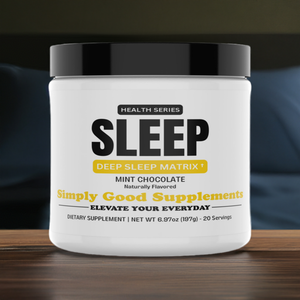
Our Sleep formula includes magnesium alongside other ingredients such as glycine, lemon balm, L-theanine, and melatonin.
But this particular review only evaluated magnesium as an independent intervention.
It cannot tell us whether combining magnesium with other ingredients produces better sleep outcomes, nor does it establish the effectiveness of our specific formula.
For me, that's an important distinction to maintain when discussing research.
I also wouldn't recommend increasing magnesium intake simply because someone is struggling to sleep.
I'd first consider whether they're consuming adequate magnesium through their diet and whether other factors are contributing to their sleep problems.
Is Magnesium Supplementation Safe?
The review generally found magnesium supplementation to be well tolerated during the clinical trials.
However, adverse-event reporting was inconsistent, and many studies were relatively short.
Gastrointestinal symptoms were among the most plausible supplement-related adverse effects.
Higher supplemental magnesium doses can cause diarrhea, nausea, and abdominal discomfort. People with impaired kidney function also need particular caution because magnesium can accumulate when the kidneys cannot eliminate it normally.
For adults, the U.S. tolerable upper intake level for magnesium from supplements and medications is 350 mg per day unless otherwise directed by a healthcare professional. That limit does not include magnesium naturally present in food.
Some studies in this review used doses above that threshold, but those were controlled research settings and shouldn't be interpreted as general dosing recommendations.
Magnesium supplements can also interfere with the absorption of certain medications, including some antibiotics and osteoporosis treatments.
Anyone with kidney disease, relevant medication use, or persistent sleep problems should discuss supplementation with a qualified healthcare professional.
The Biggest Limitations of This Review
The review was useful, but there are several reasons to be cautious about its conclusions.
First, the trials were highly heterogeneous. Different populations received different magnesium forms and doses for different lengths of time.
Second, many studies were small and included sleep as a secondary outcome rather than their main research question.
Third, subjective sleep questionnaires were much more common than objective sleep measurements.
Fourth, baseline magnesium status was poorly characterized, making it difficult to determine who might benefit most.
Fifth, some trials had industry sponsorship or investigator relationships with supplement companies.
The review authors also disclosed relevant industry relationships. Two authors had participated in studies included in the review, although an independent coauthor verified their assessments of those studies.
The review itself reported no specific external funding.
Finally, the review was not prospectively registered in a public protocol registry, although the authors reported preparing an internal protocol before conducting the review.
Taken together, these limitations help explain why the certainty of evidence remained low or very low.
So, Should You Take Magnesium Before Bed?
If someone asked me whether magnesium is worth taking specifically to improve sleep, my answer would depend on why they're considering it.
If their magnesium intake is inadequate, improving that intake makes sense for several reasons beyond sleep.
If they're already consuming enough magnesium and expect a supplement to reliably fix insomnia, I'd be much less enthusiastic.
There are some promising findings, particularly for selected insomnia symptoms and daytime functioning.
But the benefits appear modest, inconsistent, and dependent on the study.
For persistent insomnia, cognitive behavioral therapy for insomnia (CBT-I) is a better-established first-line treatment than magnesium supplementation.
I'd also pay attention to sleep consistency, caffeine timing, alcohol consumption, bedroom conditions, and potential medical causes of disrupted sleep.
Those factors may be more relevant than choosing between magnesium glycinate and magnesium L-threonate.
And if someone does decide to try magnesium, I'd encourage them to evaluate whether it's producing a meaningful improvement rather than assuming it's working simply because they're taking it.
The Bottom Line
This 2026 systematic review provides a useful reality check on one of the most popular supplements for sleep.
Across 15 randomized controlled trials, including 12 focused on sleep or insomnia, magnesium supplementation produced inconsistent results.
Some studies found modest improvements in insomnia symptoms, subjective sleep quality, or daytime functioning.
Others found no meaningful benefit compared with placebo.
The researchers couldn't identify a consistently effective magnesium form, dose, or treatment duration.
And objective sleep measurements were particularly unconvincing.
My takeaway is that magnesium is important for normal physiological function, but the evidence that additional magnesium reliably improves sleep is much weaker than its reputation suggests.
That doesn't mean it can't help certain people.
It means we still need better research to determine who benefits, how much they benefit, and under what circumstances.
Until then, I wouldn't consider magnesium a proven stand-alone treatment for insomnia.
About the Author
Matt Mosman, MS, CISSN, CSCS, is the founder and Chief Science Officer of Simply Good Supplements. With a background in exercise science, sports nutrition, and strength and conditioning, Matt focuses on turning research into practical advice that athletes, parents, and everyday active people can actually use.
References
Lopresti AL, Smith SJ, Drummond PD. Magnesium Supplementation for Sleep in Adults: A Systematic Review of Randomized Controlled Trials. Journal of Dietary Supplements. 2026;23(5):553–581. https://doi.org/10.1080/19390211.2026.2719670