Fatigue Resistance: Why Durability May Be the Most Important Pillar of Endurance Performance
By Matt Mosman, MS, CISSN, CSCS | Founder & Chief Science Officer, Simply Good Supplements
For decades, endurance performance has largely been explained by three physiological variables: VO₂max, lactate threshold, and exercise economy.
And for good reason.
VO₂max tells us something about an athlete's aerobic capacity. Lactate threshold helps describe the intensity they can sustain. Exercise economy tells us how efficiently they convert energy into movement.
These are important measurements, and I wouldn't argue otherwise.
But there's a problem with how we typically evaluate them.
We measure athletes when they're fresh.
A runner completes a VO₂max test after a recovery day. A cyclist performs a functional threshold power test after reducing training volume. A triathlete measures aerobic efficiency under controlled laboratory conditions.
Those results tell us what the athlete can do under favorable circumstances.
They don't necessarily tell us what that athlete can do after three hours of cycling, 20 miles of running, or several thousand feet of climbing.
And that's where I think we've been overlooking one of the most important characteristics of endurance performance.
It's called durability, sometimes discussed as fatigue resistance or physiological resilience.
The concept is relatively straightforward.
How well can an athlete preserve their physiological capabilities as fatigue accumulates?
I would argue that for long-duration endurance events, durability deserves to be treated as a foundational performance characteristic.
An athlete's aerobic capacity matters. Their threshold matters. Their economy matters.
But those characteristics become considerably less useful if they deteriorate rapidly during competition.
Recent research is beginning to explain why.
The Central Idea
Endurance performance isn't just what you can produce. It's what you can preserve.
A high physiological ceiling is valuable, but the ability to maintain performance after hours of accumulated work may be what separates athletes with similar fresh-state fitness.
TLDR
- Durability describes an athlete's resistance to physiological deterioration during prolonged exercise. It includes changes in threshold, exercise economy, maximal aerobic capacity, and performance after accumulated work.
- Traditional endurance testing typically measures athletes while fresh, potentially missing important differences in how they respond to prolonged exercise.
- A 2024 study found that after 150 minutes of cycling, ventilatory-threshold power declined approximately 6% and five-minute performance declined approximately 9%. Athletes who preserved threshold power better also tended to preserve five-minute performance.
- A 2023 intervention study found that both low-intensity and high-intensity endurance training improved a composite measure of durability over 10 weeks.
- Fueling, hydration, heat management, pacing, and muscular conditioning can influence performance deterioration, although their individual effects on specific durability measurements are not fully established.
- Durability is an emerging performance concept. Researchers still disagree about its definition, measurement, and whether it should be considered a distinct physiological determinant.
- My recommendation: Keep developing VO₂max, threshold, and economy, but begin evaluating how well you preserve those characteristics after prolonged exercise.
1. What Is Durability in Endurance Sports?
Durability has been described in the scientific literature as the time course and magnitude of deterioration in physiological characteristics during prolonged exercise [1].
Put simply, it's how well your body holds up.
Consider two cyclists with nearly identical laboratory profiles.
Both have a VO₂max of 65 mL/kg/min.
Both have a functional threshold power of 300 watts.
Both have similar exercise efficiency.
Based on those measurements, you might expect them to perform similarly.
But after three hours of riding, their capabilities could look very different.
5% decline from 300 W
15% decline from 300 W
Hypothetical example, not results from a published study. Bars show remaining capacity relative to the fresh value.
Athlete A has preserved much more of their original capacity.
And if the race requires a decisive climb, a sustained surge, or a strong final hour, that difference could be enormous.
The important point is that these athletes started with the same measured fitness.
Their ability to maintain it was different.
That's durability.
Is Durability the Same as Fatigue Resistance or Physiological Resilience?
Not exactly.
The terms are sometimes used interchangeably, but researchers have recently argued that they describe overlapping yet distinct concepts.
A 2025 viewpoint in the Journal of Applied Physiology proposed clearer distinctions among durability, fatigability, repeatability, and resilience [6].
| Concept | What It Generally Describes |
|---|---|
| Durability | Preservation of physiological characteristics during prolonged exercise |
| Fatigability | The extent to which function or performance declines in response to exercise |
| Physiological resilience | A broader ability to tolerate, respond to, or recover from physiological stress |
| Repeatability | The ability to repeatedly produce high-intensity efforts, often with incomplete recovery |
These characteristics are related, but they aren't necessarily interchangeable.
A cyclist might be exceptionally durable during a steady four-hour ride but struggle to repeat explosive attacks.
A runner might tolerate high training loads well but experience substantial performance deterioration late in a marathon.
For this article, I'm primarily discussing durability during prolonged endurance exercise.
And while I think it deserves foundational importance, the research hasn't yet established that it should replace the traditional determinants of performance.
I see it as the characteristic that determines how much of those capabilities an athlete can retain when they matter most.
2. Why VO₂max, Lactate Threshold, and Economy Don't Tell the Whole Story
The traditional model of endurance performance has been remarkably useful.
VO₂max: Your Aerobic Ceiling
VO₂max represents the maximum rate at which your body can take up and utilize oxygen during intense exercise.
It helps establish the upper limit of aerobic energy production.
Generally, a higher VO₂max provides greater potential for endurance performance.
But VO₂max alone doesn't determine who wins.
Lactate Threshold: How Much of That Ceiling You Can Sustain
Threshold-related measurements help describe the exercise intensity an athlete can sustain without progressive metabolic instability.
Two athletes with similar VO₂max values can have substantially different sustainable race intensities.
That's one reason threshold development is so important.
Exercise Economy: The Cost of Moving
Running economy describes the oxygen or metabolic energy required to run at a given speed.
Cycling efficiency describes how effectively metabolic energy is converted into external mechanical work.
An athlete who requires less energy to maintain a given pace or power has an important advantage.
The Missing Question
All three characteristics can change during prolonged exercise.
VO₂max may decrease.
Threshold power may fall.
Movement economy may deteriorate.
And the physiological cost of maintaining the same pace may increase.
A 2025 methodological review summarized evidence showing that several traditional endurance determinants can decline following prolonged running and cycling. It also proposed durability as a potentially important additional parameter of endurance performance [5].
This changes how I think about athlete testing.
Knowing your threshold power when fresh is useful.
Knowing how much of that threshold remains after three hours may be even more relevant for a long cycling race.
Similarly, knowing your running economy during the first 20 minutes of a test is valuable.
Knowing how much it deteriorates during the final hour of a marathon could provide a different kind of information.
Fresh-state fitness describes your starting capabilities. Durability describes how those capabilities survive prolonged exercise.
3. The Research: What Happens to Performance After Prolonged Exercise?
One of the most compelling arguments for durability comes from research examining what happens to physiological performance after athletes have already accumulated substantial work.
Study #1: Critical Power Can Decline Dramatically After Two Hours
In a 2024 review in The Journal of Physiology, Andrew Jones described physiological resilience as a potential fourth dimension of endurance performance.
One of the most striking findings concerned critical power.
Critical power is a physiological marker closely associated with the boundary between exercise intensities that can reach a metabolic steady state and those that cannot.
The review described research in which critical power declined by approximately 10%, on average, after two hours of heavy-intensity cycling.
But the average wasn't the most interesting part.
Individual changes ranged from less than 1% to approximately 32% [2].
These values describe variability summarized in the review, not the expected response of every cyclist.
Think about what that means.
Two athletes can begin with similar critical power values, yet one may preserve almost all of that capacity while another experiences a substantial reduction.
And this occurs after only two hours of exercise.
For athletes competing in four-, six-, or ten-hour events, that raises an obvious question.
Are we paying enough attention to how performance capacity changes throughout a race?
Study #2: A 2024 Experiment Directly Linked Durability With Performance
A particularly relevant study by Hamilton and colleagues, published in the European Journal of Applied Physiology, examined 13 well-trained cyclists and triathletes.
Participants completed physiological and performance testing under two conditions: when fresh and after 150 minutes of moderate-intensity cycling.
Researchers measured power at the first ventilatory threshold (VT1) and performance during a five-minute time trial.
The results were revealing [3].
| Measure | Fresh | After 150 Minutes | Change |
|---|---|---|---|
| VT1 power | 211 W | 198 W | Approximately −6% |
| Five-minute power | 333 W | 302 W | Approximately −9% |
Percentages calculated from reported group mean power values [3].
But the most important finding wasn't simply that performance declined.
The researchers found a strong association between how well athletes preserved their VT1 power and how well they preserved their five-minute time-trial performance.
The reported Spearman correlation was rₛ = 0.719, p = 0.007.
In other words, athletes who experienced smaller declines in this threshold-related measure also tended to experience smaller declines in high-intensity performance after prolonged exercise.
This is one of the clearest demonstrations of why durability may matter.
It connects the preservation of a physiological characteristic with the preservation of actual performance.
There are limitations. The sample included only 13 athletes, and correlation doesn't establish causation.
Still, the findings support the idea that the way an athlete responds to accumulated work provides information that fresh-state testing can miss.
Study #3: Not Every Physiological Variable Deteriorates Equally
A 2025 study in the European Journal of Sport Science examined 12 competitive cyclists.
Participants completed work-matched cycling bouts at moderate and heavy intensities, followed by physiological testing.
The researchers evaluated VO₂max, lactate threshold, critical power, cycling efficiency, peak ramp power, and W′, which represents finite work capacity above critical power.
After the prolonged exercise bouts, peak ramp power and W′ declined significantly.
However, the other measured parameters did not change significantly.
The researchers also found no significant differences between the moderate- and heavy-intensity exercise conditions for the magnitude of deterioration [7].
This is important because it challenges an overly simplistic interpretation of durability.
Not everything declines at the same rate, and not every exercise session produces the same kind of fatigue.
An athlete might preserve their aerobic threshold while losing some capacity for intense surges.
Another might experience considerable cardiovascular drift without a corresponding reduction in a particular performance test.
This is why durability shouldn't be reduced to a single number without considering what is being measured.
4. What Actually Causes Durability to Decline?
There's probably no single mechanism responsible for declining endurance performance.
Instead, multiple physiological systems interact as exercise continues.
A. Glycogen Depletion and Carbohydrate Availability
Muscle glycogen is an important fuel source during prolonged exercise, particularly as intensity increases.
As carbohydrate availability decreases, maintaining a given workload can become more difficult.
Blood glucose regulation also becomes increasingly important.
An athlete who begins a long race with insufficient glycogen or consumes inadequate carbohydrate may experience performance deterioration that has little to do with their underlying aerobic fitness.
This is one reason I think fueling needs to be considered part of performance preservation, rather than something athletes address only when they begin feeling tired.
B. Cardiovascular Drift
During prolonged exercise, heart rate can gradually increase even when external workload remains constant.
This phenomenon is commonly called cardiovascular drift.
It can be influenced by body temperature, hydration status, changes in stroke volume, and other physiological factors.
A runner might maintain the same pace for two hours while their heart rate gradually climbs.
That can indicate increasing physiological strain.
However, cardiovascular drift isn't a perfect measure of durability. It is influenced by environmental and nutritional factors, and a change in heart rate doesn't automatically establish a decline in maximal performance capacity.
C. Neuromuscular Fatigue
Muscles don't maintain their force-producing capabilities indefinitely.
Repeated contractions can lead to changes in excitation-contraction coupling, metabolite accumulation, and neural drive.
For runners, this may contribute to changes in stride mechanics, ground contact time, and movement economy.
For cyclists, it can reduce the ability to produce high power late in a race.
And for trail runners, repeated climbing and descending add another layer of muscular stress.
The ability to preserve force production after prolonged exercise may be particularly important when the event involves steep climbs, technical terrain, or late-race accelerations.
D. Heat Stress and Hydration
As body temperature rises, the cardiovascular and thermoregulatory demands of exercise increase.
Heat exposure can make maintaining a given pace or power output more difficult.
Dehydration can further complicate the situation, particularly when it becomes substantial.
This doesn't mean every athlete needs to drink as much as possible.
Overhydration can be dangerous, and fluid and sodium requirements vary considerably.
But appropriate heat acclimation, hydration planning, and pacing can help athletes manage conditions that would otherwise accelerate fatigue.
E. Exercise Economy Deterioration
An athlete may become less economical as fatigue accumulates.
In practical terms, maintaining the same pace may require more oxygen or metabolic energy.
This creates a problem.
Even if an athlete's aerobic capacity remains relatively high, a rising energy cost makes that capacity less useful.
For a marathon runner, preserving running economy late in the race could be just as important as improving economy while fresh.
The challenge is that we still don't fully understand which training interventions best preserve economy under fatigue.
F. Perceived Exertion and Central Regulation
Endurance performance isn't determined exclusively by muscle physiology.
Perceived exertion generally increases during prolonged exercise.
Motivation, discomfort, thermal strain, and the brain's regulation of effort can influence how much performance an athlete is willing or able to sustain.
An athlete might still possess some physiological capacity but be unable to maintain the necessary effort.
That doesn't make fatigue imaginary.
It means endurance performance is the result of interacting physiological and perceptual processes.
5. Can You Actually Train Durability?
This is where the research becomes particularly useful.
It's one thing to identify durability as an important performance characteristic.
It's another to demonstrate that training can improve it.
The 2023 Training Study: Both Easy and Hard Training Improved Durability
Matomäki and colleagues conducted a 10-week intervention involving 35 sedentary or recreationally active adults.
Participants completed either low-intensity or high-intensity cycling training.
The low-intensity group averaged approximately 6.8 hours of training per week.
The high-intensity group averaged approximately 1.6 hours per week.
Before and after the intervention, researchers assessed participants during a three-hour cycling test.
Durability was evaluated using physiological drift, the timing of that drift, and measures of physiological strain.
Both groups improved the composite durability measure.
There was no statistically significant difference between groups in the overall improvement.
Interestingly, VO₂max increased only in the high-intensity group [4].
| Training Approach | Average Weekly Training | Durability Result |
|---|---|---|
| Low intensity | 6.8 hours | Improved composite score |
| High intensity | 1.6 hours | Improved composite score |
The training volumes were not matched. Results were obtained in initially sedentary or recreationally active adults, not elite endurance athletes.
I think there are two important takeaways.
First, durability appears to be trainable, at least in less-trained individuals.
Second, improvements in durability aren't necessarily identical to improvements in VO₂max.
That suggests durability may capture an adaptation that conventional fitness testing doesn't fully describe.
However, we shouldn't conclude that low-intensity and high-intensity training are universally interchangeable.
The training volumes were very different, and these findings don't establish the best approach for well-trained marathoners, cyclists, or ultrarunners.
What the study supports is the idea that training can improve resistance to physiological deterioration, even when changes in VO₂max differ.
6. How I Would Train Durability in Endurance Athletes
We don't yet have enough research to prescribe a universally optimal durability-training program.
But we can combine what we know about endurance adaptation with the emerging durability literature to make reasonable training decisions.
I would focus on five areas.
1. Build the Aerobic Foundation
Consistent aerobic training remains essential.
For runners, cyclists, and triathletes, that generally means accumulating appropriate amounts of lower-intensity training while gradually increasing the amount of work the body can tolerate.
Longer sessions expose the athlete to the metabolic, cardiovascular, and neuromuscular demands that develop during prolonged exercise.
Over time, this may help delay the onset of physiological deterioration.
I wouldn't interpret this as an argument that every long session needs to be exhausting.
In fact, consistently turning long workouts into maximal efforts may interfere with recovery and the ability to train effectively throughout the week.
The goal is to build the capacity to sustain work, not simply accumulate fatigue.
2. Maintain High-Intensity Training
High-intensity training remains important for developing aerobic capacity and performance at higher workloads.
And the 2023 Matomäki study suggests it can also improve some measures of durability in less-trained individuals.
I wouldn't remove intervals from an endurance program simply because durability has become a priority.
Instead, I would use them alongside sufficient aerobic volume.
For example, a cyclist preparing for a long road race might combine regular lower-intensity rides with one or two carefully planned higher-intensity sessions per week.
The appropriate balance depends on the athlete's training history, event demands, and recovery capacity.
3. Include Event-Specific Work Under Fatigue
This is one of the most interesting practical applications of durability.
If a race requires an athlete to produce meaningful power or maintain a specific pace after several hours, it makes sense to occasionally train that ability.
For a cyclist, this might involve sustained efforts toward the end of a longer ride.
For a marathon runner, it might involve controlled marathon-pace segments during selected long runs.
For a trail runner, it might involve practicing technical descending after accumulated climbing and running.
These sessions can help athletes learn how their bodies respond when fatigued.
But there's a distinction between a reasonable training application and a proven intervention.
We don't yet have strong evidence establishing that adding hard efforts late in long sessions improves laboratory-measured durability more than other training arrangements.
I'd use these workouts selectively rather than making every long session progressively harder.
4. Strength Train to Support Performance
I think strength training is underutilized by many endurance athletes.
And while direct evidence linking strength training to improved durability remains limited, there's substantial research supporting its benefits for running economy and performance.
A 2024 systematic review and meta-analysis involving 38 studies and 894 runners found that high-load strength training improved running performance, while combining different strength-training methods may provide additional benefits.
The effects on VO₂max and several other traditional physiological markers were generally small or nonsignificant [8].
Another 2024 meta-analysis examined the effects of strength training methods on running economy at different speeds [9].
For endurance athletes, I generally favor a combination of progressive resistance training and appropriate plyometric work.
The specific exercises matter less than matching the program to the athlete's needs and managing fatigue.
For runners, this may include squats, split squats, deadlift variations, calf raises, and controlled jumping exercises.
For cyclists, lower-body strength work can complement endurance training, particularly when programmed to avoid excessive interference with key riding sessions.
I wouldn't claim that strength training has been proven to prevent late-race physiological deterioration.
But improving the muscular qualities that support endurance performance is a reasonable part of a broader strategy.
5. Practice Fueling and Heat Management
I consider this essential.
An athlete's durability isn't expressed in isolation from their nutritional and environmental conditions.
Poor fueling can accelerate fatigue.
Heat can increase cardiovascular strain.
And inadequate hydration can make an already demanding session considerably harder.
If you want to evaluate how well an athlete maintains performance over time, these factors need to be controlled.
The 2025 methodological review by Hunter and colleagues specifically emphasized the importance of standardizing nutrition, environmental conditions, and exercise protocols when assessing durability [5].
That means a cyclist who performs poorly at the end of a long ride because they consumed almost no carbohydrate hasn't necessarily demonstrated poor underlying durability.
They may have demonstrated poor fueling.
Those are not the same thing.
7. Carbohydrate Availability May Be One of the Most Important Tools for Preserving Performance
I want to spend a little more time on carbohydrate intake because it's an area where endurance athletes frequently make avoidable mistakes.
There's a tendency to view carbohydrate as something you consume only when you're beginning to run out of energy.
But by that point, you've already allowed fuel availability to become a limiting factor.
For prolonged endurance exercise, maintaining carbohydrate availability can help support performance as fatigue accumulates.
A 2026 review in The Journal of Nutrition examined contemporary carbohydrate recommendations for endurance athletes.
The authors discussed how carbohydrate intake can help maintain plasma glucose availability and carbohydrate oxidation during prolonged exercise.
They also noted that while athletes increasingly experiment with intake rates above 90 grams per hour, evidence supporting very high intakes remains incomplete [10].
Practical Carbohydrate Targets
| Exercise Duration | Starting Intake Range |
|---|---|
| Under 60 minutes | Often unnecessary during exercise |
| 1–2.5 hours | Approximately 30–60 g/hour |
| Over 2.5–3 hours | Approximately 60–90 g/hour when tolerated |
| Very long events | Individualized; higher intakes require practice |
These are general sports-nutrition ranges, not precise prescriptions for every athlete. Training intensity, body size, gastrointestinal tolerance, and total event duration all matter.
For longer sessions, combining glucose-based carbohydrates with fructose can increase the amount of ingested carbohydrate the body can absorb and oxidize.
That's one reason multi-carbohydrate formulations can be useful.
Fuel the Work You've Trained For
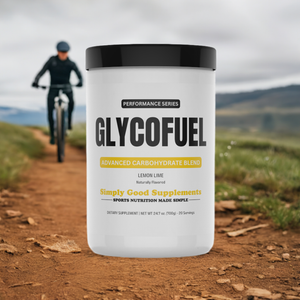
At Simply Good Supplements, our GlycoFuel formula combines Cluster Dextrin, dextrose, and fructose.
The purpose of a carbohydrate supplement isn't to magically increase durability. It's to provide usable fuel that may help delay carbohydrate-related performance limitations.
You can't necessarily supplement your way to better physiological resilience, but you can avoid allowing inadequate fueling to undermine the performance capacity you've developed through training.
Explore GlycoFuel8. How to Measure Your Own Durability
This is where I think the concept becomes especially useful for everyday endurance athletes.
You don't necessarily need a laboratory to begin collecting meaningful information about how your performance changes during prolonged exercise.
But you do need consistency.
Method 1: Heart Rate Drift
One of the simplest approaches is to evaluate changes in heart rate relative to pace or power during a steady aerobic session.
For example, a cyclist might complete a two-hour ride at a consistent power output.
If heart rate increases substantially during the second half despite unchanged power, that indicates increasing cardiovascular strain.
Runners can perform a similar assessment using a steady pace on relatively flat terrain.
However, heart rate drift is influenced by heat, dehydration, altitude, illness, and other factors.
It is useful for monitoring, but it isn't a definitive measure of durability.
Method 2: Compare Fresh and Fatigued Performance
A more direct approach is to compare performance before and after a standardized amount of exercise.
For cyclists, that might involve comparing a five-minute maximal effort performed fresh with one performed after a controlled two- or three-hour ride.
The percentage change can provide an estimate of performance deterioration.
(Fresh output − Fatigued output) ÷ Fresh output × 100
Example: (320 W − 290 W) ÷ 320 W × 100 = 9.4% decline.
One caution: maximal testing after prolonged exercise can be demanding.
It shouldn't be added casually to every long workout, especially when training fatigue is already high.
Method 3: Track Late-Session Performance
A simpler field approach is to monitor whether you can maintain planned pace, power, and perceived effort during the final portion of a long session.
For example, compare the final 30 minutes of similar long rides across a training block.
Are you maintaining the same output at a lower perceived effort?
Is heart rate drift becoming less pronounced?
Are you able to finish the session without a substantial loss of pace?
These observations can be useful, but they aren't specific proof of improved durability.
They may also reflect better pacing, improved fueling, greater familiarity with the session, or changes in fitness.
What I Would Standardize
- The duration and intensity of exercise before testing.
- Carbohydrate intake before and during the session.
- Hydration strategy and environmental conditions.
- Recovery and training load during the preceding days.
- Equipment, terrain, and testing protocol.
Without some consistency, it's difficult to know whether changes reflect improved physiology or simply different conditions.
9. A Practical Durability-Focused Training Week
Here's how I might organize a general endurance training week around the goal of preserving performance during prolonged exercise.
This is an illustrative framework for an already-trained athlete, not a universal prescription.
| Day | Training Focus | Purpose |
|---|---|---|
| Monday | Recovery or rest | Manage accumulated fatigue |
| Tuesday | VO₂max or threshold intervals | Develop aerobic capacity and sustainable intensity |
| Wednesday | Easy aerobic training + strength | Build aerobic volume and muscular capacity |
| Thursday | Moderate aerobic endurance | Accumulate controlled training volume |
| Friday | Recovery or easy training | Prepare for the longer session |
| Saturday | Long endurance session | Develop tolerance to prolonged work |
| Sunday | Easy aerobic training or optional strength | Add appropriate volume without excessive intensity |
Every few weeks, an athlete might incorporate controlled event-specific efforts toward the end of a long session.
But I would only do that when the athlete is recovering well and has a sufficient training foundation.
I wouldn't make fatigue the goal.
The goal is to develop performance capacity while managing the fatigue required to stimulate adaptation.
What About Ultramarathon and Trail Athletes?
I think durability is particularly relevant to trail and ultrarunning because these events introduce challenges that are difficult to reproduce in traditional laboratory tests.
Climbing changes muscular and metabolic demands.
Descending adds eccentric loading and muscle damage.
Technical terrain increases the importance of coordination and neuromuscular control.
And races may last long enough that sleep, gastrointestinal tolerance, and thermoregulation become major performance considerations.
A trail runner with an impressive VO₂max may still struggle if their quadriceps deteriorate during repeated descents.
Similarly, an athlete with excellent flat-road running economy may not maintain that economy on steep, technical terrain after several hours.
That's why I favor event-specific preparation rather than relying exclusively on conventional aerobic testing.
However, direct research validating durability-specific training protocols in ultrarunners remains limited.
10. Is Durability Really the Fourth Pillar, or Should It Be the Foundation?
This is where I want to distinguish my interpretation from what the science has definitively established.
Andrew Jones proposed physiological resilience as a fourth dimension of endurance performance.
Maunder and colleagues argued that durability deserves greater consideration in the physiological profiling of endurance athletes.
More recent research has supported its relevance to performance after prolonged exercise [1–3].
But the field is still developing.
Researchers have not agreed on one universal measurement.
We don't yet know whether durability is completely independent of VO₂max, threshold, and economy.
And we don't have enough intervention studies to determine the best ways to improve it in highly trained athletes.
So calling durability the foundational pillar of endurance performance is a perspective, not an established scientific consensus.
Still, I think it's a useful way to approach long-duration events.
A conceptual model, not a validated physiological framework.
The traditional pillars describe an athlete's potential.
Durability helps describe how that potential changes as the event unfolds.
I wouldn't necessarily argue that durability is more important than VO₂max in a short race.
But as event duration increases, the preservation of physiological capabilities becomes increasingly relevant.
And for events lasting several hours, I think durability should influence how we test, train, fuel, and evaluate athletes.
11. Frequently Asked Questions
What is durability in endurance sports?
Durability describes how well an athlete resists deterioration in physiological characteristics and performance during prolonged exercise. It can involve changes in threshold, exercise economy, aerobic capacity, and performance after accumulated work.
Is durability the same as aerobic endurance?
Not exactly. Aerobic endurance broadly describes the ability to sustain exercise using aerobic energy metabolism. Durability focuses on how physiological characteristics change as prolonged exercise continues.
Can you improve durability through training?
Early intervention research suggests that durability can improve with endurance training. A 2023 study found improvements after both low- and high-intensity cycling programs, although the best training methods for well-trained athletes remain uncertain.
Does a higher VO₂max mean better durability?
Not necessarily. VO₂max and durability describe different aspects of performance. Athletes with similar fresh-state aerobic capacities may respond differently to prolonged exercise.
How do you test durability?
Researchers use changes in physiological variables or performance before and after prolonged exercise. Field approaches include heart rate drift and standardized fresh-versus-fatigued performance comparisons. No single universally accepted test currently exists.
Are long runs the best way to improve durability?
Long runs are a practical way to expose athletes to prolonged exercise demands, but research hasn't established that they are uniquely superior to other training approaches for improving every aspect of durability.
Does strength training improve durability?
Strength training can improve running economy and endurance performance, but direct evidence that it improves specific durability measurements remains limited.
Can supplements improve durability?
Adequate carbohydrate intake and appropriate hydration can help prevent avoidable performance deterioration during prolonged exercise. However, evidence that a particular supplement directly improves the underlying physiological characteristic of durability is limited.
Is durability more important for marathon and ultramarathon runners?
It is likely particularly relevant to long-duration events because athletes must preserve their capabilities for extended periods. Its relative importance compared with traditional performance determinants has not yet been precisely established.
The Bottom Line: Endurance Performance Is About What You Can Preserve
I think durability has the potential to change how we evaluate endurance athletes.
For years, we've focused heavily on improving physiological numbers measured when athletes are rested.
And those numbers matter.
But a marathon isn't run in a laboratory.
A cycling race isn't decided after a 20-minute warm-up.
And an ultramarathon isn't won based on what an athlete can produce during the first hour.
Endurance events require athletes to maintain performance while fatigue, metabolic stress, muscular strain, and environmental demands accumulate.
The research increasingly supports the idea that athletes differ substantially in how well they preserve their physiological capabilities.
Some maintain their performance remarkably well.
Others experience substantial deterioration.
And those differences may help explain why athletes with similar laboratory fitness perform differently in long-duration competition.
My view is that durability should be treated as a foundational consideration in endurance training, alongside VO₂max, threshold, and economy.
That doesn't mean abandoning traditional training principles.
It means expanding how we define fitness.
Build your aerobic capacity.
Improve your threshold.
Develop your economy.
Strength train appropriately.
Fuel your sessions.
And pay attention to how well your performance holds up after hours of accumulated work.
Because in endurance sports, your best performance isn't necessarily what you can produce when you're fresh.
It's what you can still produce when you're tired.
References
1. Maunder E, Seiler S, Mildenhall MJ, Kilding AE, Plews DJ. The Importance of 'Durability' in the Physiological Profiling of Endurance Athletes. Sports Medicine. 2021;51:1619–1628. Read article.
2. Jones AM. The fourth dimension: physiological resilience as an independent determinant of endurance exercise performance. The Journal of Physiology. 2024;602(17):4113–4128. Read review.
3. Hamilton K, et al. Durability of the moderate-to-heavy-intensity transition is related to the effects of prolonged exercise on severe-intensity performance. European Journal of Applied Physiology. 2024;124:2427–2438. Read study.
4. Matomäki P, et al. Durability is improved by both low and high intensity endurance training. Frontiers in Physiology. 2023;14:1128111. Read study.
5. Hunter B, Maunder E, Jones AM, Gallo G, Muniz-Pumares D. Durability as an index of endurance exercise performance: Methodological considerations. Experimental Physiology. 2025;110(11):1612–1624. Read review.
6. Meixner BJ, Joyner MJ, Sperlich B. Durability, fatigability, repeatability, and resilience in endurance sports: definitions, distinctions, and implications. Journal of Applied Physiology. 2025. Read viewpoint.
7. Durability of the Major Determinants of Endurance Performance Is Not Different After 15 kJ·kg⁻¹ of Moderate or Heavy Exercise. European Journal of Sport Science. 2025;25(9):e70039. Read study.
8. Llanos-Lagos C, Ramirez-Campillo R, Moran J, Sáez de Villarreal E. The Effect of Strength Training Methods on Middle-Distance and Long-Distance Runners' Athletic Performance: A Systematic Review with Meta-analysis. Sports Medicine. 2024;54:1801–1833. Read meta-analysis.
9. Llanos-Lagos C, et al. Effect of Strength Training Programs in Middle- and Long-Distance Runners' Economy at Different Running Speeds: A Systematic Review with Meta-analysis. Sports Medicine. 2024;54:895–932. Read meta-analysis.
10. From Metabolism to Medals: Contemporary Perspectives and Revisiting Carbohydrate Guidelines for Fueling Endurance Athletes during Exercise. The Journal of Nutrition. 2026;156(5):101442. Read review.