Creatine Monohydrate vs. Creatine MagnaPower: Is Magnesium Creatine Chelate Actually Better?
Creatine monohydrate has been one of the most researched supplements in sports nutrition for decades. Yet supplement manufacturers continue introducing alternative forms that promise better absorption, greater performance benefits, or some other advantage over traditional monohydrate.
One of those alternatives is Creatine MagnaPower, a branded form of magnesium creatine chelate.
The idea sounds promising.
Magnesium plays an important role in ATP metabolism, muscle contraction, and energy production. Creatine helps regenerate ATP during high-intensity exercise.
Combine the two, and you have a supplement that appears to offer the benefits of both ingredients in one compound.
But does that actually make it better than creatine monohydrate?
That's the question I care about as a formulator.
I'm not particularly interested in whether an ingredient sounds more advanced or has a clever delivery system. I want to know whether it produces meaningful improvements in strength, muscle growth, exercise performance, or recovery.
And when we look at the available research, there isn't convincing evidence that magnesium creatine chelate outperforms creatine monohydrate.
That doesn't mean Creatine MagnaPower is ineffective. It means the premium positioning deserves scrutiny.
TLDR
- Creatine MagnaPower is magnesium creatine chelate, a compound containing creatine associated with magnesium.
- Magnesium is important for normal energy metabolism, but combining it with creatine doesn't automatically improve creatine's effectiveness.
- Small human studies have investigated magnesium creatine chelate, with some encouraging findings, but they haven't established consistent superiority over monohydrate.
- Creatine monohydrate has substantially more evidence supporting its effectiveness, safety, and dosing.
- The weight of magnesium creatine chelate isn't entirely creatine, so equal gram amounts of the two compounds shouldn't automatically be considered equivalent creatine doses.
- For most healthy adults, 3–5 grams of creatine monohydrate daily remains a practical, research-supported approach.
- My recommendation: Unless future research demonstrates a meaningful advantage, I don't see a reason to pay more for Creatine MagnaPower.
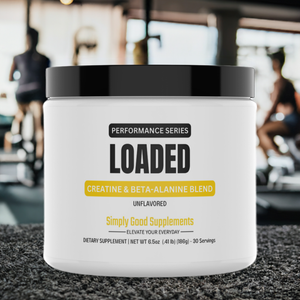
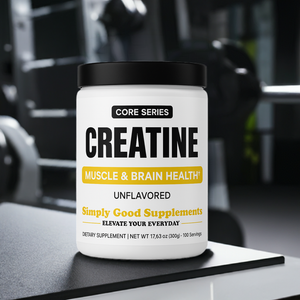
At Simply Good Supplements, we use creatine monohydrate in both our Creatine Monohydrate and Loaded formulas because the evidence continues to support it.
What Exactly Is Creatine MagnaPower?
Creatine MagnaPower is a branded form of magnesium creatine chelate.
Unlike creatine monohydrate, which contains creatine associated with a water molecule, magnesium creatine chelate contains creatine associated with magnesium.
The concept is based on the biological roles of both nutrients.
Creatine contributes to the phosphocreatine system, which helps rapidly regenerate ATP during intense muscular activity.
Magnesium is involved in hundreds of enzymatic processes, including reactions related to energy metabolism.
In fact, ATP commonly functions in cells as a magnesium-associated complex.
That provides a reasonable biochemical explanation for why combining magnesium and creatine might be worth studying.
However, there's an important distinction between a plausible mechanism and a demonstrated performance advantage.
Just because two compounds participate in energy metabolism doesn't mean chemically combining them produces better results.
Creatine Monohydrate vs. Creatine MagnaPower at a Glance
| Feature | Creatine Monohydrate | Creatine MagnaPower |
|---|---|---|
| Form | Creatine monohydrate | Magnesium creatine chelate |
| Contains magnesium | No added magnesium | Yes |
| Human performance research | Extensive | Limited |
| Established maintenance dose | Typically 3–5 g/day | Less standardized |
| Demonstrated muscle creatine saturation | Yes | Less directly established |
| Proven superior strength gains | Reference standard | No |
| Long-term safety evidence | Extensive | Less extensive |
| Cost | Generally economical | Often positioned as premium |
| Overall recommendation | Best-supported option | No established advantage |
One additional detail matters when comparing labels.
A gram of magnesium creatine chelate isn't necessarily equivalent to a gram of creatine monohydrate in terms of the amount of creatine delivered.
The precise creatine content depends on the compound's composition and the manufacturer's specifications.
That's why I prefer comparing the amount of actual creatine delivered rather than simply comparing ingredient weights.
Why Magnesium Sounds Like an Advantage
Magnesium is essential for normal muscle and nerve function, protein synthesis, and energy metabolism.
It also plays a role in ATP-dependent reactions.
Because creatine helps replenish ATP during exercise, it's reasonable to investigate whether magnesium availability influences creatine-related processes.
But that doesn't establish that someone with adequate magnesium intake will benefit from having magnesium chemically attached to their creatine.
There are two separate questions here.
First, can correcting magnesium deficiency improve physiological function?
Absolutely. Magnesium is an essential mineral, and inadequate intake can impair normal function.
Second, does magnesium creatine chelate produce greater performance improvements than creatine monohydrate in someone who already consumes sufficient magnesium?
That second claim requires direct clinical evidence.
And it's much harder to establish.
You don't necessarily need to combine two nutrients into one molecule to obtain their benefits.
If someone needs additional magnesium, they can obtain it through food or an appropriately selected magnesium supplement.
If someone wants to increase muscle creatine stores, creatine monohydrate already accomplishes that reliably.
What Does the Research Actually Show?
Magnesium creatine chelate has been investigated in human trials. That's more than can be said for some alternative creatine formulations.
However, the evidence base is small, and the results need to be interpreted carefully.
Study #1: Magnesium Creatine Chelate vs. Monohydrate for Strength and Endurance
A 2004 study by Selsby and colleagues, published in the Journal of Strength and Conditioning Research, investigated magnesium creatine chelate in 31 resistance-trained men.
Participants were randomly assigned, under double-blind conditions, to one of three groups:
| Group | Daily Supplementation |
|---|---|
| Creatine monohydrate | 2.5 g creatine |
| Magnesium creatine chelate | 2.5 g creatine |
| Placebo | Non-creatine placebo |
The intervention lasted 10 days.
Researchers measured bench press one-repetition maximum and the total work participants could complete at 70% of their maximum.
Both creatine groups performed significantly more work than the placebo group.
However, the two creatine groups performed similarly, and the improvements in maximal strength were not significantly different between groups.
The researchers concluded that the proposed magnesium-chelate delivery mechanism did not provide an advantage over conventional creatine at the studied dose [1].
My Interpretation
This is a particularly useful study because it directly tested the claim that magnesium creatine chelate might be more effective than creatine monohydrate.
And it didn't find that advantage.
That doesn't prove the compounds are identical in every physiological respect. The study was small and lasted only 10 days.
But it does weaken the argument that MagnaPower produces superior training outcomes.
If the main selling point is better performance, I want to see a meaningful difference in performance.
This study didn't demonstrate one.
Study #2: Magnesium Creatine Chelate and Muscle Water Retention
A 2003 study by Brilla and colleagues, published in Metabolism, investigated magnesium creatine chelate in 35 recreationally active participants.
The researchers compared three groups over two weeks:
- Magnesium creatine chelate, providing 5 g creatine and 800 mg magnesium daily.
- Creatine combined with magnesium oxide, providing comparable creatine and magnesium amounts.
- Placebo.
The researchers measured body water distribution, quadriceps torque, total work, and power.
The magnesium creatine chelate group demonstrated significant within-group increases in intracellular water and peak torque.
Both active supplementation groups improved power.
The investigators proposed that the changes in cellular hydration might reflect improved muscle creatine uptake [2].
Does That Prove MagnaPower Increases Muscle Creatine Better?
No.
This is an important distinction.
The study measured body water distribution using bioelectrical impedance.
It did not directly measure muscle creatine concentrations.
Increased intracellular water can be consistent with creatine-related changes, but it isn't proof that one creatine form produces greater muscle creatine accumulation.
There was also no clear demonstration that the chelated form consistently produced superior strength and power outcomes.
And because the study was relatively small and lasted only two weeks, we can't draw conclusions about long-term muscle growth.
One other consideration: the study reported support from Albion Laboratories, an ingredient company associated with mineral chelate technology. Industry funding doesn't invalidate findings, but it's relevant context when evaluating claims about a branded ingredient.
My takeaway: Interesting physiological findings, but not enough to establish a meaningful performance advantage over creatine monohydrate.
Study #3: Magnesium Creatine Chelate in Soccer Players
A longer study examined magnesium creatine chelate supplementation during 16 weeks of soccer training.
The researchers investigated repeated sprint performance using approximately 5.5 grams of magnesium creatine chelate daily.
The supplemented group improved repeated sprint performance compared with placebo.
That's encouraging evidence that magnesium creatine chelate may be an effective creatine source for certain athletic applications.
But there's a major limitation.
The study didn't include a creatine monohydrate comparison group.
That means it can't establish that magnesium creatine chelate works better than monohydrate.
We already know that creatine monohydrate can support repeated high-intensity exercise.
Showing that another creatine formulation may also improve performance isn't the same as showing it's superior.
The 2022 critical review also noted an increase in reported creatinine concentrations in the chelate group. That finding warrants careful interpretation rather than being taken as proof of harm [3].
What Do Systematic Reviews Say?
Individual studies can be useful, but I put more weight on the overall body of evidence.
A systematic review published in the Journal of Strength and Conditioning Research evaluated alternative creatine formulations for exercise performance and body composition.
The researchers included 17 randomized, placebo-controlled clinical trials involving various alternative forms, including magnesium creatine chelate.
Only three trials directly compared alternative forms with creatine monohydrate.
The authors found no consistent evidence that alternative creatine formulations provided superior performance benefits.
They also identified creatine monohydrate as the lowest-cost form in their marketplace analysis [4].
A separate 2022 critical review examined creatine bioavailability, effectiveness, safety, and regulatory status.
For magnesium creatine chelate specifically, the authors concluded that there was no direct evidence demonstrating greater blood creatine concentrations, muscle creatine retention, or superior bioavailability compared with monohydrate.
Their broader conclusion was that creatine monohydrate remains the best-supported option [3].
That's the evidence I find most persuasive.
MagnaPower may work. But working isn't the same as working better.
Does Creatine MagnaPower Absorb Better?
One of the most common selling points for alternative creatine forms is improved absorption.
The implication is that conventional creatine monohydrate is poorly absorbed and needs a special delivery system.
But that isn't supported by the broader research.
Creatine monohydrate has high oral bioavailability and reliably increases muscle creatine stores when taken at established doses.
Magnesium creatine chelate has been marketed as a potentially more bioavailable form, but there is no convincing human evidence showing that it delivers more creatine to skeletal muscle than monohydrate [3].
That's an important distinction.
It's possible for two compounds to have different chemical properties without producing meaningfully different physiological outcomes.
For a performance supplement, the outcome matters more than the theoretical mechanism.
How Much Actual Creatine Is in MagnaPower?
This is one of the details that often gets overlooked when comparing alternative creatine products.
Creatine monohydrate is approximately 88% creatine by molecular weight.
A 2022 critical review reports that magnesium creatine chelate is approximately 84.4% creatine by molecular weight [3].
Approximate theoretical creatine content of the two compounds, not measured bioavailability or muscle uptake [3].
The difference is relatively small.
For example, a 5-gram serving of each compound would theoretically contain approximately:
| Compound | Creatine Content |
|---|---|
| 5 g creatine monohydrate | 4.40 g |
| 5 g magnesium creatine chelate | 4.22 g |
This doesn't mean magnesium creatine chelate is substantially inferior.
But it does demonstrate why the idea that MagnaPower somehow delivers dramatically more creatine per gram doesn't make much sense based on composition alone.
If a product lists magnesium creatine chelate as an ingredient, I would want to know how much actual creatine the serving provides.
And I would want to see evidence supporting the recommended dose.
Does MagnaPower Reduce Water Retention?
Some alternative creatine products are marketed as producing less bloating or water retention.
But water retention needs to be discussed accurately.
Creatine supplementation can increase intracellular water as muscle creatine concentrations rise.
That's a normal physiological response.
It isn't automatically undesirable.
Interestingly, the 2003 magnesium creatine chelate study found increased intracellular water in the chelate group [2].
That finding doesn't support a blanket claim that magnesium creatine chelate eliminates creatine-associated water changes.
If someone experiences digestive discomfort or an unwanted increase in body mass with creatine monohydrate, I'd first consider their dose, loading strategy, and how they're taking it.
For many people, taking 3–5 grams daily without a loading phase is a reasonable approach.
Is Creatine MagnaPower Worth the Extra Money?
This is where the decision becomes relatively straightforward for me.
If an ingredient costs more, I want a reason to believe it offers something meaningful in return.
That could be better performance, improved tolerability, greater convenience, or some other measurable advantage.
MagnaPower has an interesting biochemical rationale and some encouraging research.
But it hasn't demonstrated consistently superior strength, muscle growth, or exercise performance compared with creatine monohydrate.
The broader evidence also favors monohydrate for cost-effectiveness [4].
So even without comparing current retail prices, I don't see a compelling scientific reason to pay a premium solely for magnesium creatine chelate.
If a particular MagnaPower product is priced competitively and provides a verified effective creatine dose, it's a reasonable option to consider.
But I wouldn't choose it over monohydrate because of claims of superior absorption or performance.
Those claims haven't been established.
Why I Continue to Use Creatine Monohydrate in Simply Good Supplements
When I formulate products, I want ingredients that have strong human evidence behind them.
Creatine monohydrate checks that box.
We know it increases muscle creatine stores.
We know it can improve performance during repeated high-intensity exercise.
We have substantial research supporting its use alongside resistance training.
And we have extensive safety data in healthy adults.
That's why it's the form we use in both our standalone Creatine Monohydrate and Loaded formulas.
Creatine Monohydrate
5 g per serving | Unflavored
Our standalone Creatine Monohydrate is designed for people who want a straightforward, research-supported daily creatine supplement.
No complicated delivery systems. No premium creatine forms without demonstrated benefits.
Explore Creatine MonohydrateLoaded
3 g creatine monohydrate + 3.2 g beta-alanine
Loaded combines creatine monohydrate with beta-alanine for athletes who want support for strength, power, and repeated high-intensity efforts.
It's particularly relevant for people combining resistance training with sprint intervals, cycling, and hybrid endurance training.
Explore LoadedWhich Product Would I Choose?
If your goal is simply to increase muscle creatine stores, I'd choose our standalone Creatine Monohydrate.
If you also want beta-alanine to support performance during certain demanding high-intensity efforts, Loaded may be a better fit.
Beta-alanine works through a different mechanism than creatine. It increases muscle carnosine concentrations over time, which can help buffer acidity during intense exercise.
Loaded already provides 3 grams of creatine monohydrate per serving, so most people won't need to add a full serving of standalone creatine on top of it.
How Much Creatine Monohydrate Should You Take?
For most healthy adults, 3–5 grams daily is an effective maintenance strategy.
You can also use a loading phase if you want to increase muscle creatine stores more quickly.
| Protocol | Typical Dose | Purpose |
|---|---|---|
| Daily supplementation | 3–5 g/day | Gradually increase and maintain creatine stores |
| Optional loading | Approximately 20 g/day, divided into four doses for 5–7 days | Increase stores more rapidly |
| After loading | 3–5 g/day | Maintain elevated stores |
Loading isn't required.
Cycling isn't required.
And for most people, taking creatine consistently matters more than taking it at a specific time.
Frequently Asked Questions
Is Creatine MagnaPower better than creatine monohydrate?
There is no convincing evidence that magnesium creatine chelate produces greater strength gains, muscle growth, or exercise performance than creatine monohydrate.
What is Creatine MagnaPower made of?
MagnaPower is a branded magnesium creatine chelate ingredient. It combines creatine with magnesium in a chelated compound.
Does magnesium creatine chelate absorb better?
Superior muscle creatine uptake has not been demonstrated in human studies comparing magnesium creatine chelate with creatine monohydrate.
Does MagnaPower build more muscle?
No convincing clinical evidence establishes greater hypertrophy from MagnaPower than from an appropriately dosed creatine monohydrate supplement.
Does MagnaPower contain less creatine?
By molecular weight, magnesium creatine chelate contains approximately 84.4% creatine, compared with approximately 87.9% for monohydrate. The difference is relatively small, and exact product dosing should be checked.
Does magnesium make creatine work better?
Magnesium is essential for normal ATP metabolism, but attaching magnesium to creatine hasn't been shown to consistently improve creatine's performance benefits.
Is MagnaPower safe?
Small clinical studies have investigated magnesium creatine chelate, but its long-term safety database is much smaller than that of creatine monohydrate. Total magnesium intake also matters, especially for people with kidney disease or those using other magnesium-containing supplements.
Should I choose Creatine Monohydrate or Loaded?
Choose standalone Creatine Monohydrate if you want a simple creatine supplement. Choose Loaded if you also want beta-alanine for additional high-intensity muscular-endurance support.
The Bottom Line: Magnesium Doesn't Automatically Make Creatine Better
I understand the appeal of Creatine MagnaPower.
Magnesium is essential for energy metabolism, creatine is effective for high-intensity exercise, and combining the two sounds like a logical improvement.
But a good biochemical explanation isn't the same as proof of a better supplement.
The small studies examining magnesium creatine chelate suggest that it can support exercise performance.
That's encouraging.
However, the direct comparisons haven't demonstrated that it outperforms creatine monohydrate.
And the larger reviews continue to favor monohydrate because of its extensive research, established dosing, safety record, and value.
My recommendation is simple: Choose high-quality, independently tested creatine monohydrate, take an effective dose consistently, and focus on your training.
That's why I use it in our Creatine Monohydrate and Loaded formulas.
Until magnesium creatine chelate demonstrates a meaningful advantage in well-designed human trials, I don't see a reason to pay more for it.
More Creatine Research
I've also examined the claims behind several other creatine formulations and delivery methods:
References
1. Selsby JT, DiSilvestro RA, Devor ST. Mg2+-creatine chelate and a low-dose creatine supplementation regimen improve exercise performance. Journal of Strength and Conditioning Research. 2004;18(2):311–315. View study.
2. Brilla LR, Giroux MS, Taylor A, Knutzen KM. Magnesium-creatine supplementation effects on body water. Metabolism. 2003;52(9):1136–1140. View study.
3. Kreider RB, Jäger R, Purpura M. Bioavailability, efficacy, safety, and regulatory status of creatine and related compounds: A critical review. Nutrients. 2022;14(5):1035. View review.
4. Efficacy of Alternative Forms of Creatine Supplementation on Improving Performance and Body Composition in Healthy Subjects: A Systematic Review. Journal of Strength and Conditioning Research. View systematic review.
5. Antonio J, Candow DG, Forbes SC, et al. Common questions and misconceptions about creatine supplementation: What does the scientific evidence really show? Journal of the International Society of Sports Nutrition. 2021;18:13. View review.
Research note: The magnesium creatine chelate studies discussed here are relatively small. Some used short interventions, and not all included a creatine monohydrate comparator. A lack of statistically significant differences also does not establish that two formulations are formally equivalent.