Creatine Monohydrate vs. Kre-Alkalyn: Is Buffered Creatine Really Better?
Creatine monohydrate has been one of the most extensively researched sports supplements for decades. Yet companies continue to introduce supposedly improved versions, often promising better absorption, smaller doses, fewer side effects, and superior performance.
One of the most recognizable is Kre-Alkalyn, a patented, pH-buffered form of creatine.
The marketing argument is straightforward. Traditional creatine monohydrate supposedly breaks down too easily in the stomach, while Kre-Alkalyn's higher pH protects the creatine, improves delivery, and allows users to achieve the same benefits with substantially smaller doses.
That sounds appealing, particularly if you don't enjoy taking several grams of powder every day.
But there's a problem with that argument.
Researchers have actually compared Kre-Alkalyn with regular creatine monohydrate, measuring muscle creatine concentrations, strength, body composition, exercise performance, and side effects.
And the results don't support the claims of superiority.
As someone who formulates sports nutrition supplements, I find this comparison particularly interesting because it illustrates how easily a plausible chemical explanation can become a marketing claim without demonstrating a meaningful benefit in humans.
My position is simple: creatine monohydrate remains the better-supported and generally more economical choice.
Kre-Alkalyn may be an effective way to consume creatine at an adequate dose. But there's no convincing evidence that buffering creatine makes it work better.
TLDR
- Kre-Alkalyn is buffered creatine monohydrate, formulated to have a higher pH.
- The central marketing claim is that buffering protects creatine from degradation, improves delivery, and allows smaller doses.
- A direct 2012 clinical trial found no superiority for Kre-Alkalyn over regular creatine monohydrate in muscle creatine accumulation, strength, body composition, or anaerobic performance.
- Lower-dose Kre-Alkalyn did not establish equivalence to a conventional monohydrate loading protocol across the measured outcomes.
- Kre-Alkalyn did not demonstrate fewer side effects in the direct comparison.
- Creatine monohydrate remains the gold standard, with decades of research supporting 3–5 grams daily for most healthy adults.
- My recommendation: Choose a properly dosed, quality-tested creatine monohydrate product rather than paying extra for buffering claims that haven't translated into better clinical results.
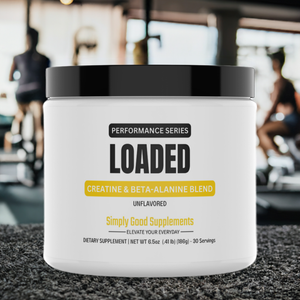
At Simply Good Supplements, that's why we use creatine monohydrate in both our Creatine Monohydrate and Loaded formulas.
What Exactly Is Kre-Alkalyn?
Kre-Alkalyn is a branded, pH-buffered creatine product associated with All American Pharmaceutical.
Its defining feature is the addition of buffering agents designed to increase the pH of the formulation.
The proposed benefit is greater stability, particularly under acidic conditions.
The underlying premise is that traditional creatine monohydrate may convert to creatinine, a breakdown product, before the body can effectively use it.
By increasing the pH, Kre-Alkalyn is intended to limit that conversion.
In theory, this could mean more creatine remains available for absorption.
But there's a critical distinction.
A more stable formulation under a particular laboratory condition doesn't automatically mean more creatine reaches skeletal muscle after oral consumption.
Muscle creatine accumulation is ultimately what matters for the established exercise-performance benefits of creatine.
Is Kre-Alkalyn a Completely Different Form of Creatine?
No.
Kre-Alkalyn is generally described as buffered creatine monohydrate rather than a chemically distinct creatine salt such as creatine hydrochloride.
The creatine molecule itself is not transformed into a new performance-enhancing compound simply because the formulation contains buffering agents.
The main question is whether that buffering improves its effectiveness in humans.
That's something we can test.
Why Does Creatine Stability Matter?
Creatine can convert to creatinine under certain conditions.
The rate of this conversion depends on factors including pH, temperature, and how long creatine remains in solution.
This is relevant to products stored in liquid for extended periods.
However, the behavior of creatine in a bottled beverage over several weeks or months is not necessarily representative of what happens when someone consumes a serving of creatine monohydrate.
Creatine monohydrate is efficiently absorbed after oral ingestion.
A 2022 critical review of creatine formulations concluded that alternative forms had not demonstrated superior bioavailability or effectiveness compared with monohydrate.
The authors also emphasized that creatine monohydrate has the strongest evidence for efficacy and safety [1].
The marketing claim that ordinary creatine monohydrate is largely destroyed by stomach acid is inconsistent with the substantial evidence showing that oral monohydrate supplementation increases muscle creatine concentrations.
If regular monohydrate were being extensively destroyed before absorption, we wouldn't consistently observe that physiological response.
The Most Important Study: Kre-Alkalyn vs. Creatine Monohydrate
The most relevant evidence comes from a direct clinical comparison published in 2012 in the Journal of the International Society of Sports Nutrition.
Jagim and colleagues conducted a randomized, double-blind study involving 36 resistance-trained men over 28 days.
The researchers compared three supplementation protocols:
| Group | Supplementation Protocol |
|---|---|
| Creatine monohydrate | 20 g/day for 7 days, followed by 5 g/day for 21 days |
| Buffered creatine, equivalent dose | Same loading and maintenance amounts as monohydrate |
| Buffered creatine, lower dose | 1.5 g/day for 28 days |
The lower-dose buffered group was particularly important because one of Kre-Alkalyn's major selling points was that much smaller amounts could provide equivalent results.
The researchers assessed muscle creatine content, body composition, one-repetition-maximum strength, anaerobic performance, and clinical safety markers.
Finding #1: Kre-Alkalyn Did Not Increase Muscle Creatine More Than Monohydrate
Muscle creatine accumulation is one of the most important outcomes in a study comparing creatine formulations.
The researchers found that buffered creatine did not increase muscle creatine concentrations more effectively than conventional creatine monohydrate.
The higher-dose buffered protocol did not demonstrate an advantage over the traditional monohydrate protocol.
The lower-dose buffered protocol also failed to establish that 1.5 grams daily could replace conventional loading and maintenance doses.
This directly challenges the idea that Kre-Alkalyn is so much more bioavailable that users can take substantially less.
Finding #2: No Greater Strength Gains
If buffered creatine were substantially more effective, we might expect that difference to appear in training outcomes.
But the researchers found no superior strength adaptations with buffered creatine.
This included measures of one-repetition-maximum performance.
Both forms were evaluated during a resistance-training program, making the comparison more practically relevant than simply measuring how well each powder dissolved.
Finding #3: No Superior Body Composition Changes
The study also examined changes in body composition.
Buffered creatine did not demonstrate greater improvements than monohydrate.
This is important because some supplement companies imply that their formulation provides more usable creatine, which should theoretically lead to greater muscle-related benefits.
The actual training outcomes did not establish that advantage.
Finding #4: No Better Anaerobic Performance
The researchers also evaluated anaerobic exercise performance.
Again, buffered creatine did not produce superior results compared with monohydrate.
Across the major outcomes, the supposed advantages of buffering were not demonstrated.
Finding #5: No Evidence of Fewer Side Effects
Another selling point for Kre-Alkalyn is improved tolerability.
Some marketing claims suggest that buffered creatine reduces bloating, gastrointestinal discomfort, or other side effects.
However, the 2012 study did not find evidence that buffered creatine was associated with fewer side effects than monohydrate.
That doesn't mean individual experiences can't differ.
But a personal preference for one product is different from demonstrating a consistent safety or tolerability advantage in clinical research.
The researchers' overall conclusion was that buffered creatine did not promote greater muscle creatine accumulation, training adaptations, or fewer side effects than creatine monohydrate [2].
That is a fairly decisive finding for the claims the study was designed to investigate, although one 28-day study cannot settle every possible question about every buffered formulation.
A Closer Look at the Actual Study Results
I think the numbers are worth examining because they show why the claims surrounding Kre-Alkalyn are difficult to justify.
Mean percentage change from baseline, Jagim et al. (2012)
Descriptive group averages, not statistically significant differences between groups (p = 0.10 for percentage changes). Individual responses varied considerably [2].
The monohydrate group had the largest numerical increase in muscle free creatine.
But I wouldn't use this chart to claim that monohydrate was proven superior by a specific percentage. The variability was substantial, and the between-group difference was not statistically significant.
What the data do show is that the buffered formulation did not establish the greater uptake its marketing claims would lead us to expect.
The researchers also reported the following 28-day changes:
| Outcome | Monohydrate | Buffered, Equivalent Dose | Buffered, 1.5 g/day |
|---|---|---|---|
| Muscle free creatine | +50.4% | +27.3% | +11.9% |
| Fat-free mass | +1.1 kg | +1.2 kg | +0.37 kg |
| Bench press 1RM | +10.0 kg | +7.3 kg | +7.1 kg |
The study found no statistically significant between-group differences for these outcomes. The figures are observed averages, not proof that the protocols are equivalent [2].
There's another detail worth noting: the monohydrate comparator in this study was Creapure, a branded source of creatine monohydrate.
That doesn't mean Creapure is necessary for creatine to work. It simply identifies the specific raw material the researchers used.
Does Kre-Alkalyn Really Require a Smaller Dose?
This is probably the most commercially important claim.
A typical creatine monohydrate maintenance dose is 3–5 grams daily.
Kre-Alkalyn has been promoted at approximately 1.5 grams daily.
That's half or less of the usual monohydrate maintenance amount.
For the smaller dose to be a genuine advantage, we'd want evidence that it produces comparable muscle creatine saturation and performance benefits over time.
The Jagim study directly investigated the lower-dose protocol.
It did not establish that 1.5 grams of buffered creatine was equivalent to conventional monohydrate loading and maintenance.
It's also important not to overinterpret the result. A four-week trial with 36 participants cannot exclude every possibility of longer-term benefits or equivalence under different conditions.
But the burden of proof belongs with the product claiming that a substantially smaller dose is equally effective.
At this point, I don't think that claim has been adequately supported.
What About Bloating, Water Retention, and Stomach Discomfort?
Creatine monohydrate is sometimes criticized for causing bloating or water retention.
These are actually two different issues.
Water Retention
Creatine increases muscle creatine availability and can increase intracellular water content.
That may contribute to an increase in body weight, particularly during loading.
This is part of the physiological response to creatine supplementation and isn't necessarily an adverse effect.
If buffered creatine produces similar muscle creatine saturation, there's no established reason to assume it will eliminate all creatine-associated changes in body water.
Gastrointestinal Discomfort
Some people experience gastrointestinal discomfort when taking large servings of creatine, especially during aggressive loading protocols.
That doesn't mean monohydrate is inherently poorly tolerated.
Taking a smaller daily dose, dividing larger doses, or consuming creatine with a meal may help.
The direct buffered-creatine study did not demonstrate a clear tolerability advantage.
For most people, I'd try adjusting how they take monohydrate before paying more for a different formulation.
What About Cost?
The price of creatine supplements varies by manufacturer, serving size, packaging, and retailer.
But there's an important distinction between comparing package prices and comparing effective daily doses.
A Kre-Alkalyn product may appear economical if its label recommends 1.5 grams daily.
However, if the smaller dose hasn't been demonstrated to provide the same muscle creatine saturation as a conventional monohydrate protocol, the comparison isn't straightforward.
I'd rather pay for a clearly established dose of creatine monohydrate than choose a smaller dose primarily because the manufacturer claims it works better.
A Hypothetical Comparison
Suppose regular creatine monohydrate costs $25 for 100 daily servings and a buffered creatine product costs $35 for 100 manufacturer-recommended daily servings.
Illustrative prices only. These are not verified market averages or Simply Good Supplements prices.
The buffered product costs 40% more per labeled serving.
But the real question isn't whether each container provides 100 servings.
It's whether each serving provides a comparably effective dose.
Without evidence of dose equivalence, the lower amount of creatine in the buffered product shouldn't automatically be treated as an advantage.
Why Creatine Monohydrate Still Wins
The reason I recommend creatine monohydrate isn't that I'm opposed to new formulations.
I'm open to any ingredient that demonstrates a meaningful benefit.
But I want that benefit established through appropriately designed human research.
Creatine monohydrate has been studied for decades.
It reliably increases muscle creatine stores, improves repeated high-intensity exercise capacity, and can support greater training adaptations when combined with resistance exercise.
A 2022 critical review examined alternative creatine formulations and concluded that monohydrate continued to have the strongest combined evidence for bioavailability, effectiveness, and safety.
The authors found no convincing evidence that other forms, including buffered creatine, were more effective than monohydrate [1].
That's the evidence standard I use when making formulation decisions.
If another form eventually demonstrates better muscle uptake, superior outcomes, or meaningful improvements in tolerability, I'll reconsider.
But the available research doesn't give me a reason to replace creatine monohydrate with Kre-Alkalyn.
Want to Compare Other Creatine Forms?
I've also written a broader comparison covering creatine HCl, nitrate, citrate, ethyl ester, buffered creatine, and other marketed alternatives.
Why I Use Creatine Monohydrate in Simply Good Supplements
When I formulate supplements, I focus on three things: evidence, effective dosing, and ingredient quality.
I don't see a reason to use a more expensive creatine formulation unless it provides something meaningful that conventional creatine monohydrate doesn't.
That's why both our Creatine Monohydrate and Loaded formulas use creatine monohydrate.
They serve different purposes, but both start with the same well-established ingredient.
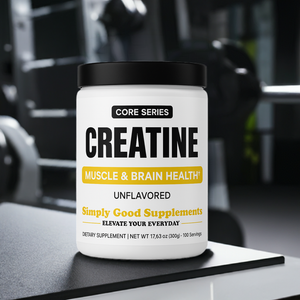
Creatine Monohydrate
5 grams per serving | 100 servings | Unflavored
Our standalone creatine provides a straightforward daily serving without additional active ingredients or unnecessary blends.
It's the product I'd recommend if your primary goal is supporting muscle creatine saturation, strength, power, and resistance-training adaptations.
Explore Creatine MonohydrateLoaded
3 g creatine monohydrate + 3.2 g beta-alanine
Loaded combines creatine with beta-alanine, which works through a different mechanism by increasing muscle carnosine over time.
This combination makes sense for athletes who lift weights and perform repeated high-intensity efforts, including cyclists, runners doing interval sessions, and hybrid athletes.
Explore LoadedWhich One Would I Choose?
If you simply want creatine, choose our standalone Creatine Monohydrate.
If you also want beta-alanine to support high-intensity muscular endurance, Loaded may be a better fit.
Loaded already contains 3 grams of creatine monohydrate per serving, so most people won't need to add a full serving of standalone creatine on top of it.
The important part is consistency.
How Much Creatine Should You Take?
For most healthy adults, I recommend 3–5 grams of creatine monohydrate daily.
There are two established approaches:
| Protocol | Dose | Purpose |
|---|---|---|
| Daily supplementation | 3–5 g daily | Gradually increases muscle creatine stores over several weeks |
| Loading protocol | Approximately 20 g daily, divided into four servings for 5–7 days | Increases muscle creatine stores more quickly |
| Maintenance after loading | 3–5 g daily | Helps maintain elevated muscle creatine stores |
You don't have to load creatine to obtain its longer-term benefits.
You also don't need to cycle it or take it at a precise time.
For most people, consistently taking an effective dose is much more important than timing [1, 3].
Is Creatine Monohydrate Safe?
Creatine monohydrate has an extensive safety literature.
Recommended doses have generally been well tolerated in healthy adults, and controlled research has not demonstrated that appropriate creatine supplementation damages healthy kidneys.
However, people with kidney disease or other relevant medical conditions should discuss supplementation with a healthcare professional.
Creatine can also increase serum creatinine, a marker commonly used in kidney-function assessments, without necessarily indicating kidney damage.
It's worth telling your healthcare provider if you use creatine, particularly when interpreting laboratory results.
There's no convincing evidence that Kre-Alkalyn is safer than appropriately dosed creatine monohydrate [1, 2, 3].
Frequently Asked Questions
Is Kre-Alkalyn better than creatine monohydrate?
No convincing clinical evidence shows that Kre-Alkalyn produces greater muscle creatine accumulation, strength gains, or training adaptations than creatine monohydrate.
Does Kre-Alkalyn absorb better?
The proposed advantage is improved stability from buffering, but the direct clinical research has not demonstrated superior muscle creatine uptake.
Can 1.5 grams of Kre-Alkalyn replace 5 grams of creatine monohydrate?
That equivalence has not been established. The 2012 comparison did not support the claim that the manufacturer's lower recommended dose was more effective than conventional monohydrate supplementation.
Does Kre-Alkalyn cause less bloating?
A direct clinical comparison did not demonstrate fewer side effects with buffered creatine. Individual tolerability may vary.
Is Kre-Alkalyn a different type of creatine?
It's a buffered creatine monohydrate formulation. The addition of buffering agents doesn't make the creatine molecule itself more powerful.
Is creatine monohydrate better for building muscle?
Creatine monohydrate has the strongest evidence supporting its use alongside resistance training. The direct comparison did not establish superior hypertrophy-related outcomes for Kre-Alkalyn.
Do I need to load creatine monohydrate?
No. Taking 3–5 grams daily without loading can increase muscle creatine stores over several weeks.
Can I use Loaded instead of standalone creatine?
Yes. Loaded provides 3 grams of creatine monohydrate plus 3.2 grams of beta-alanine per serving. It can be a practical option for athletes who want both ingredients.
The Bottom Line: Buffered Doesn't Mean Better
I understand why Kre-Alkalyn appeals to consumers.
The idea of taking less creatine while getting better results sounds great.
And the chemistry behind pH buffering gives the product a scientific-sounding explanation.
But that explanation needs to translate into actual benefits.
In the most directly relevant published trial, Kre-Alkalyn failed to demonstrate superior muscle creatine accumulation, strength gains, body composition changes, anaerobic performance, or tolerability compared with creatine monohydrate.
The lower-dose protocol also failed to establish the claimed advantage.
That doesn't mean buffered creatine can never work. It means the evidence doesn't justify treating it as a better option.
At Simply Good Supplements, we use creatine monohydrate in our Creatine Monohydrate and Loaded because it's effective, well researched, and appropriately dosed.
I would rather give customers a proven ingredient at an effective dose than charge them more for a formulation whose supposed advantages haven't been demonstrated.
My recommendation: stick with high-quality, independently tested creatine monohydrate. Spend less time worrying about buffering technology and more time focusing on consistent supplementation and training.
References
1. Kreider RB, Jäger R, Purpura M. Bioavailability, efficacy, safety, and regulatory status of creatine and related compounds: a critical review. Nutrients. 2022;14(5):1035. View study.
2. Jagim AR, Oliver JM, Sanchez A, et al. A buffered form of creatine does not promote greater changes in muscle creatine content, body composition, or training adaptations than creatine monohydrate. Journal of the International Society of Sports Nutrition. 2012;9:43. View study.
3. Antonio J, Candow DG, Forbes SC, et al. Common questions and misconceptions about creatine supplementation: what does the scientific evidence really show? Journal of the International Society of Sports Nutrition. 2021;18:13. View study.
4. Fazio C, Elder CL, Harris MM. Efficacy of alternative forms of creatine supplementation on improving performance and body composition in healthy subjects: a systematic review. Journal of Strength and Conditioning Research. 2022;36(9):2663–2670. View study.
Research note: The 2012 Jagim trial was supported by AlzChem AG, a manufacturer of creatine monohydrate. This funding relationship should be considered when interpreting the findings, alongside the study's randomized, double-blind design, relatively small sample, and 28-day duration [2].