Creatine Monohydrate vs. HCl, Buffered, Nitrate, and Other Forms: Which One Is Actually Best?
Creatine has become one of the most popular supplements in sports nutrition, and for good reason.
It's one of the few ingredients with decades of research demonstrating meaningful benefits for strength, power, high-intensity exercise performance, and resistance-training adaptations.
But walk into a supplement store today, and you'll find something interesting.
Creatine monohydrate is no longer your only option.
There's creatine hydrochloride (HCl), creatine ethyl ester, buffered creatine, creatine nitrate, creatine citrate, creatine malate, creatine magnesium chelate, and even products combining several different forms.
Each comes with its own marketing claims.
Some supposedly absorb better. Others claim to eliminate bloating, require smaller doses, or deliver more creatine directly into muscle cells.
And almost all of them cost more than traditional creatine monohydrate.
So, is there any reason to pay extra?
I've spent years studying sports nutrition research and formulating supplements, and this is one area where I think the evidence is remarkably clear.
Creatine monohydrate remains the best overall form of creatine available.
That doesn't mean every alternative form is useless. Some have interesting properties, and a few have shown benefits in clinical trials.
But there's a big difference between demonstrating that an ingredient works and proving that it works better than something we already know is effective.
A 2022 systematic review examined 17 randomized trials involving alternative forms of creatine. Only three directly compared an alternative form against creatine monohydrate, and the review found no consistent performance advantage for the alternatives [1].
Let's examine the different forms, what the research actually says, and why I continue to use creatine monohydrate in our formulations at Simply Good Supplements.
TLDR
- Creatine monohydrate is still the best overall choice. It has the strongest evidence for increasing muscle creatine stores, supporting strength and power, and improving resistance-training adaptations.
- Creatine HCl may dissolve more easily in water, but better solubility doesn't establish better absorption, muscle uptake, or performance.
- Buffered creatine hasn't demonstrated superior results. A direct comparison found no greater muscle creatine accumulation, strength gains, or training benefits than monohydrate.
- Creatine ethyl ester has performed worse in important comparisons, including research examining muscle creatine concentrations.
- Creatine nitrate, citrate, malate, pyruvate, and magnesium chelate have varying amounts of preliminary research, but none has convincingly demonstrated superiority over monohydrate.
- Micronized creatine is still creatine monohydrate. Smaller particles can improve mixing characteristics without changing the underlying ingredient.
- Most people should take 3–5 grams of creatine monohydrate daily. Loading is optional.
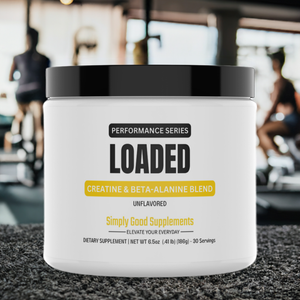
- My recommendation: Choose our Creatine Monohydrate for a straightforward daily serving, or Loaded if you want creatine combined with beta-alanine for high-intensity training.
The important point is that creatine monohydrate isn't the best because it's the oldest or cheapest form. It's the best-supported choice because alternative forms have not demonstrated a meaningful advantage that justifies replacing it.
What Does Creatine Actually Do?
Before comparing different forms, it's worth understanding what creatine does in the body.
Creatine is a naturally occurring compound synthesized primarily from the amino acids arginine, glycine, and methionine.
Your body produces creatine, and you also obtain some through foods such as meat and fish.
Approximately 95% of the body's creatine is stored in skeletal muscle, primarily as free creatine and phosphocreatine.
Phosphocreatine plays an important role in rapidly regenerating adenosine triphosphate, or ATP.
ATP is the immediate energy currency used by muscle cells.
When you're performing a heavy set of squats, sprinting up a hill, or accelerating on a bicycle, your muscles consume ATP rapidly.
Phosphocreatine helps regenerate ATP from ADP, allowing high-intensity muscular contractions to continue.
Your muscles have a limited supply of stored phosphocreatine.
Creatine supplementation increases total muscle creatine availability, which can improve the capacity to regenerate ATP during short, intense efforts.
This is particularly useful for activities involving repeated high-intensity contractions.
Research consistently supports creatine supplementation for improving high-intensity exercise capacity and enhancing certain training adaptations [5, 7].
Does Creatine Directly Build Muscle?
Creatine isn't a direct muscle-building signal in the same way resistance training stimulates the processes involved in hypertrophy.
Instead, one of its most important benefits is improving your ability to train.
If creatine helps you complete another repetition, maintain performance across sets, or sustain slightly higher training volumes, those improvements can contribute to greater adaptations over time.
Creatine supplementation can also increase intracellular water content, particularly during the early stages of supplementation.
That's one reason body weight and measured lean mass may increase relatively quickly.
Not all early weight gain represents newly synthesized muscle protein.
Over longer periods, however, studies combining creatine supplementation with resistance training have demonstrated improvements in strength and lean mass.
The key is that creatine supports the training process. It doesn't replace it.
Why Creatine Monohydrate Remains the Gold Standard
Creatine monohydrate is a creatine molecule associated with one molecule of water.
By weight, it's approximately 88% creatine.
That might sound like a disadvantage compared with some alternative forms, but the important question is how much usable creatine reaches the body's tissues.
And this is where monohydrate performs extremely well.
Orally consumed creatine monohydrate is efficiently absorbed, with research indicating that approximately 99% is absorbed from the gastrointestinal tract under typical conditions.
That does not mean 99% of a dose is retained in muscle. Absorption, muscle uptake, and eventual excretion are different processes.
However, it does mean there's very little room for another form to improve gastrointestinal absorption in a way that produces a meaningful physiological advantage.
A 2022 critical review published in Nutrients examined the bioavailability, efficacy, safety, and regulatory status of alternative creatine forms.
Its conclusion was that creatine monohydrate remains the only form supported by a substantial body of evidence across those categories.
The review found no convincing evidence that alternative forms were more bioavailable, more effective, or safer [2].
For me, that is the central issue.
If a new creatine form costs twice as much, I want to see evidence that it delivers something meaningful in return.
Better marketing isn't enough.
Comparing the Different Forms of Creatine
Here's how the major commercially marketed forms compare.
| Form | Main Marketing Claim | What the Evidence Shows |
|---|---|---|
| Creatine monohydrate | Proven strength, power, and muscle benefits | Strongest overall evidence |
| Creatine HCl | Better solubility and absorption | Solubility advantage; no established performance superiority |
| Buffered creatine | Greater stability and effectiveness at lower doses | Direct trials show no advantage |
| Creatine ethyl ester | Better cellular uptake | Comparative research does not support superiority |
| Creatine nitrate | Better solubility and potential nitric oxide benefits | Limited research; no proven advantage over monohydrate |
| Creatine citrate | Better water solubility | Some research; no demonstrated superiority |
| Creatine malate | Better absorption and energy production | Limited comparative evidence |
| Creatine pyruvate | Enhanced creatine delivery and energy metabolism | Limited research; superiority unproven |
| Magnesium creatine chelate | Improved ATP-related effects | Some preliminary research; no established superiority |
| Creatine gluconate | Enhanced uptake through glucose-related pathways | Insufficient direct evidence |
| Creatine phosphate | Direct phosphocreatine support | No established advantage as an oral supplement |
| Creatine blends | Multiple forms working together | No convincing evidence that blending forms improves outcomes |
This comparison reflects the available clinical literature and comprehensive reviews rather than manufacturer claims [1, 2, 6].
1. Creatine Monohydrate: The Form Everyone Else Is Trying to Beat
Creatine monohydrate is the form used in most of the foundational research on creatine supplementation.
It's been studied in recreationally active adults, resistance-trained athletes, older adults, and numerous other populations.
Research has examined its effects on muscle creatine concentrations, exercise performance, strength, body composition, and safety.
That gives monohydrate a major advantage over newer forms.
We know it works.
We know effective dosing strategies.
And we have substantial information about its safety profile in healthy individuals.
What Makes Monohydrate Effective?
The primary goal of creatine supplementation is increasing the body's creatine availability, particularly within skeletal muscle.
Creatine monohydrate accomplishes that reliably.
A typical daily dose of 3–5 grams increases muscle creatine stores over several weeks.
A loading protocol can accomplish the same thing more quickly.
Once muscle stores are elevated, continued daily supplementation helps maintain them.
There's no compelling evidence that most healthy adults need a more complicated creatine molecule to accomplish this.
What About Mixing and Solubility?
Creatine monohydrate doesn't dissolve particularly well in cold water.
You may notice some powder settling at the bottom of your shaker.
That isn't evidence that the creatine isn't working.
Water solubility and biological effectiveness are not the same thing.
Creatine monohydrate can be efficiently absorbed even when it doesn't fully dissolve in your drinking glass.
This is one of the most common misunderstandings behind alternative creatine marketing.
Simply Good Supplements Creatine Monohydrate
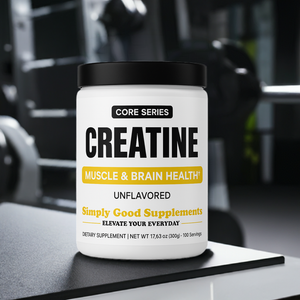
Our formula provides 5 grams of pure creatine monohydrate per serving, with 100 servings per container.
It's unflavored, contains no additional active ingredients, and is designed to fit into a straightforward daily routine.
I formulated this product around a simple principle: when an ingredient has this much research behind it, there's no reason to complicate the formula.
You don't need six different forms of creatine.
You need an effective dose of a form that's been repeatedly shown to work.
Explore Creatine Monohydrate2. Creatine Hydrochloride (HCl): Does Better Solubility Mean Better Absorption?
Creatine HCl is creatine bound to hydrochloride.
Its biggest selling point is improved water solubility.
And this is a legitimate physicochemical difference.
Creatine HCl can dissolve more readily than creatine monohydrate.
That may make it more convenient for certain beverage formulations.
However, improved solubility doesn't automatically translate into better muscle creatine uptake.
The Absorption Argument
Creatine HCl is often marketed with claims that smaller doses can provide the same benefits as much larger doses of monohydrate.
You might see recommendations suggesting that 1–2 grams of creatine HCl can replace 5 grams of monohydrate.
The problem is that this equivalence has not been convincingly demonstrated in rigorous human studies measuring muscle creatine accumulation and training outcomes.
Creatine monohydrate is already efficiently absorbed.
For HCl to justify a lower dose, research would need to show that the smaller dose produces comparable muscle creatine saturation and performance benefits.
That evidence is not established.
What About Bloating?
Another common claim is that creatine HCl causes less bloating.
Some individuals may find particular formulations easier to consume.
But that doesn't establish that HCl systematically causes fewer gastrointestinal side effects than appropriately dosed monohydrate.
For people who experience discomfort with creatine monohydrate, adjusting the serving size, splitting doses, or taking it with food may help.
Creatine HCl may offer a mixing advantage, but there's insufficient evidence to justify calling it more effective or recommending substantially lower doses.
3. Buffered Creatine: Does Changing the pH Improve Performance?
Buffered creatine is commonly marketed under names such as Kre-Alkalyn.
The idea is that increasing the product's pH helps protect creatine from degradation.
Manufacturers have claimed this results in better stability, improved uptake, and fewer side effects.
Fortunately, researchers have directly tested these claims.
The 2012 Jagim Study
Jagim and colleagues compared buffered creatine against traditional creatine monohydrate in resistance-trained individuals.
The researchers examined muscle creatine content, body composition, strength, and anaerobic performance over 28 days.
Participants received either creatine monohydrate using a loading and maintenance protocol, buffered creatine at equivalent doses, or buffered creatine at a lower manufacturer-recommended dose.
The results were straightforward.
Buffered creatine did not produce greater increases in muscle creatine content.
It didn't produce superior improvements in body composition or training performance.
And there was no evidence of fewer side effects.
The authors concluded that the findings did not support claims that buffered creatine was more effective or safer than monohydrate [3].
This is exactly the type of study I want to see when a company introduces a supposedly improved form.
The researchers didn't just measure how the powder behaved in a laboratory solution.
They measured physiological outcomes in humans.
And the newer form failed to demonstrate an advantage.
Buffered creatine doesn't justify a premium based on the available evidence.
4. Creatine Ethyl Ester: When a New Form Performs Worse
Creatine ethyl ester was developed with the idea that modifying the creatine molecule might improve its ability to cross biological membranes.
The marketing focused on enhanced absorption and cellular uptake.
But research raised a significant problem.
Creatine ethyl ester can convert to creatinine, a breakdown product of creatine, under acidic conditions.
That creates the possibility that less intact creatine will be available to increase muscle stores.
The 2009 Spillane Study
Spillane and colleagues conducted a seven-week randomized trial involving 30 previously untrained men.
Participants received placebo, creatine monohydrate, or creatine ethyl ester while following a resistance-training program.
The researchers measured muscle creatine concentrations, body composition, strength, and other outcomes.
Creatine ethyl ester did not outperform monohydrate.
In fact, monohydrate was more effective at increasing muscle creatine stores.
The ethyl ester group also experienced greater increases in serum creatinine, consistent with increased conversion to that breakdown product [4].
That doesn't establish that creatine ethyl ester is harmful, but it directly challenges the claim that it delivers creatine more effectively.
There's no convincing reason to choose creatine ethyl ester over monohydrate.
5. Creatine Nitrate: Combining Creatine With Nitrate
Creatine nitrate combines creatine with nitrate.
This is an interesting concept because nitrate itself has been studied for its potential effects on nitric oxide availability and exercise physiology.
That creates two separate questions.
Does creatine nitrate deliver creatine more effectively than monohydrate?
And could the nitrate component provide additional benefits?
These questions shouldn't be confused.
If a creatine nitrate supplement improves an outcome because of its nitrate content, that doesn't establish that the creatine portion is superior.
The 2022 systematic review identified creatine nitrate among the alternative forms examined in randomized trials, but did not establish consistent superiority over monohydrate [1].
Why the Dose Matters
Creatine nitrate contains both creatine and nitrate by weight.
That means a gram of creatine nitrate is not equivalent to a gram of pure creatine.
When comparing products, you need to know how much actual creatine the serving provides.
You also need to know whether the nitrate component is present at a dose supported by research.
Without those details, it's difficult to determine what the formula is designed to accomplish.
Creatine nitrate is interesting as a multi-functional ingredient, but it hasn't demonstrated superior creatine delivery or training adaptations compared with monohydrate.
6. Creatine Citrate: Better Solubility, but Is It Better?
Creatine citrate combines creatine with citric acid.
Like HCl, it's often promoted for improved water solubility.
This can be useful for beverage formulation.
However, creatine citrate contains less creatine per gram of compound than creatine monohydrate.
That means you may need a larger total powder dose to obtain an equivalent amount of creatine.
Some research has examined creatine citrate in relation to exercise performance and creatine availability.
However, the evidence does not establish that citrate increases muscle creatine stores or improves training outcomes more effectively than monohydrate.
This is another example where improved mixing characteristics can be mistaken for improved physiological performance.
Creatine citrate may be useful for certain product formats, but there's no established reason to prefer it over monohydrate for strength or muscle growth.
7. Creatine Malate: Does Malic Acid Add Anything?
Creatine malate combines creatine with malic acid.
Malate participates in cellular energy metabolism, which makes the combination appealing from a marketing perspective.
You'll often see claims involving improved endurance, reduced fatigue, or enhanced ATP production.
The problem is that biological plausibility isn't proof of effectiveness.
Just because malate participates in energy metabolism doesn't mean combining it with creatine produces superior exercise performance.
There is limited high-quality comparative research demonstrating that creatine malate outperforms monohydrate.
The same issue applies to di-creatine malate and tri-creatine malate products.
Different ratios and formulations also make direct comparisons more difficult.
Interesting chemistry, but insufficient evidence of a meaningful advantage.
8. Creatine Pyruvate: Another Energy-Metabolism Combination
Creatine pyruvate combines creatine with pyruvate.
Pyruvate is involved in carbohydrate metabolism and energy production.
Some early studies investigated whether combining these compounds could improve exercise performance.
However, the available evidence is limited, and findings have not established that creatine pyruvate consistently outperforms creatine monohydrate.
This is important because creatine supplementation already influences energy availability through the phosphocreatine system.
Adding another metabolically active compound doesn't automatically make that process more effective.
Not enough evidence to recommend it over monohydrate.
9. Magnesium Creatine Chelate: Does Magnesium Improve Creatine's Effects?
Magnesium creatine chelate combines creatine with magnesium.
Magnesium plays important roles in ATP-dependent reactions and normal muscle function.
That provides a reasonable rationale for investigating the combination.
Some preliminary studies have reported benefits involving performance or body-water measurements.
However, the research base is much smaller than the literature on creatine monohydrate.
The available evidence doesn't demonstrate that magnesium creatine chelate consistently produces greater muscle creatine accumulation, strength gains, or hypertrophy than monohydrate.
It's also important to distinguish the effects of magnesium from the effects of creatine.
If someone has inadequate magnesium intake, correcting that inadequacy may be beneficial.
But that doesn't mean magnesium must be chemically bound to creatine for creatine supplementation to work.
Potentially useful in specific formulations, but no demonstrated overall advantage.
10. Creatine Gluconate: Does Attaching Glucose Improve Uptake?
Creatine gluconate combines creatine with a glucose-derived component.
The marketing argument is that glucose-related transport or insulin activity might improve creatine delivery into muscle.
There is a legitimate scientific basis for investigating whether carbohydrate intake influences creatine retention.
However, that doesn't establish that chemically binding creatine to gluconate improves its effectiveness.
The research supporting creatine gluconate as a superior form is extremely limited.
We don't have convincing human trials demonstrating greater muscle creatine saturation or better performance than creatine monohydrate.
The proposed mechanism is interesting, but there isn't enough evidence to recommend it.
11. Creatine Phosphate: Why Not Supplement the Energy System Directly?
Creatine phosphate, also called phosphocreatine, is the molecule involved in rapidly regenerating ATP.
So why not simply supplement phosphocreatine directly?
Because what happens inside a muscle cell isn't necessarily what happens when a compound is consumed orally.
Oral phosphocreatine must survive digestion and absorption before it could influence intracellular phosphocreatine availability.
There's insufficient evidence that oral creatine phosphate supplementation produces better muscle phosphocreatine availability or exercise outcomes than creatine monohydrate.
Its role in cellular energy metabolism doesn't make it a superior oral supplement.
12. Micronized Creatine: Is It Actually a Different Form?
This is an important distinction.
Micronized creatine monohydrate is still creatine monohydrate.
The difference is particle size.
Micronization reduces the size of the powder particles, which can improve dispersion and mixing characteristics.
It doesn't create a new creatine molecule.
And it doesn't establish that the ingredient is absorbed more effectively or produces greater muscle gains.
I have no problem with micronized creatine.
It can be a useful manufacturing choice.
But I wouldn't pay substantially more simply because a company claims its micronized creatine is biologically superior.
The benefits still come from creatine monohydrate.
13. Creatine Blends: Are Multiple Forms Better Than One?
This might be my least favorite trend in creatine marketing.
Some supplements combine three, five, or even seven different forms of creatine.
The argument is that each form provides a different benefit, creating a more complete creatine formula.
But what exactly is being improved?
The primary goal remains increasing the body's creatine availability.
There is no convincing evidence that combining multiple forms produces greater muscle creatine saturation than an effective dose of monohydrate.
And blending several forms introduces another issue.
It can become difficult to determine how much actual creatine you're consuming.
For example, a product might advertise 5 grams of a proprietary creatine blend without clearly identifying the amount of each form.
That makes it harder to evaluate the formula against the research.
I would rather see 5 grams of creatine monohydrate than 5 grams of a blend designed primarily to make the ingredient panel look impressive.
What Does the Research Say When We Compare Creatine Forms Directly?
One of the strongest arguments for creatine monohydrate comes from systematic reviews rather than individual studies.
In 2022, Fazio and colleagues published a systematic review in the Journal of Strength and Conditioning Research.
The researchers evaluated 17 randomized, placebo-controlled clinical trials examining alternative forms of creatine.
These included creatine citrate, malate, ethyl ester, nitrate, pyruvate, and magnesium creatine chelate.
The findings were revealing.
Only three studies directly compared an alternative form with creatine monohydrate.
Across the available evidence, alternative forms did not consistently improve exercise performance compared with placebo.
And none demonstrated a convincing advantage over monohydrate.
The researchers also found that monohydrate remained the least expensive form [1].
What About Cost?
Another 2022 analysis examined 175 creatine products sold online.
The researchers identified 16 alternative forms of creatine and compared product claims, scientific support, and cost.
The average price per gram was:
Historical sample averages, not current Simply Good Supplements prices. Products containing only monohydrate averaged $0.12/g; products containing only alternative forms averaged $0.26/g.
Alternative forms cost approximately 2.2 times as much per gram in that sample.
The analysis also found that approximately 88% of alternative-creatine products had limited or no evidence supporting their bioavailability, efficacy, and safety [6].
That doesn't mean every alternative product is overpriced or ineffective.
But it does highlight an important pattern.
Consumers are often paying more for ingredients with less supporting research.
What About Creatine Gummies, Capsules, and Liquid Creatine?
These are delivery formats rather than necessarily different chemical forms.
A gummy containing creatine monohydrate still contains creatine monohydrate.
The same applies to capsules and powders.
What matters is the actual amount of creatine delivered, the stability of the finished product, and whether the product has been manufactured and tested appropriately.
Creatine Gummies
Gummies can be convenient, but consumers should verify the amount of creatine per serving.
Some products require several gummies to provide an effective dose.
Finished-product testing is particularly important because creatine stability can depend on formulation conditions.
Creatine Capsules
Capsules can be useful for people who dislike powders.
However, delivering 3–5 grams of creatine may require multiple capsules.
The ingredient itself doesn't become more effective simply because it's encapsulated.
Liquid Creatine
Creatine can degrade to creatinine over time in aqueous solutions, depending on pH, temperature, and storage conditions.
That makes the stability of ready-to-drink creatine products an important consideration.
A dry powder mixed shortly before consumption avoids many of the challenges associated with long-term storage in liquid.
The broader scientific literature supports these distinctions between formulation characteristics and actual physiological effectiveness [2, 5].
Why I Use Creatine Monohydrate in Simply Good Supplements
When I formulate a supplement, I start with the research.
I want to know which ingredients have demonstrated meaningful benefits in humans, what doses were effective, and whether the evidence supports the claims being made.
Creatine monohydrate makes that process straightforward.
We have decades of research supporting its use.
We know how to dose it.
And we don't need to rely on theoretical absorption advantages to explain why it works.
That's why creatine monohydrate is the form I use in both our standalone Creatine Monohydrate and Loaded formulas.
The products serve slightly different purposes, but the decision to use monohydrate is the same.
Which Simply Good Supplements Creatine Product Should You Choose?
Creatine Monohydrate
Best for straightforward daily creatine supplementation.
- 5 grams of creatine monohydrate per serving
- 100 servings per container
- Unflavored
- No additional active ingredients
This is the option I'd choose if your main goal is supporting muscle creatine saturation, strength, power, and resistance-training adaptations.
Explore Creatine MonohydrateLoaded
Best for combining creatine with muscular-endurance support.
- 3 grams of creatine monohydrate per serving
- 3.2 grams of beta-alanine per serving
- Two complementary performance ingredients
- Designed for consistent daily use
It's particularly relevant for athletes combining strength training with repeated hard efforts, intervals, or hybrid training.
Explore LoadedBoth products use creatine monohydrate. The difference is whether you want creatine by itself or a combination of two established sports-nutrition ingredients.
Why Combine Creatine With Beta-Alanine?
Creatine and beta-alanine work through different physiological mechanisms.
Creatine increases the availability of phosphocreatine, helping regenerate ATP during intense muscular contractions.
Beta-alanine increases muscle carnosine concentrations over time.
Carnosine helps buffer hydrogen ions associated with high-intensity exercise, which may support performance during demanding efforts lasting roughly one to several minutes.
This makes beta-alanine particularly interesting for activities such as repeated intervals, hard cycling efforts, and certain hybrid training sessions.
The two ingredients can complement one another because they address different aspects of exercise performance.
However, that doesn't mean combining them guarantees greater results than taking either ingredient alone.
The magnitude of any benefit depends on the exercise being performed, the individual's training status, and the supplementation protocol.
Also, beta-alanine works through gradual muscle carnosine accumulation. It isn't an immediate performance booster simply because you take it before a workout.
That's why Loaded is designed for consistent daily use.
Do You Need Both Products?
Usually, no.
Loaded already contains 3 grams of creatine monohydrate per serving.
For many adults, that's an appropriate daily maintenance amount.
If you're using Loaded consistently, you generally don't need to add another full 5-gram serving of standalone creatine unless you have a specific reason to use a higher total daily intake.
I would rather have someone use an appropriate amount consistently than take unnecessary extra servings.
How Much Creatine Monohydrate Should You Take?
For most healthy adults, 3–5 grams daily is a practical, research-supported dose.
There are two common approaches.
Option 1: Daily Maintenance Without Loading
Take 3–5 grams of creatine monohydrate every day.
Muscle creatine stores gradually increase over approximately three to four weeks.
This is the simplest approach.
It's the one I generally recommend for people who aren't concerned about saturating their muscle creatine stores as quickly as possible.
Option 2: Loading Followed by Maintenance
A traditional loading protocol involves taking approximately 20 grams daily for five to seven days, divided into four 5-gram servings.
After loading, reduce the dose to 3–5 grams daily.
This approach increases muscle creatine stores more quickly.
However, loading isn't necessary to obtain the longer-term benefits of creatine supplementation.
Both strategies can produce elevated muscle creatine stores. The main difference is how quickly you get there [5, 7].
Does Timing Matter?
Not nearly as much as consistency.
You can take creatine before training, after training, or at another convenient time.
The main goal is maintaining elevated muscle creatine stores over time.
You should also take creatine on rest days.
Your muscles don't suddenly lose their creatine stores because you're not training that day.
Is Creatine Monohydrate Safe?
Creatine monohydrate has been extensively studied for safety in healthy individuals.
Research has not demonstrated that recommended creatine monohydrate supplementation damages healthy kidneys.
However, this doesn't mean every person should take creatine without considering their medical circumstances.
People with known kidney disease or other relevant medical conditions should discuss supplementation with a qualified healthcare professional.
Creatine supplementation can also increase serum creatinine, which is commonly used to estimate kidney function.
That increase doesn't necessarily indicate kidney damage, but it can complicate the interpretation of laboratory results.
It's useful to tell your healthcare provider if you're taking creatine.
What About Water Retention?
Creatine can increase body water, particularly within muscle.
This may contribute to an initial increase in body weight.
For strength athletes, that may not be a concern.
For runners and cyclists, particularly those concerned about body mass, it may be more relevant.
However, the extent of weight change varies, and not everyone experiences noticeable increases.
There's also no good evidence that choosing a more expensive creatine form automatically eliminates this effect while preserving the same muscle creatine saturation.
What About Hair Loss?
The claim that creatine causes hair loss has circulated for years.
However, the available research does not establish that creatine supplementation causes hair loss.
This is another example of a concern that has become much more widespread than the evidence supporting it.
Is Creatine Worth Taking for Endurance Athletes?
I think creatine can be useful for certain endurance athletes, but the benefits depend on the demands of the sport.
Creatine is most consistently effective for high-intensity, repeated efforts.
That makes it potentially relevant for cyclists performing repeated accelerations, runners incorporating sprint work, and hybrid athletes combining endurance training with strength exercises.
However, the evidence is less consistent for improving steady-state endurance performance.
And any increase in body mass could be a disadvantage in activities where power-to-weight ratio matters.
For example, a cyclist who frequently performs short, high-power accelerations may have a different reason to use creatine than an ultrarunner trying to minimize additional body mass over a long mountain race.
I wouldn't recommend creatine to every endurance athlete for exactly the same reason.
But when creatine is appropriate, monohydrate remains my preferred form.
Frequently Asked Questions
Is creatine HCl better than monohydrate?
No convincing evidence demonstrates that creatine HCl produces greater muscle creatine saturation, strength gains, or hypertrophy than creatine monohydrate. HCl is more soluble in water, but that doesn't establish better performance.
Is creatine monohydrate absorbed poorly?
No. Creatine monohydrate is efficiently absorbed. The idea that most of it is wasted during digestion is not supported by the available evidence.
Is buffered creatine better for your stomach?
A direct comparative trial did not demonstrate fewer side effects with buffered creatine than with monohydrate.
Does creatine nitrate improve blood flow?
Nitrate can influence nitric oxide physiology, but that doesn't establish that creatine nitrate delivers creatine more effectively. The effects of the nitrate component and the creatine component should be evaluated separately.
Is micronized creatine better?
Micronized creatine is still creatine monohydrate. It may mix more easily, but there's no established performance advantage attributable to smaller particle size.
Should I cycle creatine?
There's no established need for most healthy adults to cycle creatine monohydrate.
Can I take creatine and beta-alanine together?
Yes. They work through different physiological mechanisms and can be used together. Our Loaded formula combines 3 grams of creatine monohydrate with 3.2 grams of beta-alanine per serving.
Is 3 grams of creatine enough?
Three grams daily can be an effective maintenance dose for many adults. Five grams is also commonly used, particularly in research and practical supplementation protocols.
Is creatine monohydrate only for bodybuilders?
No. Creatine is relevant to strength athletes, recreationally active adults, some endurance and hybrid athletes, and potentially other populations. Its benefits depend on the outcome being studied.
The Bottom Line: Creatine Monohydrate Still Wins
The supplement industry has introduced a remarkable number of creatine products over the years.
Some offer improved solubility.
Others have interesting chemical structures or combine creatine with compounds involved in energy metabolism.
And a few have demonstrated benefits in preliminary research.
But when we look at the totality of the evidence, the conclusion remains remarkably consistent.
No alternative form has convincingly demonstrated that it is more effective than creatine monohydrate for increasing muscle creatine stores, strength, or training adaptations.
That's why I continue to recommend monohydrate.
It works. It's well studied. It's generally well tolerated in healthy adults. And it doesn't require paying a premium for an unproven absorption advantage.
At Simply Good Supplements, that philosophy is reflected in two products.
Our Creatine Monohydrate provides a straightforward 5-gram serving for anyone who wants to incorporate creatine into their daily routine.
Our Loaded combines 3 grams of creatine monohydrate with 3.2 grams of beta-alanine for athletes who want to support strength, power, and muscular endurance.
Both formulas use creatine monohydrate because that's where the strongest evidence is.
Could a newer form eventually demonstrate a meaningful advantage?
Absolutely.
I'm open to changing my recommendation when convincing research supports it.
But until that happens, I see no reason to replace a proven ingredient with a more expensive alternative that hasn't demonstrated better results.
Sometimes the best formulation decision is sticking with what the science already supports.
References
1. Fazio C, Elder CL, Harris MM. Efficacy of alternative forms of creatine supplementation on improving performance and body composition in healthy subjects: a systematic review. Journal of Strength and Conditioning Research. 2022;36(9):2663–2670. View study.
2. Kreider RB, Jäger R, Purpura M. Bioavailability, efficacy, safety, and regulatory status of creatine and related compounds: a critical review. Nutrients. 2022;14(5):1035. View study.
3. Jagim AR, Oliver JM, Sanchez A, et al. A buffered form of creatine does not promote greater changes in muscle creatine content, body composition, or training adaptations than creatine monohydrate. Journal of the International Society of Sports Nutrition. 2012;9:43. View study.
4. Spillane M, Schoch R, Cooke M, et al. The effects of creatine ethyl ester supplementation combined with heavy resistance training on body composition, muscle performance, and serum and muscle creatine levels. Journal of the International Society of Sports Nutrition. 2009;6:6. View study.
5. Antonio J, Candow DG, Forbes SC, et al. Common questions and misconceptions about creatine supplementation: what does the scientific evidence really show? Journal of the International Society of Sports Nutrition. 2021;18:13. View study.
6. Analysis of the efficacy, safety, and cost of alternative forms of creatine available for purchase on Amazon.com: are label claims supported by science? Journal of the International Society of Sports Nutrition. 2022. View study.
7. National Institutes of Health, Office of Dietary Supplements. Dietary Supplements for Exercise and Athletic Performance: Health Professional Fact Sheet. View fact sheet.