Creapure vs. Creatine Monohydrate: Is 99.9% Purity Really Worth Paying More For?
If you've spent any time shopping for creatine, you've probably come across Creapure.
It's marketed as an exceptionally pure form of creatine manufactured in Germany. You'll see the Creapure logo prominently displayed on supplement labels, usually alongside claims about superior quality, manufacturing standards, and purity.
And you'll often pay more for it.
The big selling point is 99.9% purity.
That's an impressive number. But there's an important question I think consumers should ask before spending extra money.
Does that small difference in purity actually translate into better strength gains, greater muscle growth, improved performance, or meaningful health benefits?
In my opinion, for most people buying high-quality, independently tested creatine monohydrate, the answer is no.
But I want to be clear about something upfront.
Creapure is a legitimate, high-quality ingredient. It has well-documented manufacturing standards, and its reputation isn't simply a marketing invention.
The distinction is that Creapure is a branded source of creatine monohydrate, not a different or more effective form of creatine. Its quality assurance may have value, but that shouldn't be confused with proven superiority in exercise performance [1, 4].
Let's look at what you're actually getting for the premium, how meaningful the purity difference is, and why I believe high-quality creatine monohydrate remains the smarter purchase for most people.
TLDR
- Creapure is creatine monohydrate. It isn't a new chemical form or a more powerful version of creatine.
- Creapure guarantees at least 99.9% purity, with documented manufacturing and quality-control specifications.
- Other manufacturers can also produce highly pure creatine monohydrate. However, their actual purity must be verified rather than assumed.
- The difference between 99.9% and 99.5% purity is just 0.02 grams in a 5-gram serving. That's 20 milligrams of material, not evidence of a meaningful performance difference.
- Purity and safety aren't identical. The identity and concentration of any impurities matter, not just the overall purity percentage.
- There is no convincing clinical evidence that Creapure produces greater strength, muscle growth, or exercise performance than equally dosed, verified high-quality generic creatine monohydrate.
- My recommendation: Spend your money on properly dosed, independently tested creatine rather than assuming a branded raw ingredient will produce better results.
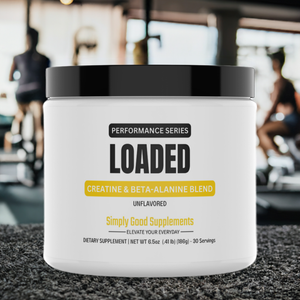
For that reason, I continue to recommend our Creatine Monohydrate and Loaded.
Both use creatine monohydrate, and both are built around the same principle: effective doses, transparent formulas, and independent testing.
First, What Exactly Is Creapure?
Creapure is a trademarked creatine monohydrate ingredient manufactured by Alzchem in Trostberg, Germany.
It's produced in a dedicated manufacturing facility using controlled chemical synthesis and quality-testing procedures.
The company specifies a creatine monohydrate purity of at least 99.9%, measured using high-performance liquid chromatography (HPLC).
Its specifications also include limits for certain manufacturing byproducts, including creatinine, dicyandiamide, and dihydrotriazine, along with controls for heavy metals and microbiological contamination [4, 5].
These are legitimate quality-control measures.
And I think it's important to acknowledge that.
Creapure has earned a strong reputation for manufacturing consistency and traceability.
But here's where I think the marketing can become confusing.
Creapure Isn't a Different Form of Creatine
Creatine monohydrate has a specific chemical structure.
Whether it comes from Alzchem's German manufacturing facility or another qualified supplier, the creatine monohydrate molecule is the same.
Once absorbed, the body doesn't recognize a Creapure molecule as somehow different from an identical creatine monohydrate molecule manufactured elsewhere.
The physiological benefits come from increasing creatine availability, particularly within skeletal muscle.
Those benefits depend on factors such as dose, consistency, muscle creatine saturation, and training demands.
They don't depend on the trademark printed on the label.
This is why I think it's important to separate two different claims.
Claim one: Creapure is manufactured to a high purity specification. That's supported.
Claim two: Creapure builds more muscle or improves performance more than equally pure, equally dosed generic creatine monohydrate. That has not been demonstrated in convincing head-to-head clinical research.
How Much Does 99.9% Purity Actually Matter?
This is where the conversation gets interesting.
A purity of 99.9% means that at least 99.9% of the tested material is creatine monohydrate under the specified assay.
The remaining fraction may include trace manufacturing-related compounds, moisture variations accounted for by the analytical method, or other substances within the material's specifications.
Now let's compare that with a hypothetical creatine monohydrate ingredient testing at 99.5% purity.
4,995 mg creatine monohydrate
5 mg other material in a 5 g serving4,975 mg creatine monohydrate
25 mg other material in a 5 g servingThis is a mathematical illustration, not a measured purity comparison with Simply Good Supplements or another specific brand.
That's a difference of 0.4 percentage points in purity, or 20 milligrams in a 5-gram serving.
For perspective, the typical daily creatine maintenance dose is approximately 3,000–5,000 milligrams.
There's no convincing evidence that the additional 20 milligrams of creatine monohydrate in this example would produce a measurable difference in strength, muscle mass, or performance.
If you wanted to obtain the same amount of creatine monohydrate from a 99.5% ingredient, the total serving would need to be only about 20 milligrams larger.
From a dosing standpoint, that's trivial.
But There's an Important Catch
A 99.5% purity specification doesn't tell us what makes up the remaining 0.5%.
And that matters.
Twenty milligrams of additional harmless material isn't necessarily a concern.
Twenty milligrams of a particular contaminant could be a very different situation.
So I don't think it's scientifically responsible to say that purity differences never matter.
They absolutely can.
The better conclusion is that a small difference in total creatine purity does not automatically create a meaningful difference in effectiveness, provided both ingredients meet appropriate safety and contaminant specifications.
That's a distinction supplement companies should be making more clearly.
Does Creapure Build More Muscle Than Regular Creatine Monohydrate?
This is the question I care about most as a formulator.
If a company charges more for an ingredient, I want to know what additional benefit the customer receives.
With creatine, we have several well-established outcomes to measure:
- Muscle creatine and phosphocreatine concentrations.
- Strength and power output.
- Repeated high-intensity exercise performance.
- Lean mass and resistance-training adaptations.
- Safety and tolerability.
If Creapure delivers more creatine to muscle or produces greater strength gains than equally dosed, high-quality generic creatine monohydrate, that would be a meaningful reason to consider paying more.
But I couldn't identify a rigorous, published head-to-head trial demonstrating that advantage.
That distinction matters because much of the research supporting creatine monohydrate has used Creapure as the raw ingredient.
A 2022 critical review by Kreider, Jäger, and Purpura identifies Creapure as a major source of the creatine monohydrate used in clinical research.
The review also makes a broader point: creatine monohydrate has a substantial body of evidence supporting its bioavailability, effectiveness, and safety [1].
That research supports creatine monohydrate.
It doesn't prove that the Creapure trademark is necessary for those benefits.
The Molecule Is What Matters
Once you take creatine monohydrate, the body absorbs creatine and distributes it through the circulation.
Creatine is transported into tissues, including skeletal muscle, where some is converted into phosphocreatine.
Phosphocreatine helps regenerate ATP during high-intensity muscular contractions.
That mechanism is the same whether the creatine monohydrate comes from Creapure or another qualified manufacturer.
If two products deliver the same amount of chemically identical creatine monohydrate, with comparable dissolution, stability, and acceptable contaminant profiles, there is no established physiological reason to expect the branded product to produce greater muscle gains.
I want to be precise here.
That is a conclusion based on chemistry, physiology, and the existing creatine literature.
It isn't the result of a definitive clinical trial proving every generic creatine product is equivalent to Creapure.
Those are different statements.
Is Creapure Actually Purer Than Generic Creatine?
Sometimes, yes.
But we need to be careful about what we're comparing.
Creapure's manufacturer guarantees at least 99.9% purity and maintains specifications for several manufacturing-related impurities.
Its quality controls are well documented, including in a publicly available FDA GRAS submission [4].
Some generic creatine products may have lower purity or less rigorous quality controls.
Others may meet similarly high specifications.
The term generic creatine monohydrate doesn't describe a single manufacturer, production process, or quality standard.
It describes the ingredient without a particular brand designation.
So it's not scientifically accurate to assume every generic creatine product is 99.5% pure, or that every generic product is inferior.
You have to look at actual laboratory results.
What About Manufacturing Contaminants?
The manufacturing process can produce or introduce unwanted compounds.
Researchers have discussed potential impurities including creatinine, dicyandiamide, and dihydrotriazine, as well as the possibility of heavy-metal contamination.
A 2022 review highlighted differences in manufacturing practices and contaminant profiles among creatine sources [1].
That's a legitimate concern.
But it also explains why I think the most useful question is not simply whether a product contains Creapure.
It's whether the finished supplement has been appropriately tested.
A purity percentage alone doesn't tell you everything about the identity or concentration of contaminants.
For example, a product could have a high creatine assay and still require additional testing to establish that heavy metals or microbiological contaminants are within acceptable limits.
This is why quality assurance matters.
And it's why I believe transparent testing is more valuable than relying exclusively on a branded ingredient logo.
Third-Party Testing vs. the Creapure Logo
I think this is where consumers can make a much more informed purchasing decision.
Creapure provides assurance about its raw ingredient and manufacturing process.
Independent third-party testing of a finished supplement can provide different information.
Depending on the test panel, a laboratory may evaluate ingredient potency, heavy metals, microbiological quality, and selected adulterants.
These are complementary quality-control approaches.
A Creapure logo doesn't automatically establish that every finished-product quality parameter has been independently verified.
Likewise, a finished-product test showing acceptable potency and heavy-metal levels doesn't automatically establish that every possible manufacturing impurity has been screened.
The best approach is to examine what was actually tested.
How We Approach Testing at Simply Good Supplements
At Simply Good Supplements, independent laboratory testing is an important part of our quality-control process.
For example, our Loaded formula has published third-party testing results for ingredient content, heavy metals, microbiological quality, and a targeted sports-nutrition adulterant screen.
The reported results include:
| Test | Published Result |
|---|---|
| Creatine | 3.3 g per serving against a 3.0 g specification |
| Beta-alanine | 3.43 g per serving against a 3.2 g specification |
| Heavy metals | All four tested metals met specifications |
| Microbiological quality | Published tests passed |
| Targeted adulterant screen | Seven screened compounds not detected |
These results are available on the Loaded product page.
That gives customers actual information about the tested product.
It's important to recognize that these results establish the reported characteristics of the tested samples. They do not establish a 99.9% raw-material purity assay or prove that every conceivable contaminant is absent.
I believe that kind of specificity is important.
When a supplement company says a product is tested, customers should be able to understand what the testing covers.
Why the Creapure Premium Often Doesn't Make Sense
Let's say you're comparing two products.
Both contain 5 grams of creatine monohydrate per serving.
Both have documented testing showing that they meet appropriate ingredient and safety specifications.
One contains Creapure and costs noticeably more.
The other uses non-branded creatine monohydrate from a qualified supplier.
What additional strength or muscle-building benefit are you buying with the more expensive product?
Based on the available research, there is no demonstrated advantage.
The premium may pay for German manufacturing, traceability, supplier quality assurance, and the Creapure trademark.
Those things can have value.
But they shouldn't be presented as evidence that the product will build more muscle.
An Illustrative Cost Comparison
Suppose a generic creatine product costs $25 for 100 servings, while a Creapure product costs $40 for the same number of servings.
Hypothetical example only. These are not verified market averages or Simply Good Supplements prices.
That's $15 more for 100 servings, or a 60% price premium.
If both products meet comparable specifications and deliver the same dose, I don't see evidence that the more expensive product will deliver 60% more performance.
Or 10% more.
Or even a measurable additional benefit.
That doesn't mean the Creapure product is a bad purchase.
Someone might reasonably value the specific manufacturing origin or supplier traceability.
But from a performance-per-dollar standpoint, I would choose the verified, high-quality creatine monohydrate that provides the best value.
Why Creatine Monohydrate Is Still the Best Form of Creatine
One thing I don't want this discussion to obscure is how effective creatine monohydrate actually is.
We're debating very small purity differences within an ingredient that already has an unusually strong evidence base.
Creatine monohydrate has consistently demonstrated benefits for increasing muscle creatine stores and supporting repeated high-intensity exercise.
When combined with resistance training, it can also contribute to greater improvements in strength and lean mass.
And it's generally well tolerated in healthy adults at recommended doses [1, 6].
For most people, 3–5 grams daily is an effective maintenance strategy.
A loading protocol can increase muscle creatine stores more quickly, but loading isn't required.
Consistency matters far more than the brand of raw material.
What About Creatine HCl, Buffered Creatine, and Other Forms?
Creapure is sometimes discussed alongside alternative creatine forms, but it really belongs in a different category.
Creatine HCl, creatine nitrate, creatine citrate, and creatine ethyl ester involve different chemical compounds.
Creapure is simply a branded source of creatine monohydrate.
I've already written a detailed breakdown comparing the major forms, their marketing claims, and the available research.
Why I Recommend Simply Good Supplements Creatine Monohydrate
When I develop a product, my goal isn't to make the ingredient panel sound as complicated as possible.
It's to provide an effective dose of an ingredient supported by research.
That's exactly what our Creatine Monohydrate does.
For someone who wants to support strength, power, and resistance-training adaptations, this is the simplest option in our lineup.
You can mix it into water, a protein shake, or another beverage and take it consistently every day.
You don't need to cycle it, and you don't need to time it precisely around your workout.
What About Loaded?
Loaded combines two established sports-nutrition ingredients for athletes who want to support strength, power, and muscular endurance.
Creatine supports rapid ATP regeneration during high-intensity efforts.
Beta-alanine increases muscle carnosine over time, which helps buffer acidity during demanding exercise.
I particularly like this combination for people who combine lifting with repeated high-intensity efforts.
Think hard cycling intervals, sprint sessions, HYROX-style workouts, and hybrid strength-and-endurance training.
The two ingredients work through different mechanisms.
And both need to be taken consistently to obtain their full benefits.
Loaded isn't designed to provide a different type of creatine.
It provides creatine monohydrate alongside beta-alanine because both ingredients have meaningful research behind them.
Which Simply Good Supplements Product Should You Choose?
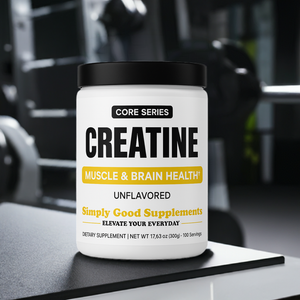
Creatine Monohydrate
5 grams per serving | 100 servings | Unflavored
Our standalone Creatine Monohydrate provides a straightforward daily dose of one of the most extensively researched ingredients in sports nutrition.
There are no additional active ingredients, no unnecessary blends, and no need to pay for a supposedly superior form of creatine.
Explore Creatine MonohydrateLoaded
3 g creatine monohydrate + 3.2 g beta-alanine
Loaded combines two established sports-nutrition ingredients for athletes who want to support strength, power, and muscular endurance.
Creatine supports rapid ATP regeneration during high-intensity efforts. Beta-alanine increases muscle carnosine over time, helping buffer acidity during demanding exercise.
Explore LoadedWhich Product Would I Choose?
If your primary goal is creatine supplementation, I'd choose our standalone Creatine Monohydrate.
If you're also interested in beta-alanine for high-intensity muscular endurance, Loaded may be a better fit.
Loaded already provides 3 grams of creatine monohydrate per serving, so most people don't need to add a full serving of standalone creatine on top of it.
Neither product requires the Creapure trademark to deliver the established physiological benefits of creatine monohydrate.
When Would I Actually Pay More for Creapure?
There are situations where I think paying a premium could be reasonable.
For example, if you're comparing Creapure against a generic creatine product from an unknown supplier with no meaningful quality documentation, the added assurance may be worth the cost.
Creapure's manufacturing process, impurity specifications, and traceability are legitimate advantages over an unverified product.
But that's a quality-control comparison, not evidence of greater creatine effectiveness.
If I'm comparing Creapure against another high-quality creatine monohydrate product with appropriate testing and documentation, the justification for paying more becomes much weaker.
I'd evaluate the actual laboratory results, dose, manufacturing controls, price per serving, and transparency of the company.
I wouldn't make my decision based on the trademark alone.
Frequently Asked Questions
Is Creapure better than creatine monohydrate?
Creapure is creatine monohydrate. It is a branded ingredient with a guaranteed minimum purity of 99.9% and documented manufacturing standards. It has not been convincingly demonstrated to improve strength, muscle growth, or performance more than equally dosed, high-quality generic creatine monohydrate.
Is Creapure 100% pure?
No. The published specification is at least 99.9% creatine monohydrate, not 100%.
Is all generic creatine 99.5% pure?
No. The 99.5% figure used earlier was a hypothetical example. Generic creatine monohydrate varies by supplier and batch. Actual purity must be determined through appropriate laboratory testing.
Does the 0.4 percentage-point difference matter?
If comparing ingredients that test at 99.9% and 99.5%, the difference in a 5-gram serving is 20 milligrams of creatine monohydrate. That is unlikely to have a meaningful effect on muscle creatine saturation or exercise performance. However, the safety implications of any impurities depend on their identity and concentration.
Is Creapure safer than generic creatine?
Creapure has documented quality controls and impurity specifications. That can provide greater assurance than an unverified generic product. However, it does not establish that Creapure is safer than every properly manufactured, independently tested generic creatine product.
Does Creapure absorb better?
There is no convincing clinical evidence that Creapure has superior absorption or muscle uptake compared with equally dosed, high-quality creatine monohydrate from another supplier.
How much creatine should I take daily?
For most healthy adults, 3–5 grams of creatine monohydrate daily is an effective maintenance strategy. Loading is optional.
Should I choose Creatine Monohydrate or Loaded?
Choose our standalone Creatine Monohydrate if you want a simple 5-gram daily serving. Choose Loaded if you want 3 grams of creatine monohydrate combined with 3.2 grams of beta-alanine for additional muscular-endurance support.
The Bottom Line: Don't Confuse Purity Marketing With Better Performance
I think Creapure is a good ingredient.
It has a strong manufacturing reputation, a high purity specification, and documented quality-control procedures.
Those are meaningful characteristics.
But I also think the supplement industry has a tendency to turn small differences in raw-material specifications into much larger claims about product effectiveness.
And that's where I disagree with the marketing.
A difference between 99.9% and 99.5% purity amounts to just 20 milligrams in a 5-gram serving.
There's no convincing evidence that a difference that small in creatine content will produce greater muscle growth, strength, or exercise performance.
The more important consideration is whether the creatine is accurately dosed, manufactured appropriately, and tested for relevant impurities.
If both products meet those requirements, I don't see a compelling performance-based reason to pay substantially more for Creapure.
At Simply Good Supplements, that's why we continue to use creatine monohydrate in our Creatine Monohydrate and Loaded formulas.
I'm not interested in charging customers more for a branded ingredient unless the evidence supports a meaningful benefit.
My recommendation is simple: buy high-quality, appropriately tested creatine monohydrate, take an effective dose consistently, and put the rest of your attention into your training.
That's where the results come from.
References
1. Kreider RB, Jäger R, Purpura M. Bioavailability, efficacy, safety, and regulatory status of creatine and related compounds: a critical review. Nutrients. 2022;14(5):1035. View study.
2. Fazio C, Elder CL, Harris MM. Efficacy of alternative forms of creatine supplementation on improving performance and body composition in healthy subjects: a systematic review. Journal of Strength and Conditioning Research. 2022;36(9):2663–2670. View study.
3. Kreider RB, et al. Analysis of the efficacy, safety, and cost of alternative forms of creatine available for purchase on Amazon.com: are label claims supported by science? Journal of the International Society of Sports Nutrition. 2022. View study.
4. Alzchem Trostberg GmbH. GRAS Notice No. 931: Creatine Monohydrate (Creapure). Includes raw-material purity, manufacturing impurity, heavy-metal, and microbiological specifications. View FDA submission.
5. Creapure. Quality & Manufacturing. Manufacturer documentation of manufacturing procedures, batch testing, and quality standards. View manufacturer documentation.
6. Antonio J, Candow DG, Forbes SC, et al. Common questions and misconceptions about creatine supplementation: what does the scientific evidence really show? Journal of the International Society of Sports Nutrition. 2021;18:13. View study.