Trying to Conceive? New Research Finds One Supplement Linked to Higher Live Birth Rates
If you've ever searched for ways to improve fertility, you've probably been overwhelmed by the number of supplements being marketed as fertility boosters.
CoQ10. Fish oil. Antioxidants. Vitamin C. Zinc. Protein powders. Specialized fertility blends.
The fertility supplement market has exploded in recent years, fueled by the promise of improving reproductive health and increasing the chances of a successful pregnancy.
But do these supplements actually work?
A new study published in Fertility and Sterility sought to answer that question by examining supplement use among thousands of couples seeking fertility treatment.
The findings may surprise you.
While women who took multivitamins were more likely to have a live birth, most individual supplements—including several of the most popular fertility supplements on the market—showed little evidence of improving outcomes.
The Growing Popularity of Fertility Supplements
Infertility affects millions of couples worldwide, and many people are willing to try almost anything that might improve their chances of conceiving.
As a result, fertility supplements have become a rapidly growing category within the supplement industry.
Many products contain ingredients such as:
- Coenzyme Q10 (CoQ10)
- Fish oil (omega-3 fatty acids)
- Vitamin C
- Vitamin B12
- Zinc
- Antioxidants
- Folic acid
- Protein supplements
While some of these ingredients have shown promise in improving certain fertility-related markers, far fewer studies have investigated whether they actually improve the outcome that matters most: a healthy live birth.
The Study
Researchers analyzed data from a large prospective cohort of couples seeking fertility treatment between 2013 and 2017.
The study included thousands of men and women who reported their supplement use before attempting conception.
Researchers then examined whether supplement use was associated with:
- Live birth rates
- Pregnancy loss
- Fertility treatment outcomes
Participants reported using a wide variety of supplements, with many individuals taking multiple products simultaneously.
Among women, approximately two-thirds reported using a multivitamin, while about one-third of men reported multivitamin use.
What Researchers Found
The most important finding was surprisingly simple.
Women who used a multivitamin before conception had a higher likelihood of achieving a live birth compared to women who did not use a multivitamin. Researchers estimated roughly a 22% greater likelihood of live birth after adjusting for numerous lifestyle and health factors.
However, this benefit was not seen for most individual supplements.
Researchers found no clear association between live birth rates and individual use of:
- Fish oil
- Vitamin C
- Vitamin B12
- Calcium
- Zinc
- Coenzyme Q10
- Protein shakes
- Protein bars
These findings were observed despite the widespread use of many of these products among participants.
Folic Acid Appears To Remain Important
One particularly interesting finding involved folic acid.
Researchers observed that women who combined a multivitamin with folic acid appeared to have an even greater likelihood of achieving a live birth compared to women taking neither supplement.
This finding aligns with decades of research supporting folic acid supplementation before and during pregnancy.
Most people are familiar with folic acid's role in reducing the risk of neural tube defects, but emerging evidence suggests it may also play an important role in reproductive success.
Why Might Multivitamins Help?
The study wasn't designed to determine exactly why multivitamin use was associated with higher live birth rates, but several explanations are possible.
Multivitamins provide a broad spectrum of nutrients involved in reproductive health, including:
- Folate
- Vitamin B12
- Iron
- Zinc
- Iodine
- Vitamin D
- Other essential vitamins and minerals
Even modest nutrient deficiencies may negatively affect fertility, ovulation, implantation, or early fetal development.
A quality multivitamin may help reduce the likelihood of nutrient gaps before conception.
It's also possible that multivitamin users tend to engage in other healthy lifestyle behaviors that contribute to fertility outcomes. Although researchers adjusted for many of these factors, observational studies can never fully eliminate this possibility.
What About Men?
The findings for men were considerably less exciting.
Researchers found no clear association between male multivitamin use and live birth outcomes.
Similarly, commonly used male supplements such as:
- Fish oil
- Vitamin C
- Vitamin B12
- CoQ10
- Zinc
showed no meaningful association with live birth rates.
This finding supports previous research suggesting that many male fertility supplements may improve certain semen parameters without necessarily translating into higher pregnancy or live birth rates.
More Supplements Doesn't Always Mean Better Results
One of the most surprising findings was the sheer number of supplements many participants were taking.
Some individuals reported using more than 10 supplements simultaneously.
Yet despite this extensive supplement use, researchers found little evidence that stacking multiple fertility supplements provided additional benefits.
This serves as an important reminder that more supplements do not automatically lead to better outcomes.
In many cases, focusing on foundational nutrition may provide greater value than chasing increasingly complex supplement protocols.
What This Means For Couples Trying To Conceive
If you're trying to conceive, this study suggests that the basics may matter more than the latest trendy fertility supplement.
The strongest evidence continues to support:
- A nutrient-dense diet
- A healthy body weight
- Regular physical activity
- Adequate sleep
- Avoiding smoking
- Limiting excessive alcohol intake
- Using a quality multivitamin containing folic acid
While certain specialty supplements may eventually prove beneficial in specific populations, this study suggests that many commonly marketed fertility supplements may not meaningfully improve live birth outcomes.
Supporting Nutritional Foundations Before Pregnancy
Because nutrient status can influence fertility and pregnancy outcomes, ensuring adequate intake of essential vitamins and minerals before conception is important.
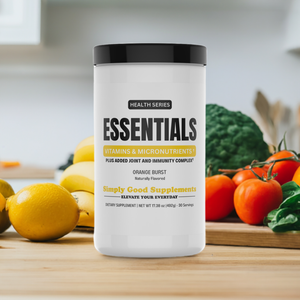
Our Essentials Vitamin & Nutrient Complex was designed to help support foundational nutrition by providing a broad spectrum of vitamins, minerals, probiotics, and other key nutrients that many adults fail to consume consistently through diet alone.
While no supplement can guarantee pregnancy success, building a strong nutritional foundation may help support overall health during the preconception period.
The Bottom Line
A new study involving couples seeking fertility treatment found that women who used a multivitamin before conception were more likely to achieve a live birth.
In contrast, most individual supplements—including fish oil, CoQ10, vitamin C, vitamin B12, zinc, protein shakes, and protein bars—showed little evidence of improving live birth outcomes.
The findings reinforce an important lesson that applies well beyond fertility: before spending hundreds of dollars on specialized supplements, it may be worth making sure the nutritional basics are covered first.
References
- Sealy NRZ, Mumford SL, Caniglia EC, et al. Supplement Use and Fertility Outcomes Among Couples Seeking Fertility Treatment. Fertility and Sterility. 2026.
- American Society for Reproductive Medicine. Optimizing Natural Fertility Committee Opinion.
- Gaskins AJ, Chavarro JE. Diet and Fertility: A Review. American Journal of Obstetrics and Gynecology. 2018.